The Gods
Ingersoll delivered The Gods in 1872. It was one of his earlier lectures and became one of his most definitive for boldly challenging religious dogmas and critiquing their historical role in undermining human rights.
If I could recommend any one of Ingersoll’s speeches for high school literature classes, I would recommend this one, possibly after reading The Scarlet Letter, seeing Glory and also after reading Letter from a Birmingham Jail.
Whenever you read a story about gods and devils, it is apparent that the narrative you’re reading is political.
It’s apparent that the gods are crueler than the devils and the gods get away with it.
In fact, getting away with cruelty and being able to hold someone more innocent responsible for it is the main difference between a god and a devil.
It follows that the audience is simply intended to worship power.
And it also follows that the devils themselves are freedom fighters.
It is apparent that a story about gods and devils is a just-so story, the moral is gaslighting, and the purpose is power.
If faith is the evidence of things hoped for, then religion is politics about the unknown.
The embodiment and reproduction of confirmation bias.

At my Christian college, the value proposition was the “integration of faith and learning.”
We might as well integrate cognition with bias.
This was a right wing response to intersectionality. It was grown in a laboratory, and my college was the laboratory.
What can wash away a fact? Nothing but the blood of Jesus.
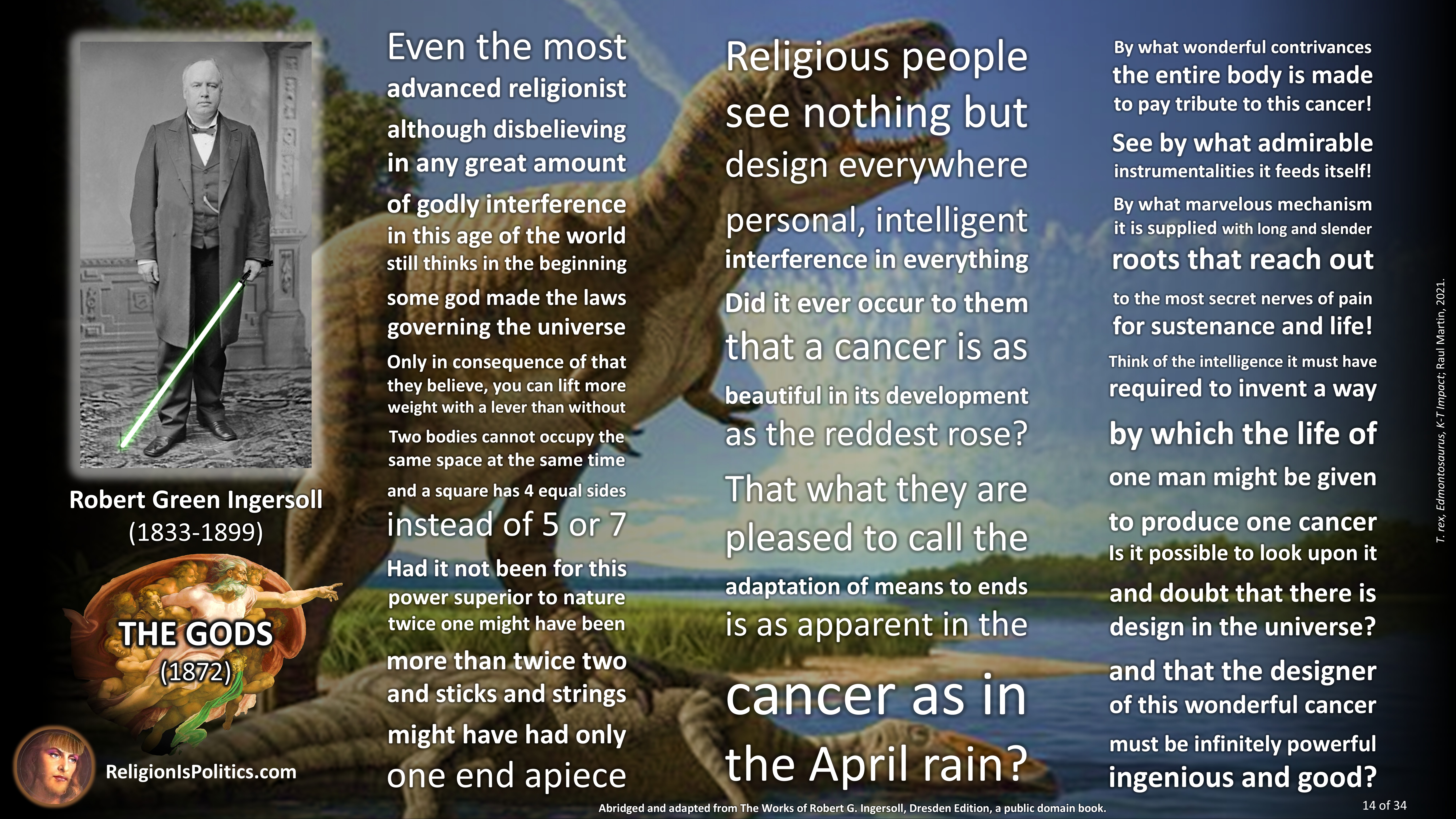
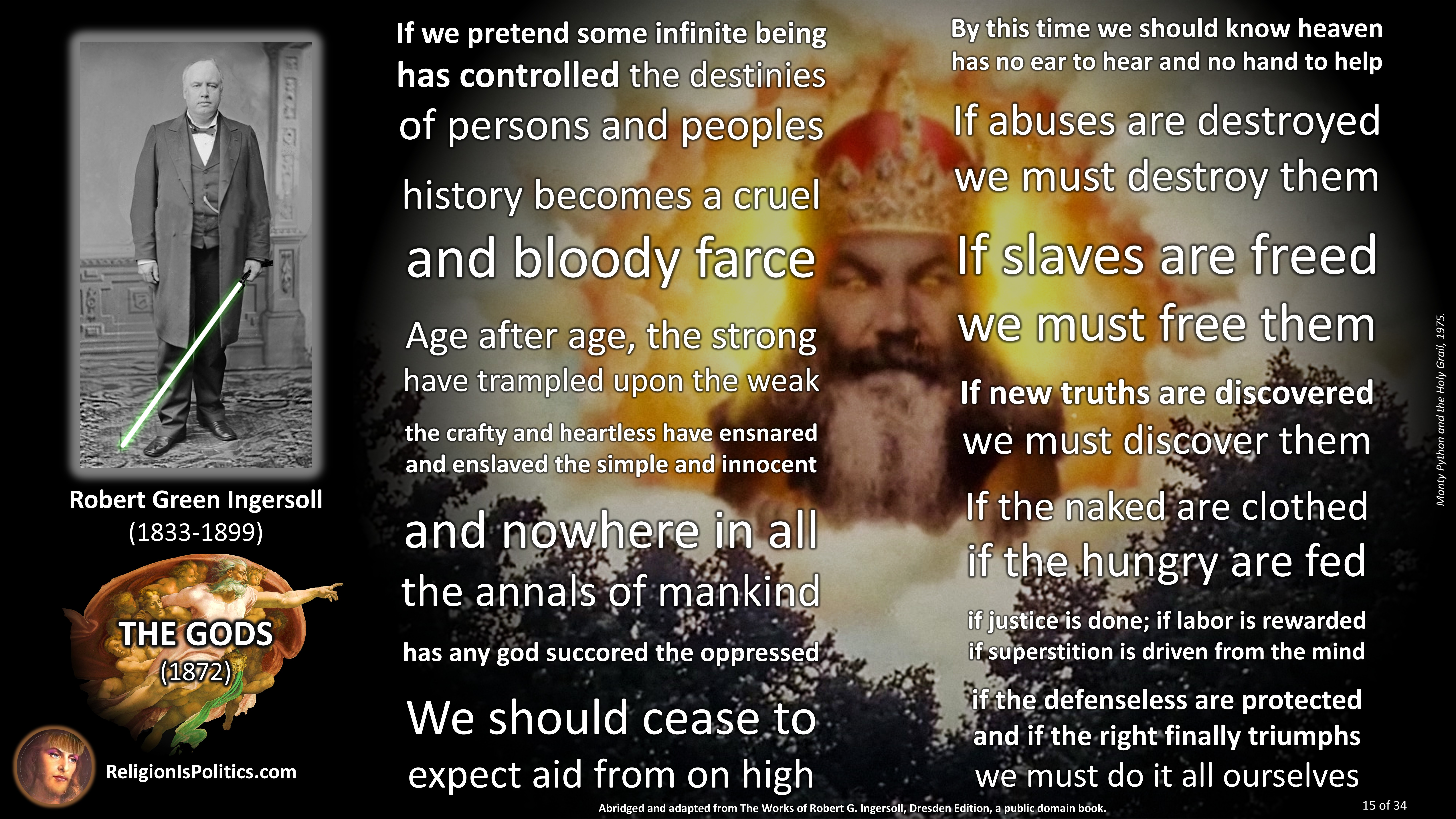
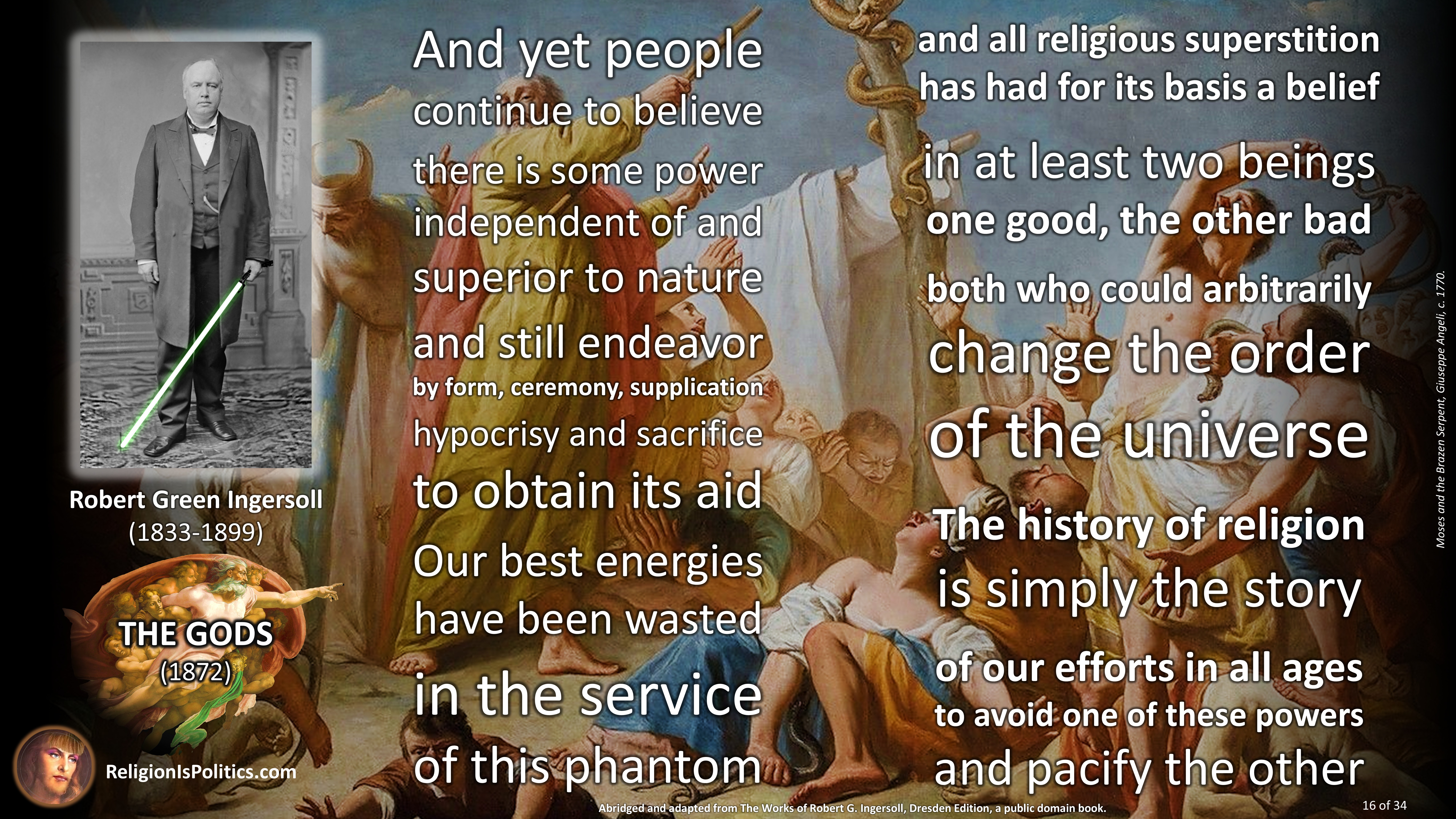
At my college, we all believed Jesus had died so we could live.
But science majors knew, as a matter of fact, dinosaurs did.
What do we get when we think we are the object of a cosmic master plan and we can only serve one master?
We lose the ability to hold competing propositions in tension. We lose the ability to manage cognitive dissonance.
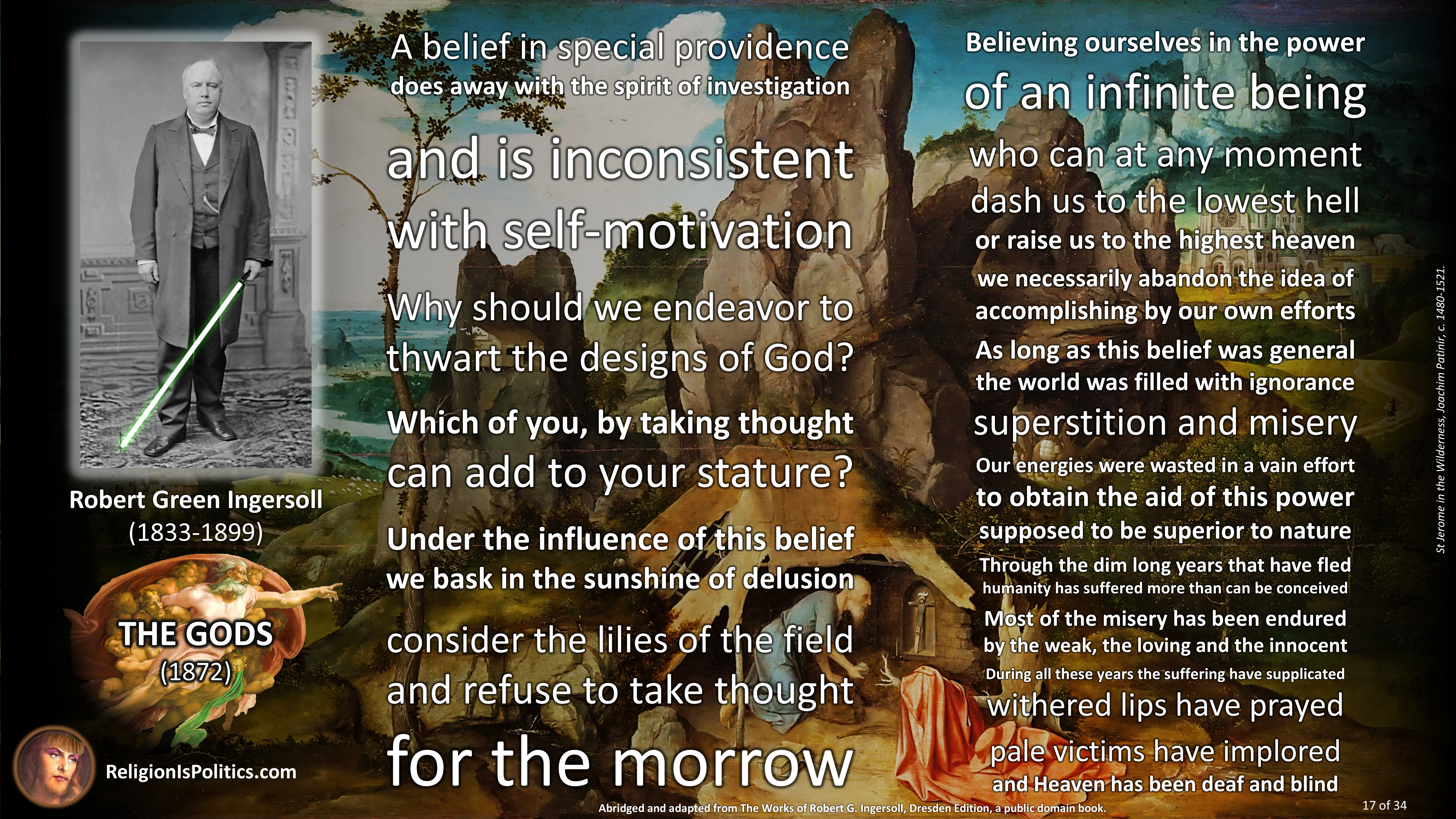
What do we get when we think we are the object of a master plan and we can only serve one master?
We take the biases of survivors as if they were good news, as if they were gospel.
And we take gospel as if it were unquestionable truth.
We remain naive, despite our education, and we hold ourselves accountable only to almighty power.
Thus we become unaccountable narcissists not only to other people but to ourselves as well.


What do we get when we think the universe is a dictatorship?
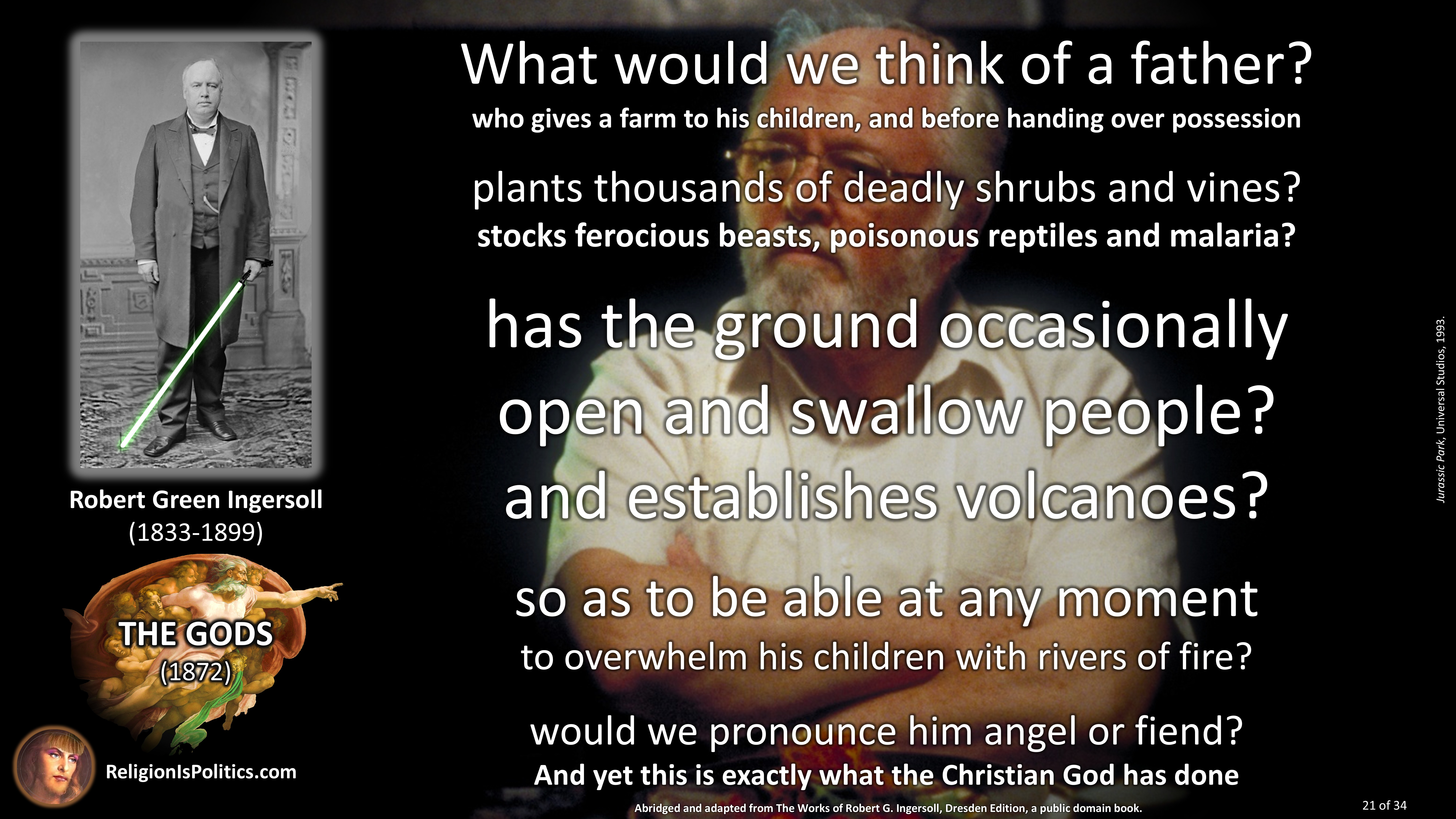
We think the dictator is a better CEO than John Hammond even when he’s infinitely worse.
And we give CEOs like John Hammond a pass on their greed and negligence.
We think gospel is prosperity and prosperity is gospel.
We think billionaires have more right to exist than we do.
What do we get when we integrate faith and learning?
I believe eventually we disintegrate one or the other.
The sons of gods were coming to earth to woo princesses in campfire stories across all cultures for thousands of years already before Genesis was ever written.
And yet their remains are not in museums today.
Dinosaurs are.

Did God create dinosaurs?
Or did dinosaurs inspire gods?
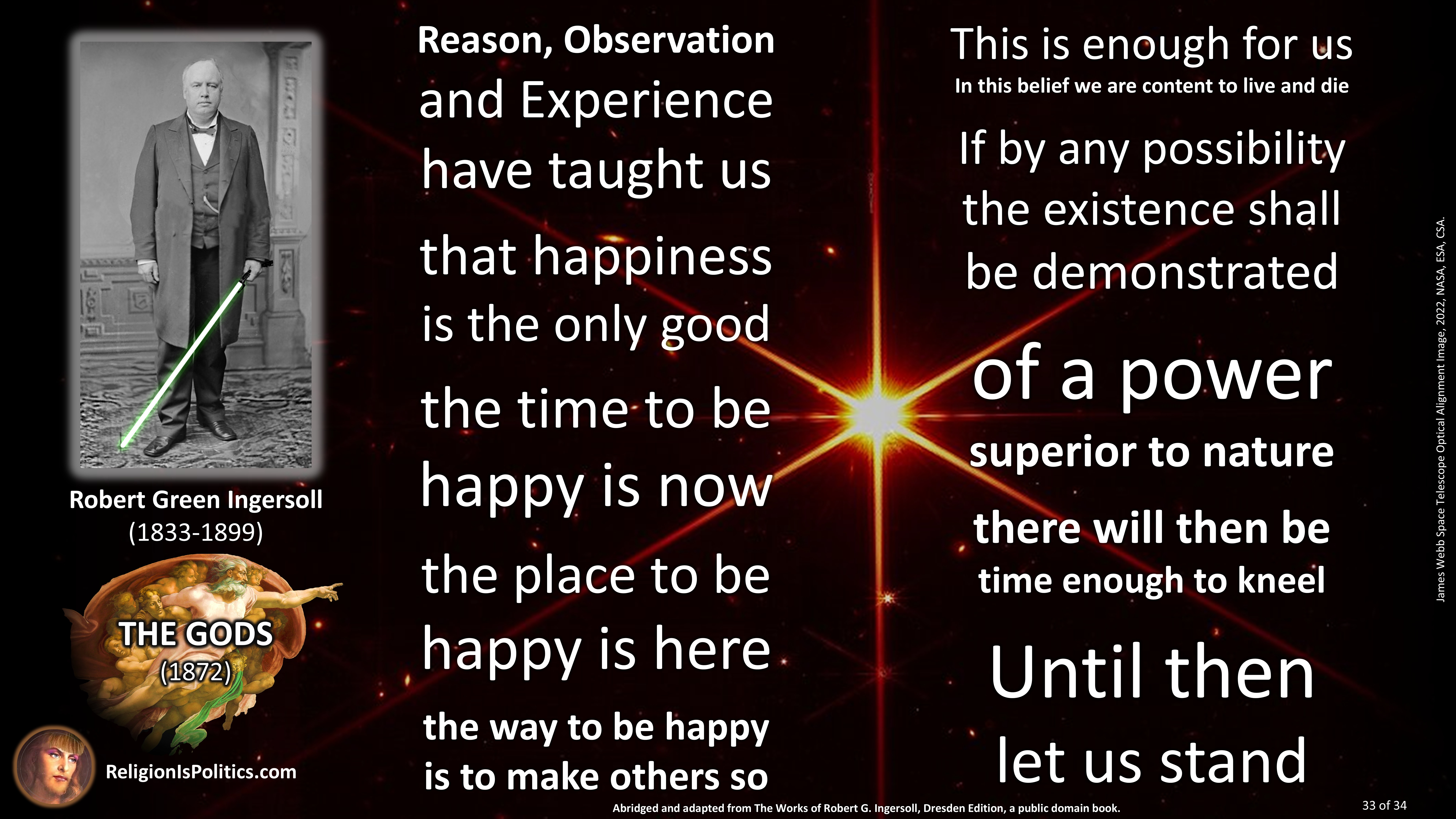
For thousands of years before Christ, heathens knew help came not from on high but from round about: from the earth and from one another.
In the years of his lordship, these truths, self-evident from nature, have been suppressed and intentionally forgotten.
Let us remember that we are all interconnected and interdependent and that harm to one affects us all.
I do not believe in belief.
I am satisfied that human rights will be limited as long as people believe they are the prerogative of almighty power.
I believe we had better love humanity than pin our hopes and fears on superior beings.
Even those we know are only human.

Do you think students
should read this speech?
Background art:
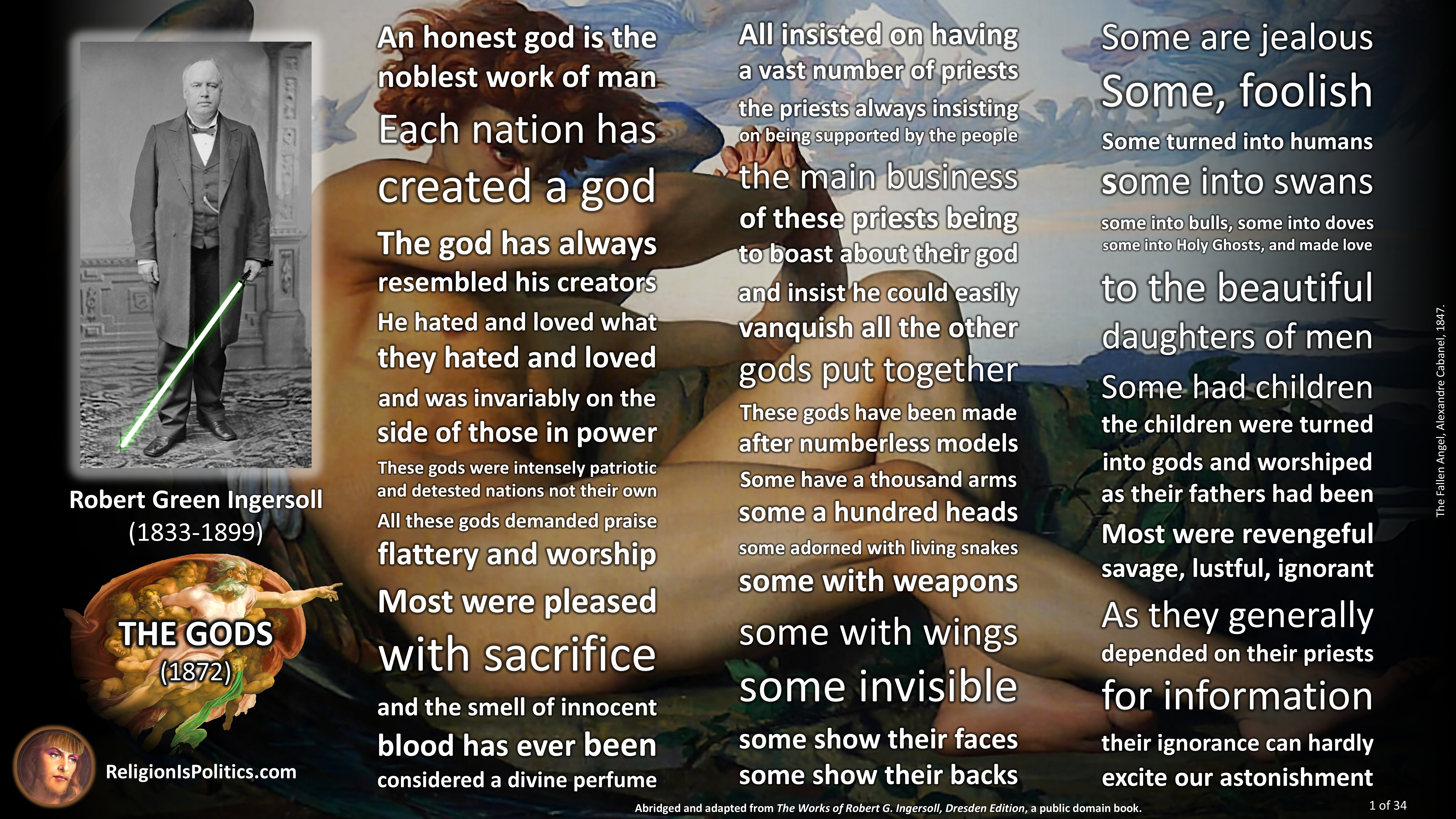
- The Fallen Angel, Alexandre Cabanel, 1847.
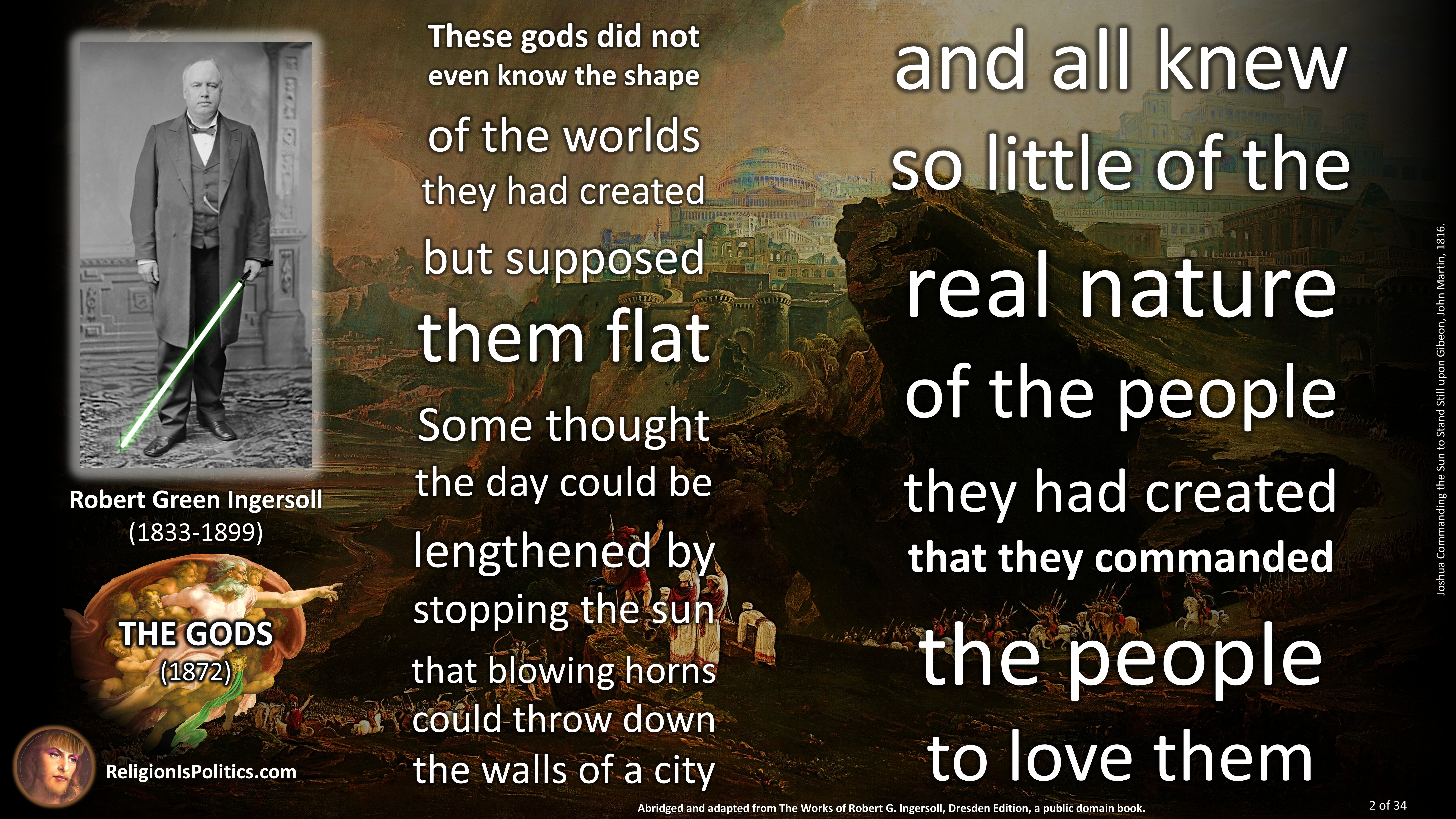
- Joshua Commanding the Sun to Stand Still upon Gibeon, John Martin, 1816.
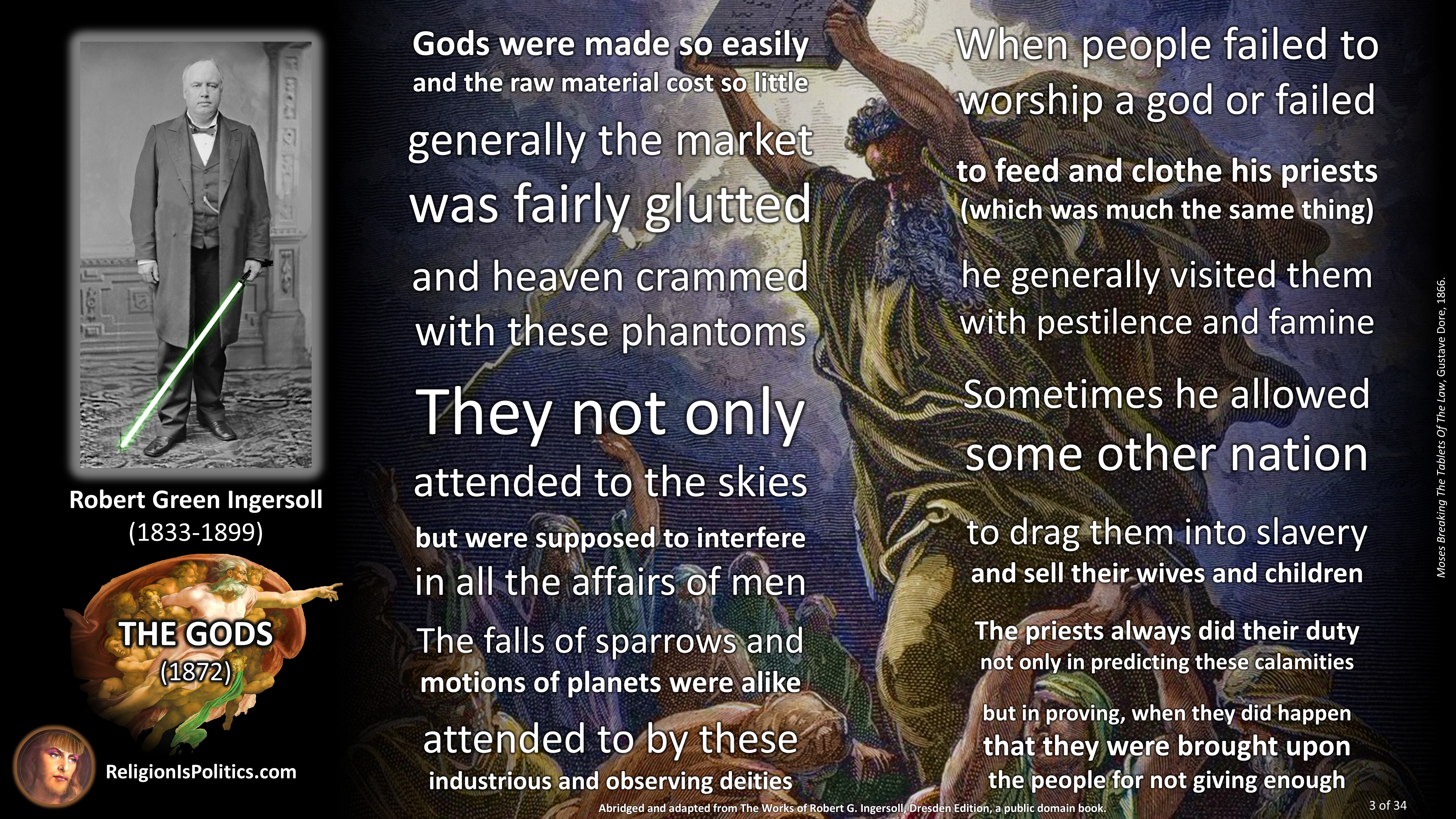
- Moses Breaking The Tablets Of The Law, Gustave Dore, 1866.
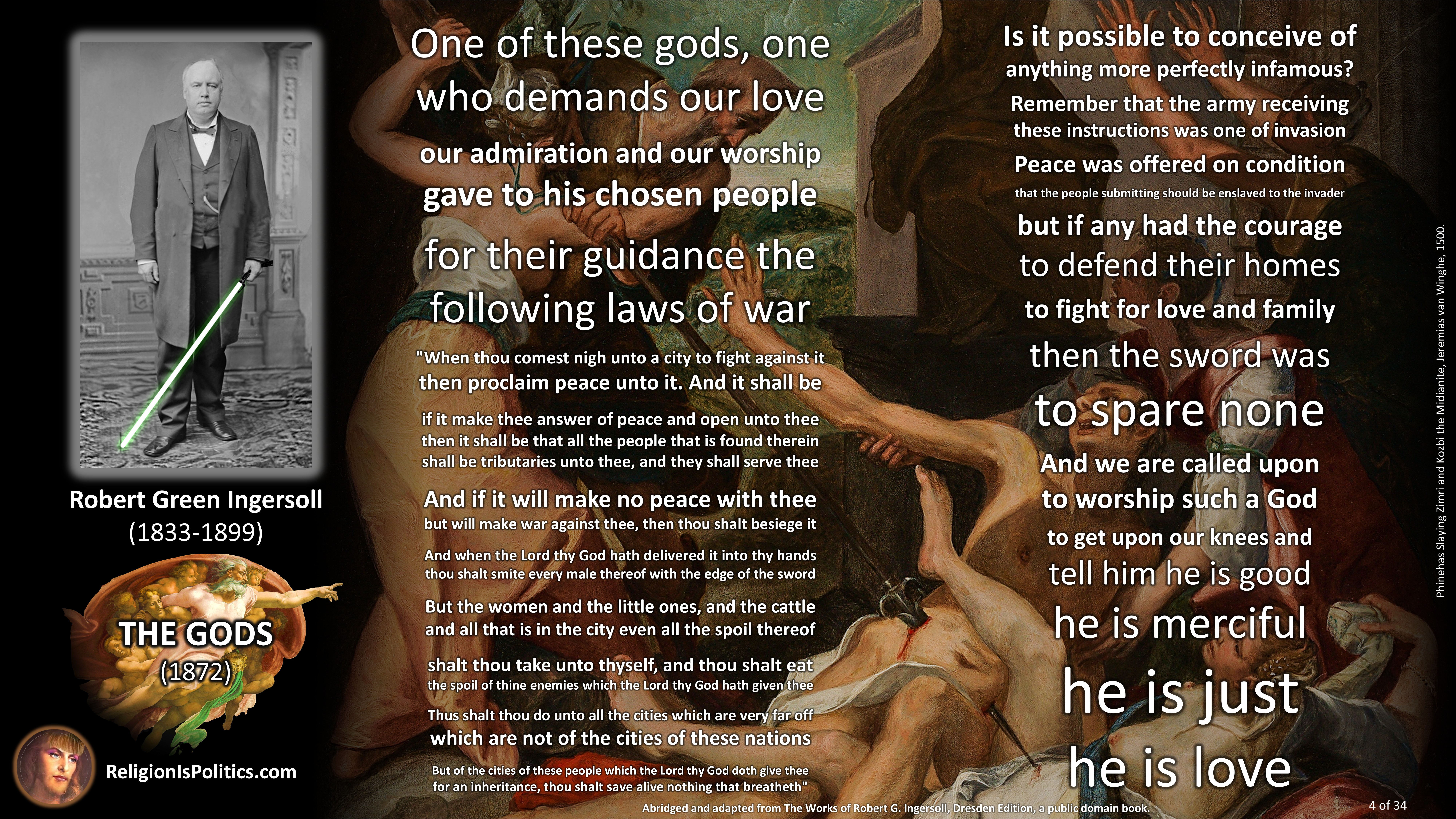
- Phinehas Slaying Zimri and Kozbi the Midianite, Jeremias van Winghe, 1500.
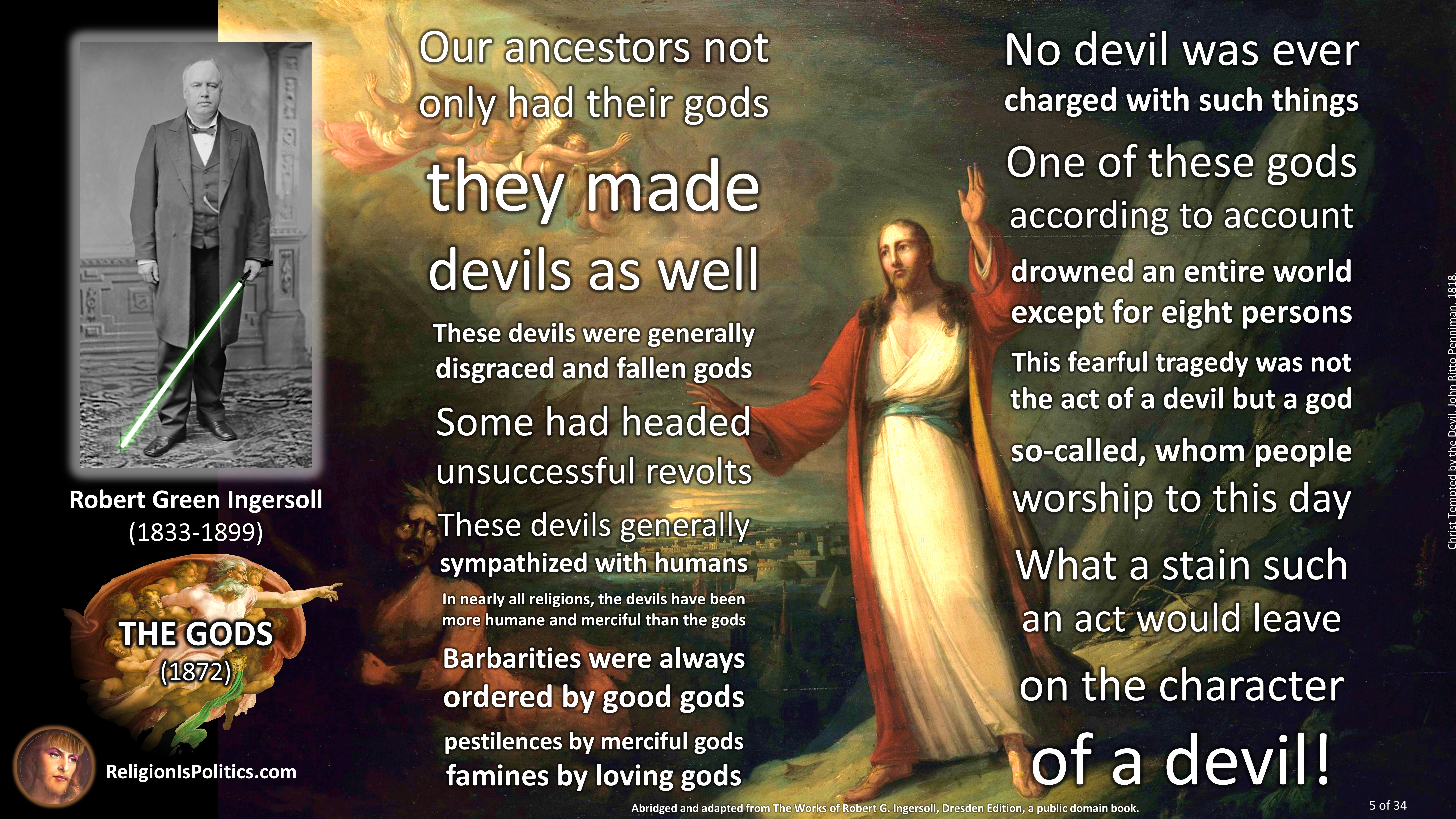
- Christ Tempted by the Devil, John Ritto Penniman, 1818.
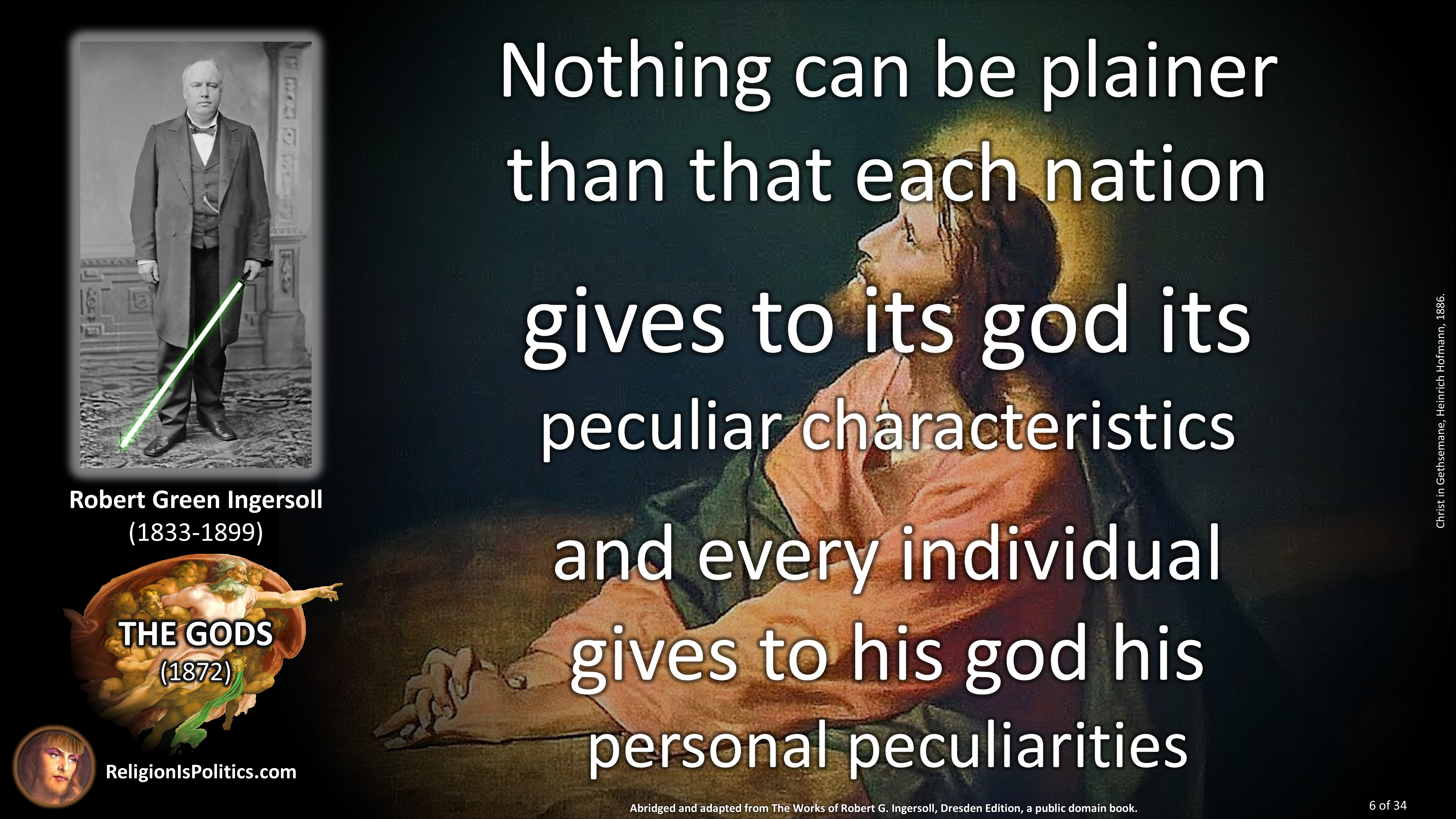
- Christ in Gethsemane, Heinrich Hofmann, 1886.
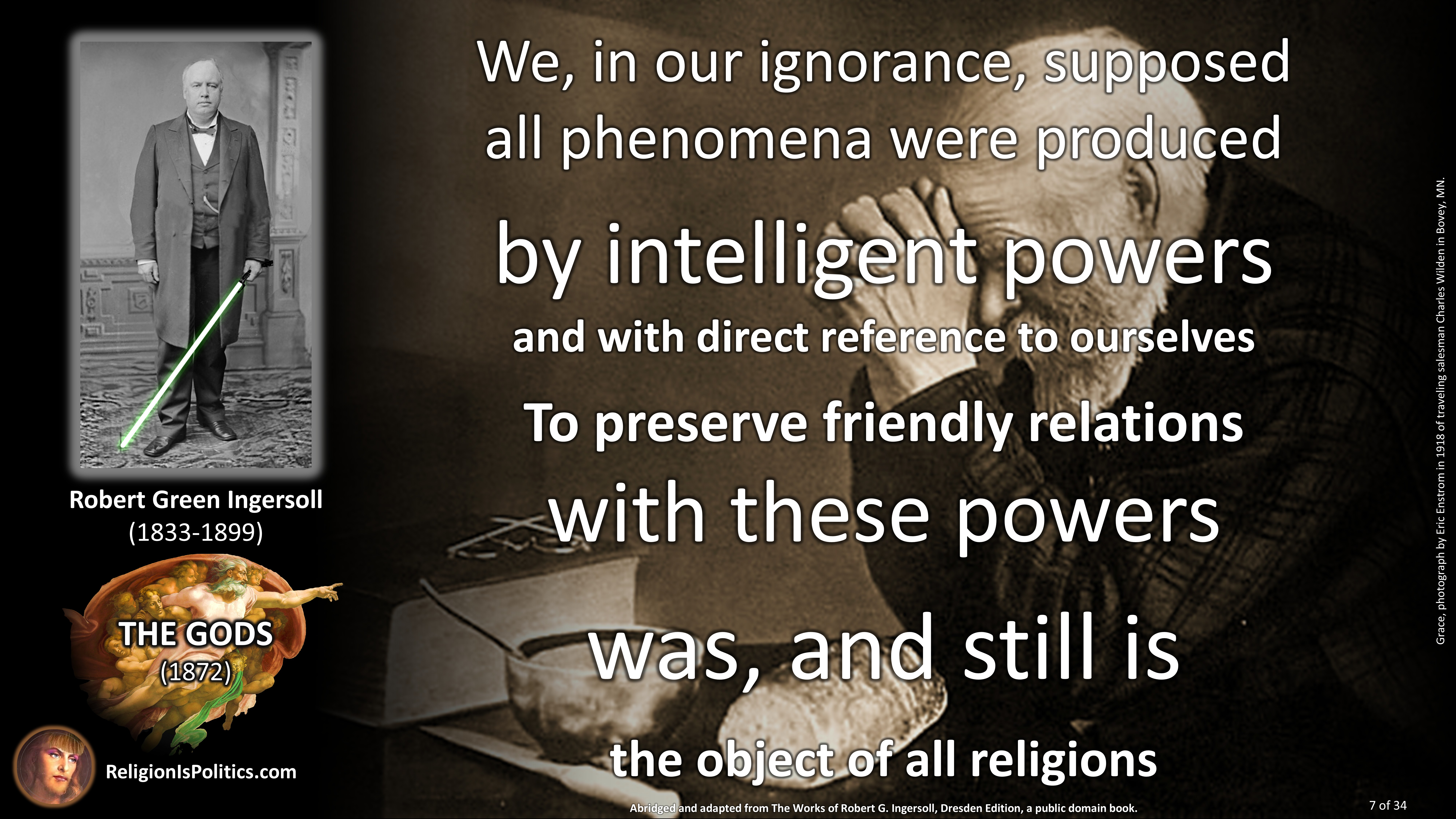
- Grace, photograph by Eric Enstrom in 1918 of traveling salesman Charles Wilden in Bovey, MN.
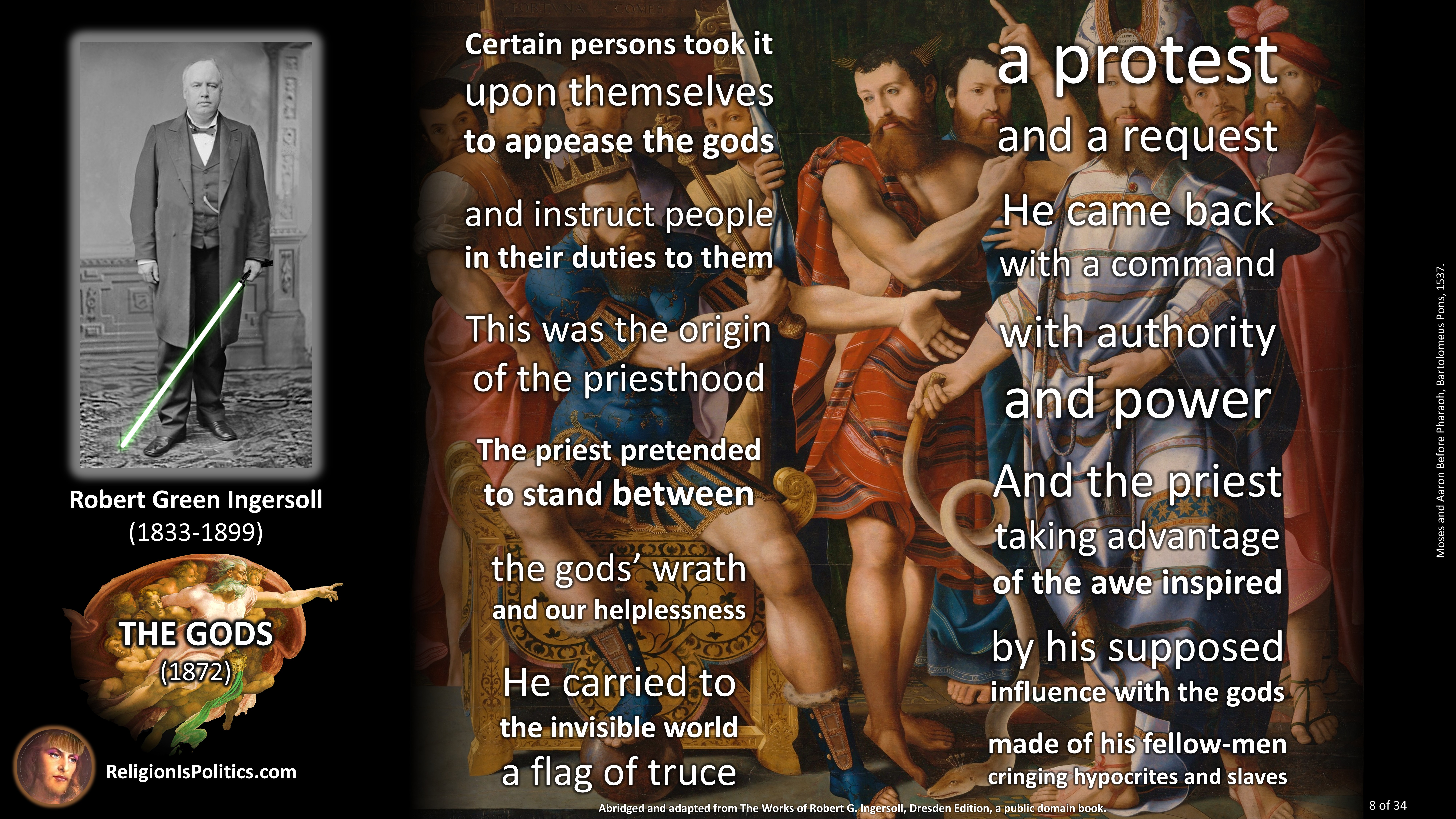
- Moses and Aaron Before Pharaoh, Bartolomeus Pons, 1537.
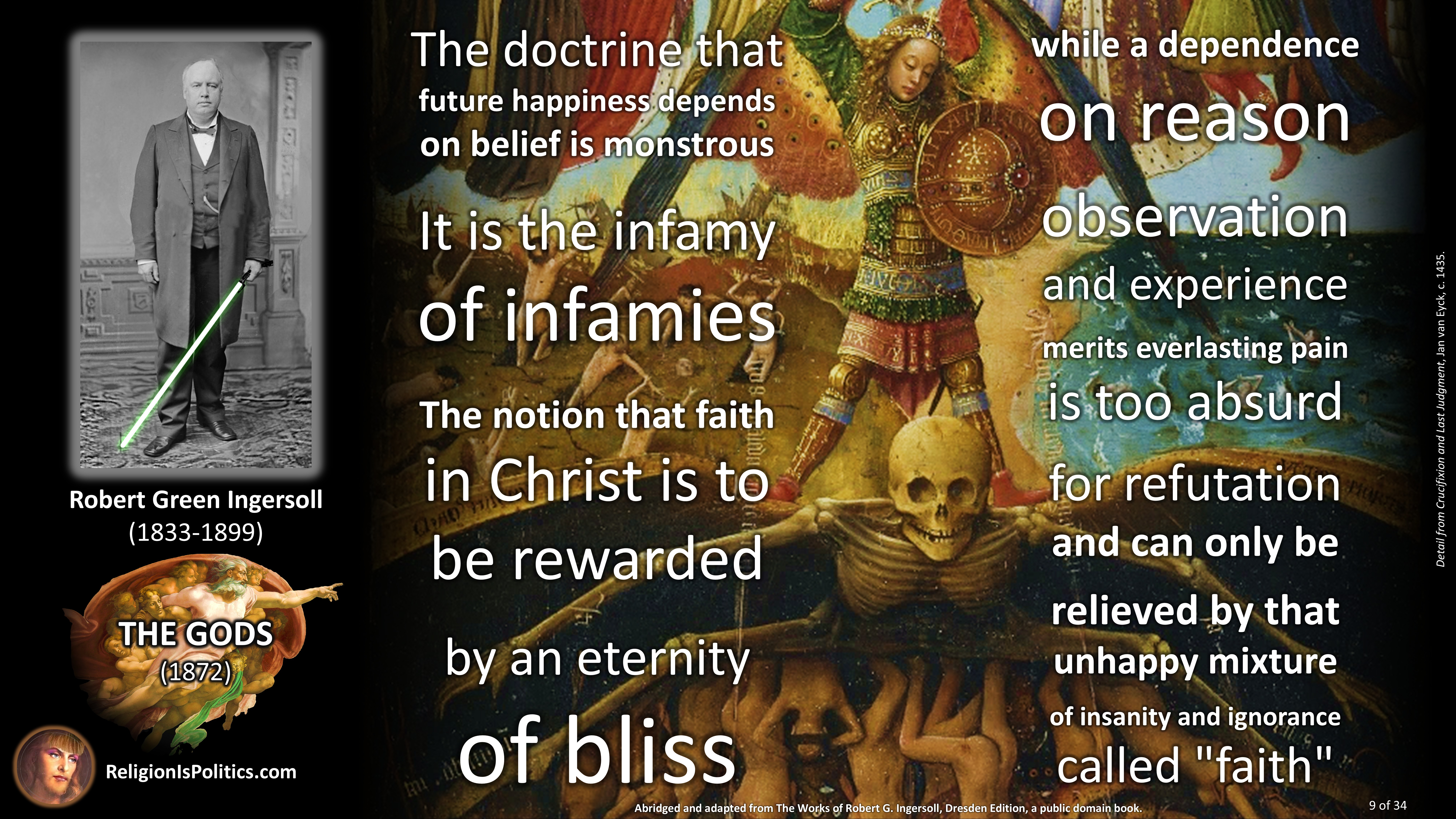
- Detail from Crucifixion and Last Judgment, Jan van Eyck, c. 1435.
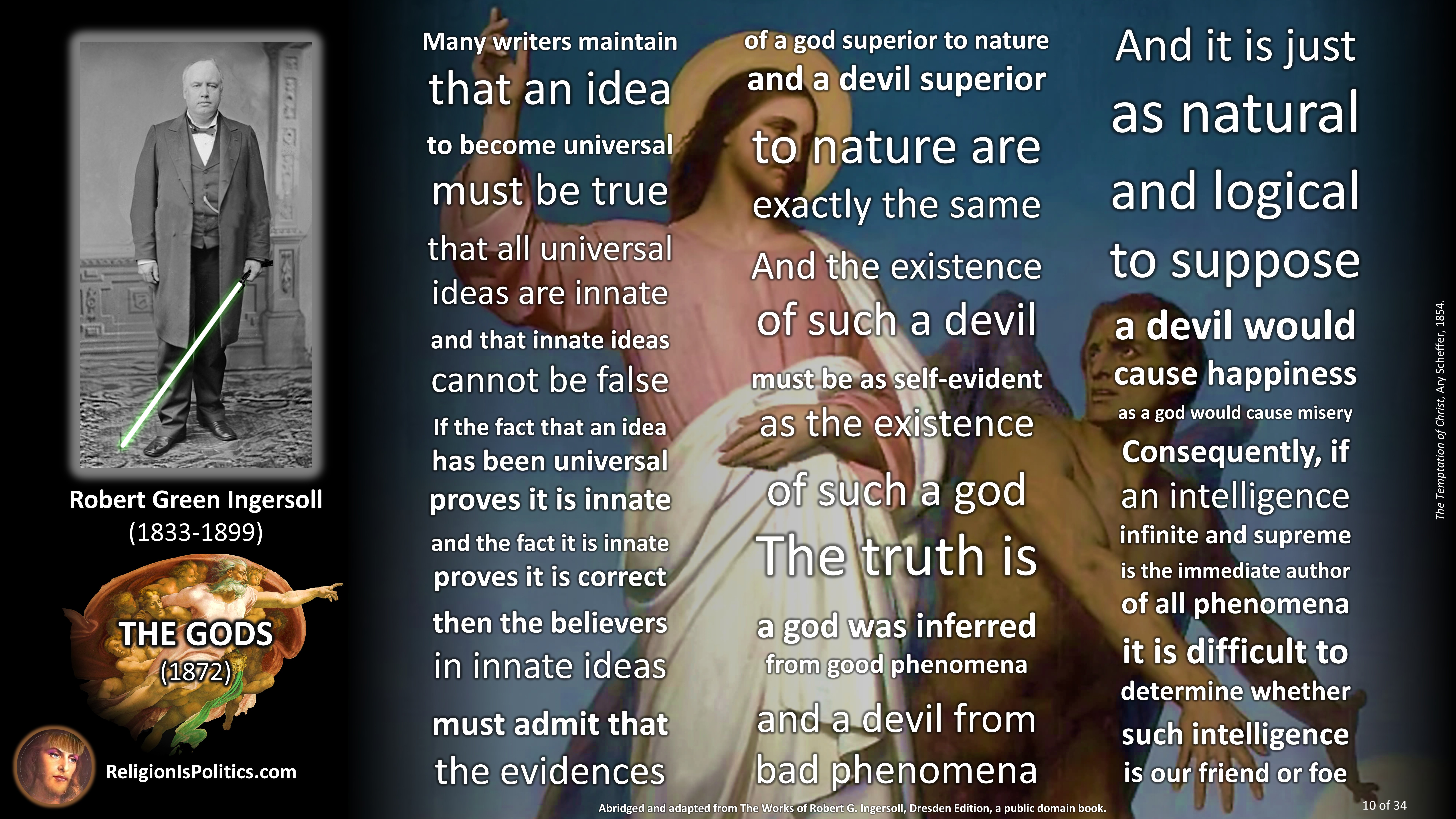
- The Temptation of Christ, Ary Scheffer, 1854.
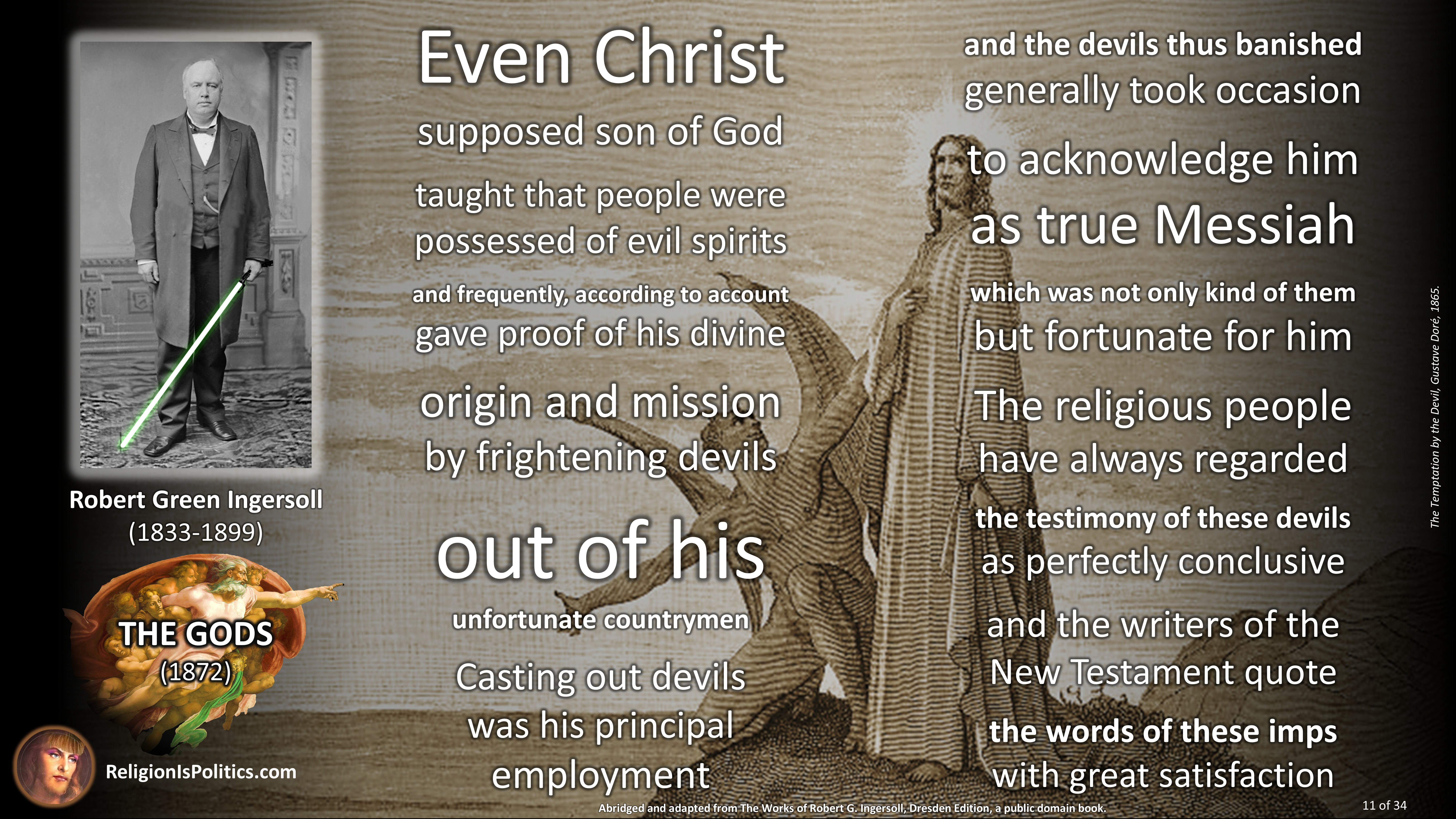
- The Temptation by the Devil, Gustave Doré, 1865.
- Bonaparte Visiting the Plague Victims of Jaffa, Antoine-Jean Gros, 1804.
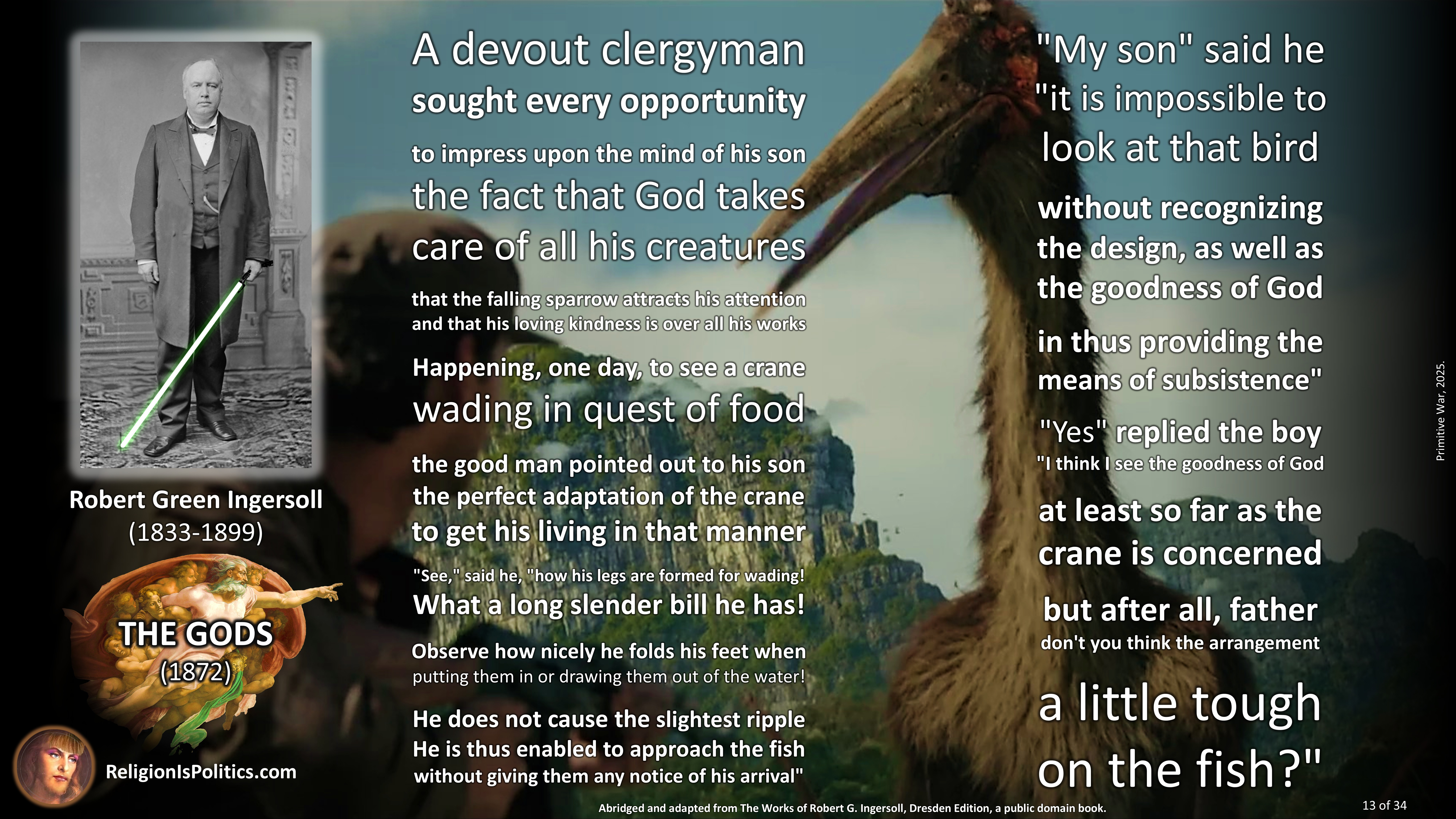
- Primitive War, 2025.
- T. rex, Edmontosaurus, K-T Impact; Raul Martin, 2021.
- Monty Python and the Holy Grail, 1995.
- Moses and the Brazen Serpent, Giuseppe Angeli, c. 1770.
- St Jerome in the Wilderness, Joachim Patinir, c. 1480-1521.
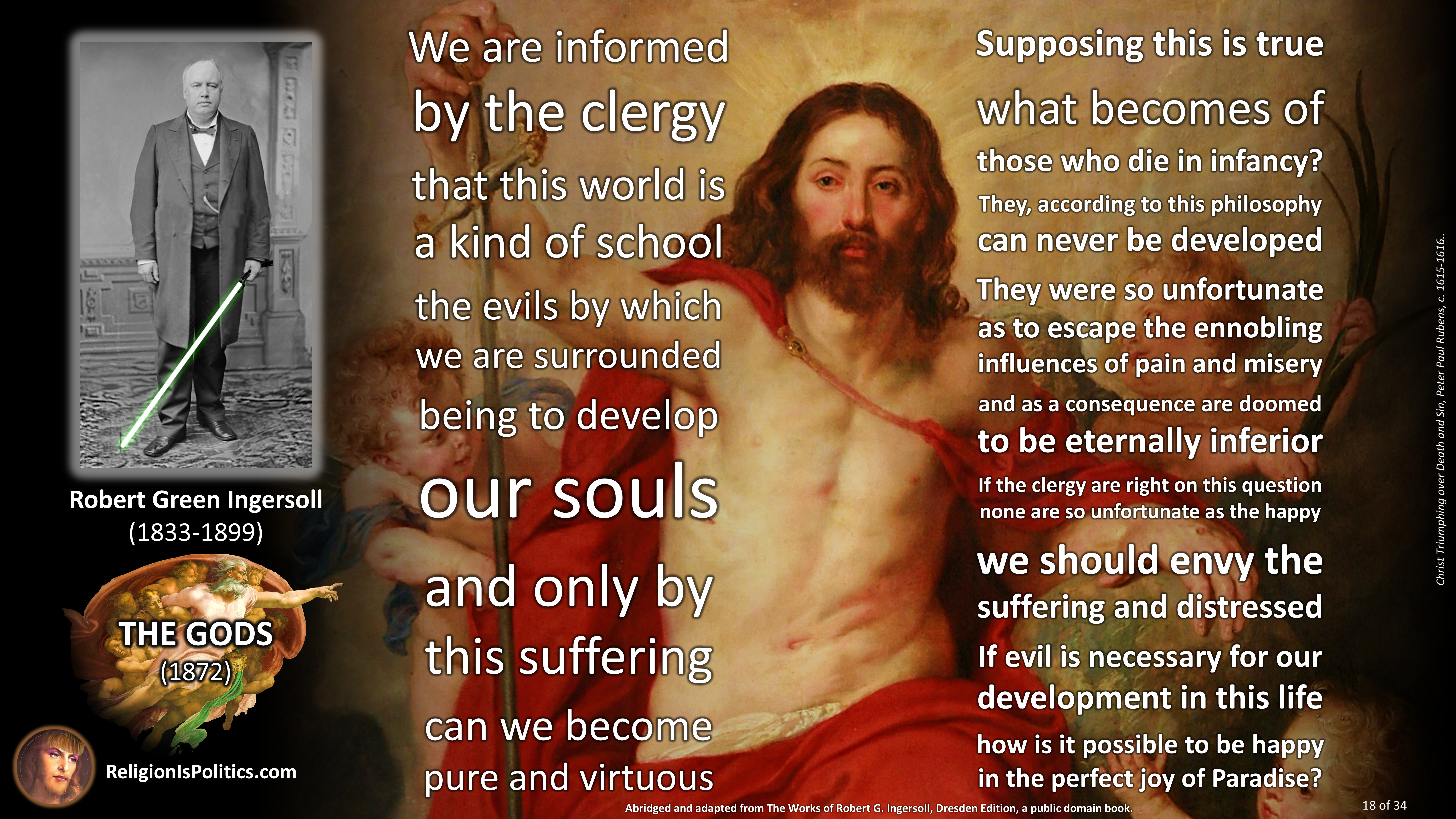
- Christ triumphing over Death and Sin, Peter Paul Rubens, c. 1615-16.
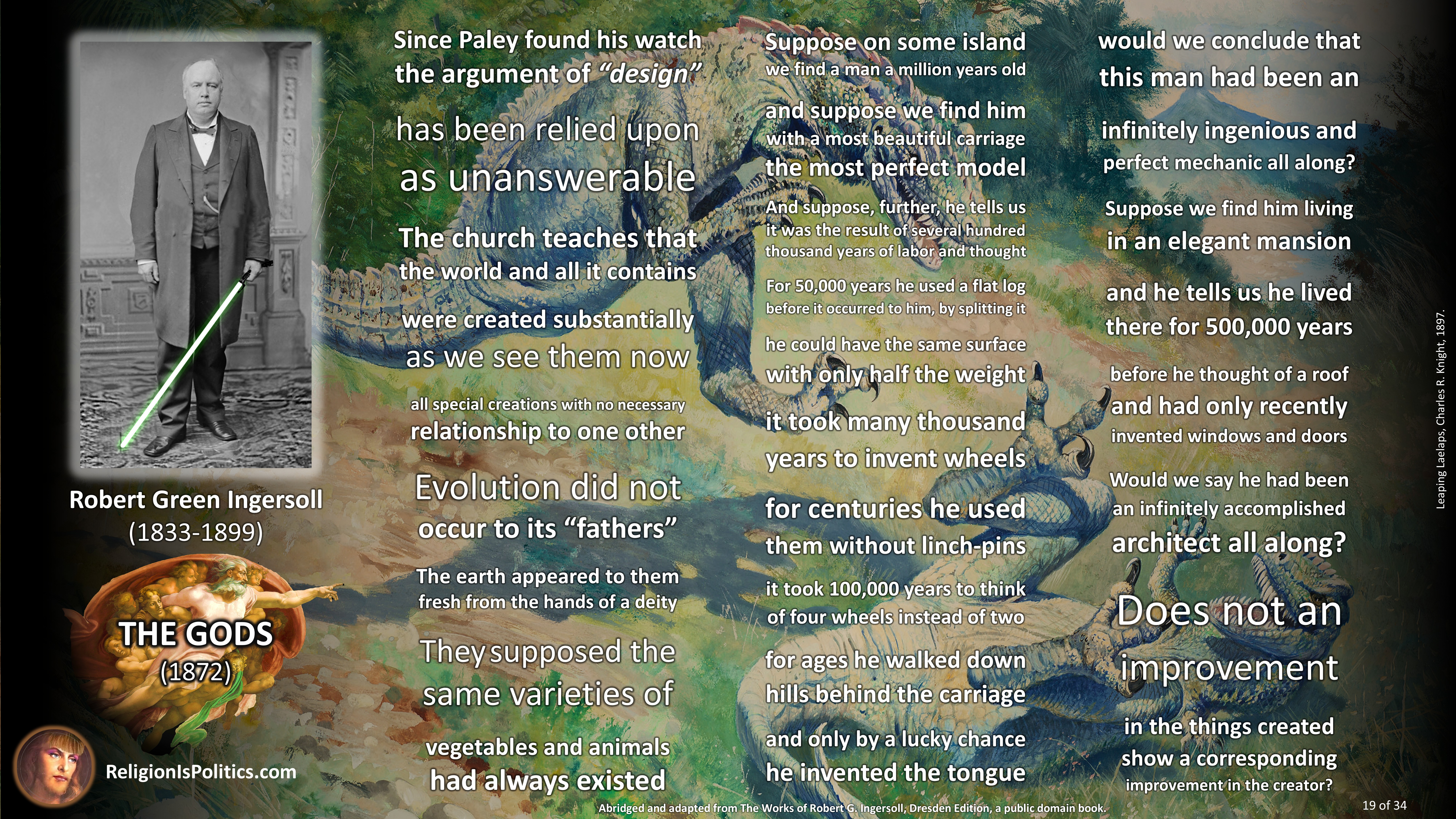
- Leaping Laelaps, Charles R. Knight, 1897.
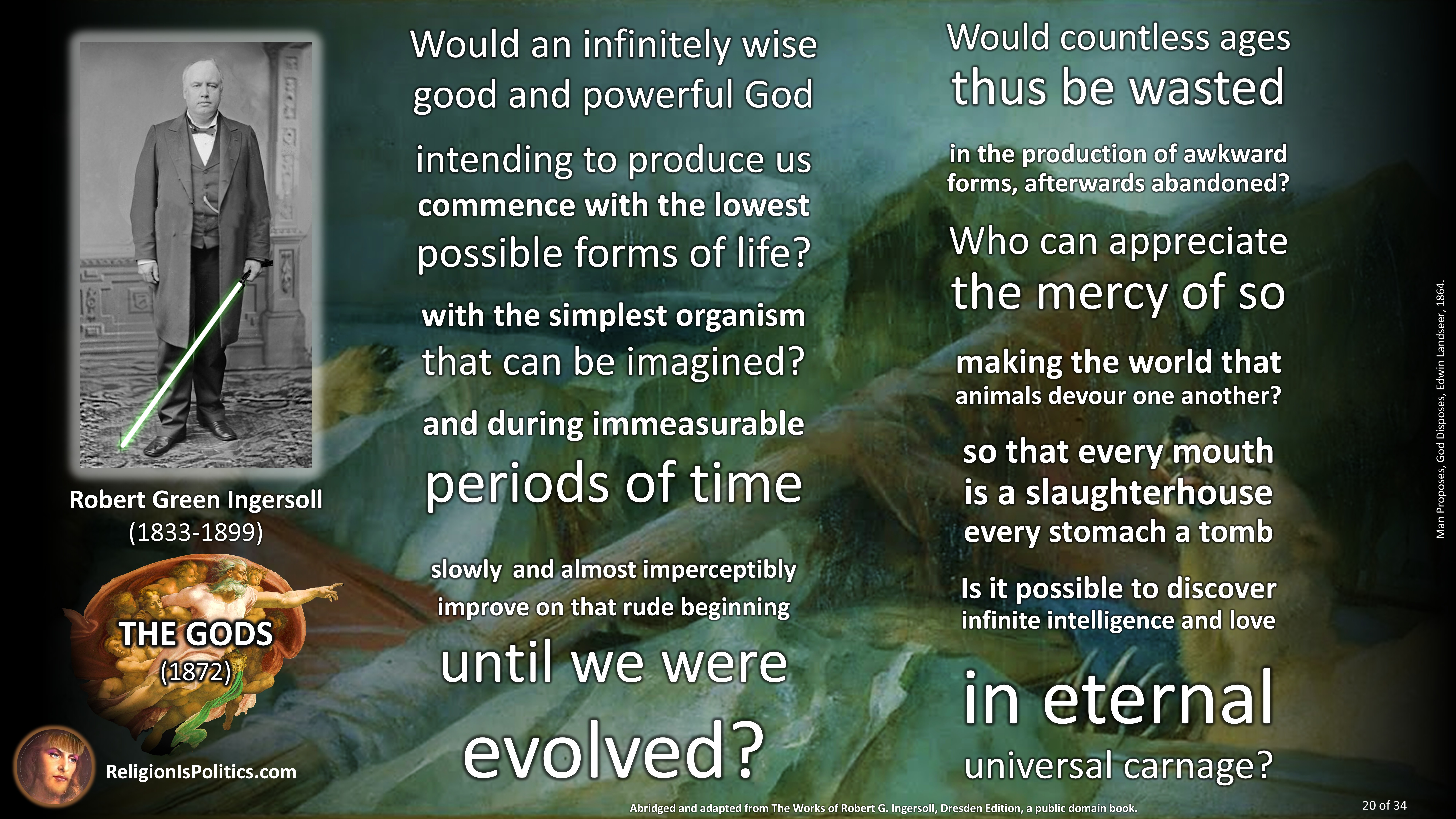
- Man Proposes, God Disposes, Edwin Landseer, 1864.
- Jurassic Park, Universal Studios, 1993.
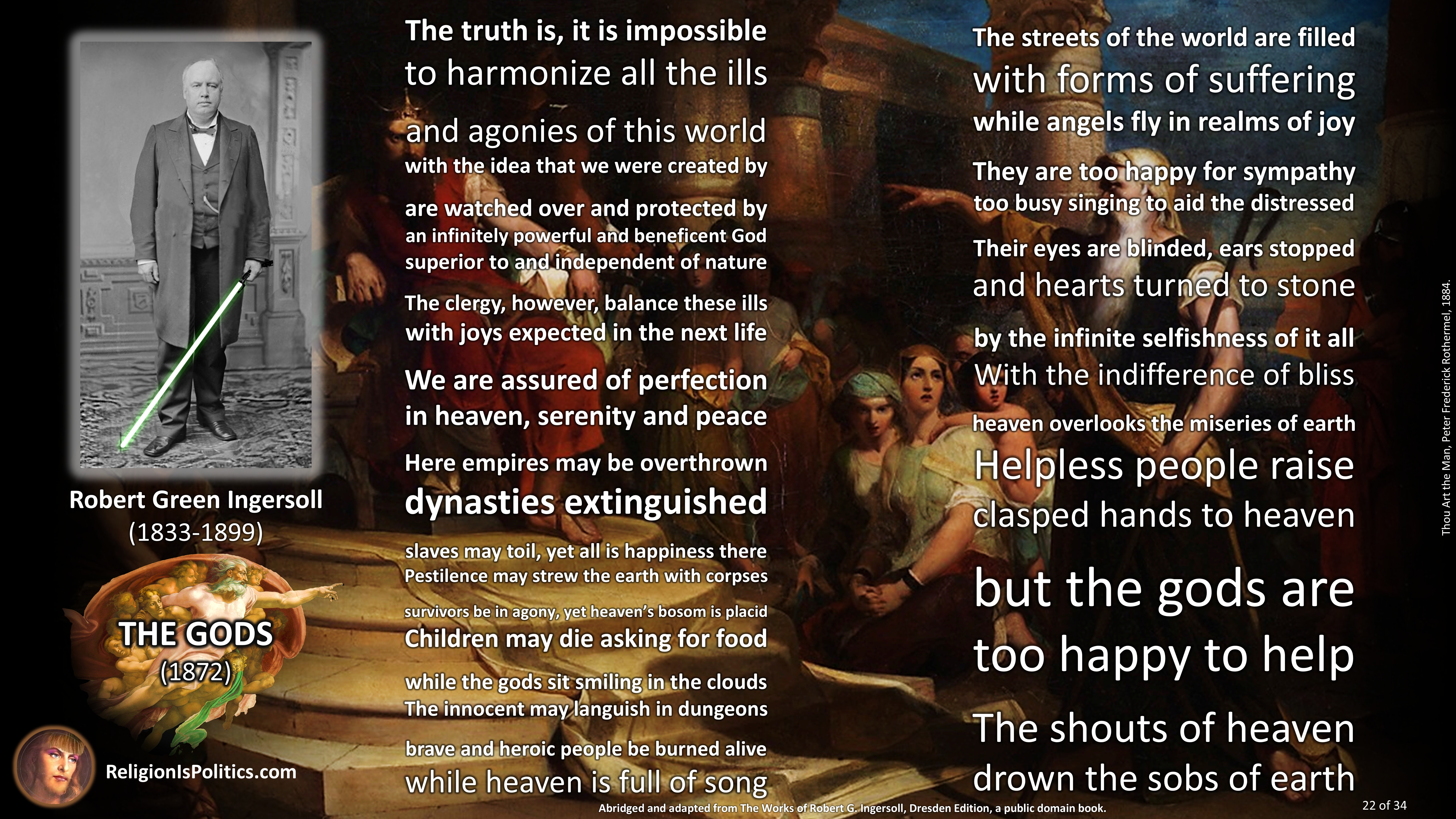
- Thou Art the Man, Peter Frederick Rothermel, 1884.
- Colossi, Rudolf Hima, 2022.
- Jurassic Park, Universal Studios, 1993.
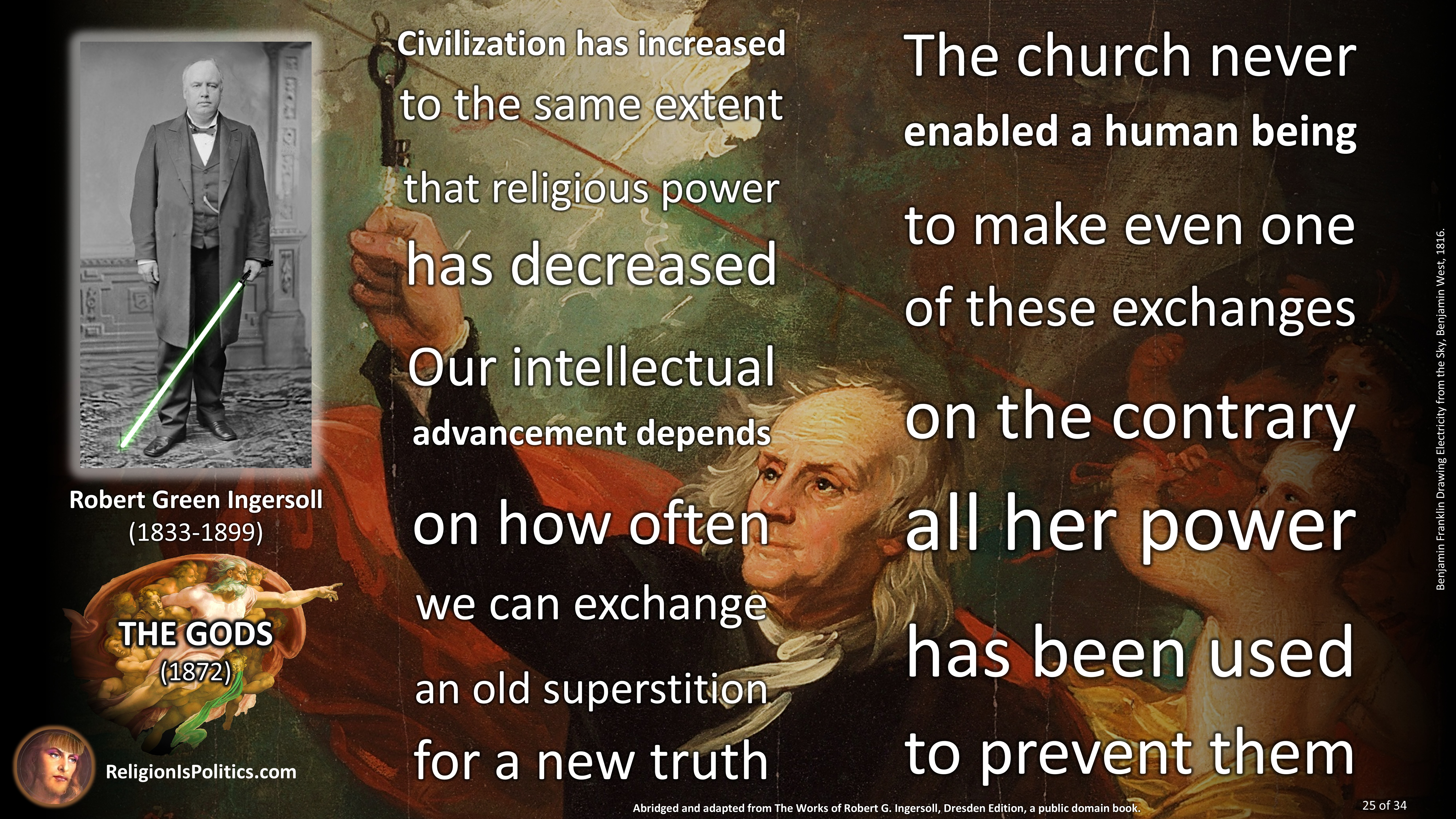
- Benjamin Franklin Drawing Electricity from the Sky, Benjamin West, 1816.
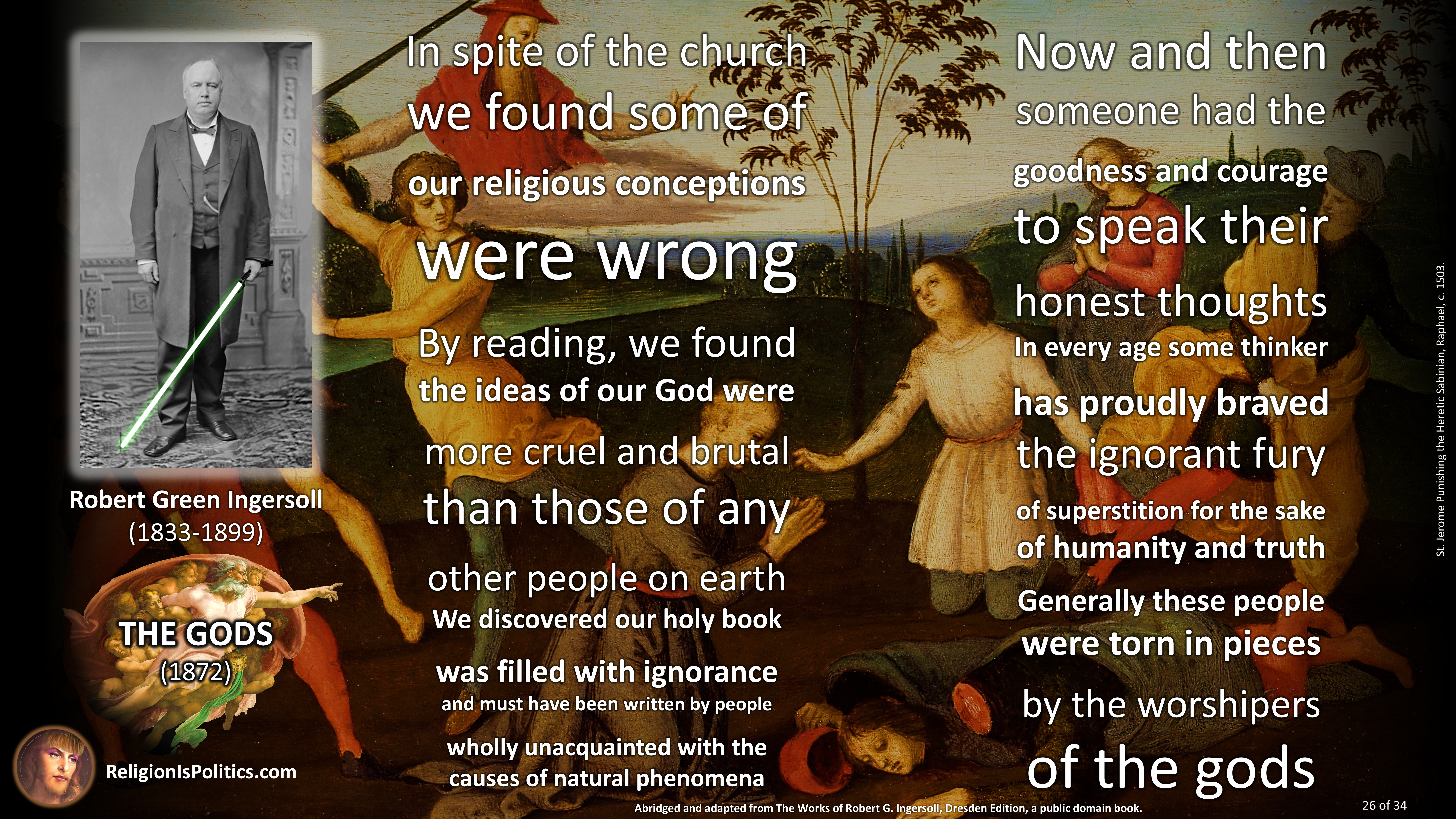
- St. Jerome Punishing the Heretic Sabinian, Raphael, c. 1503.
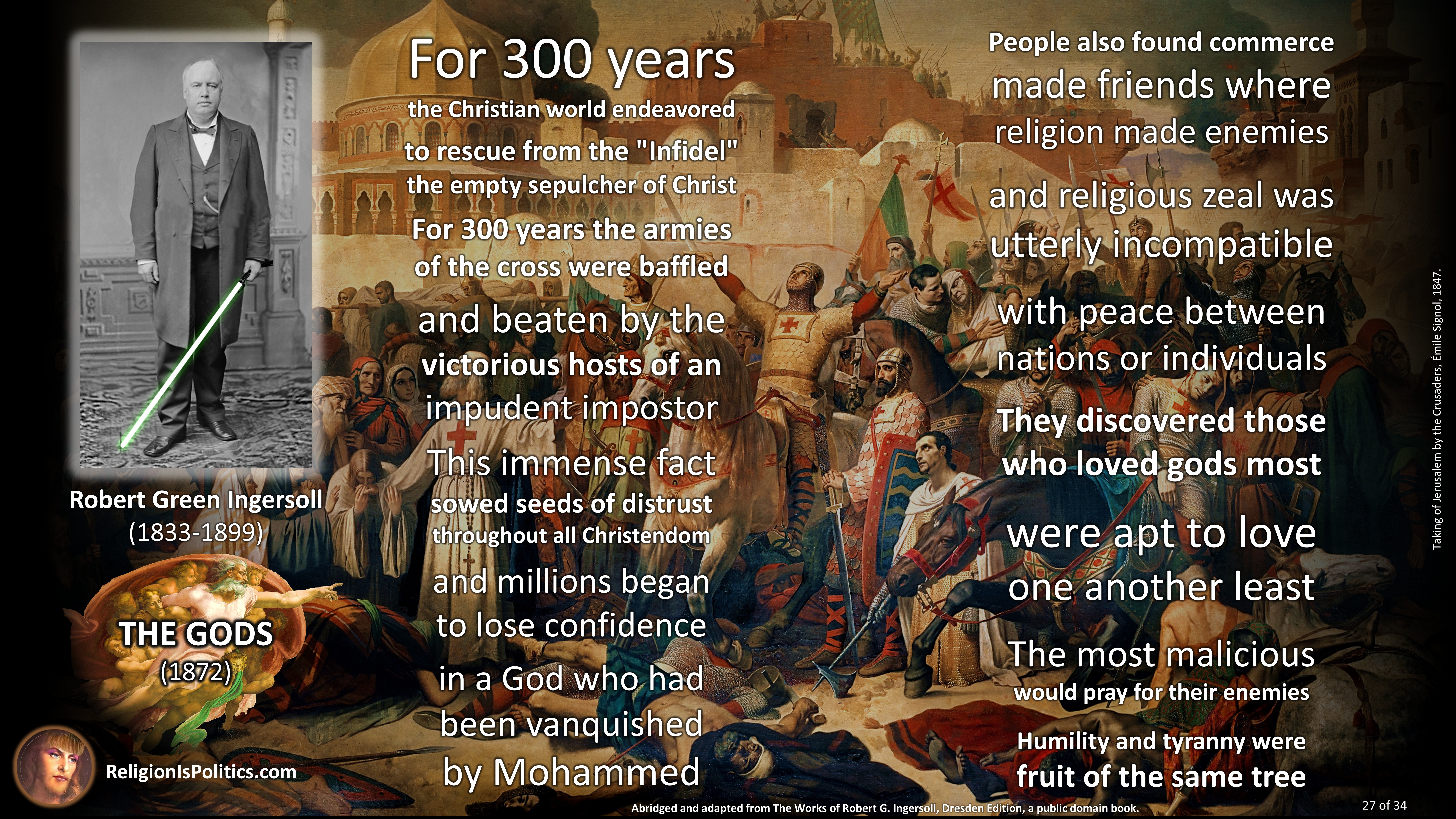
- Taking of Jerusalem by the Crusaders, Émile Signol, 1847.
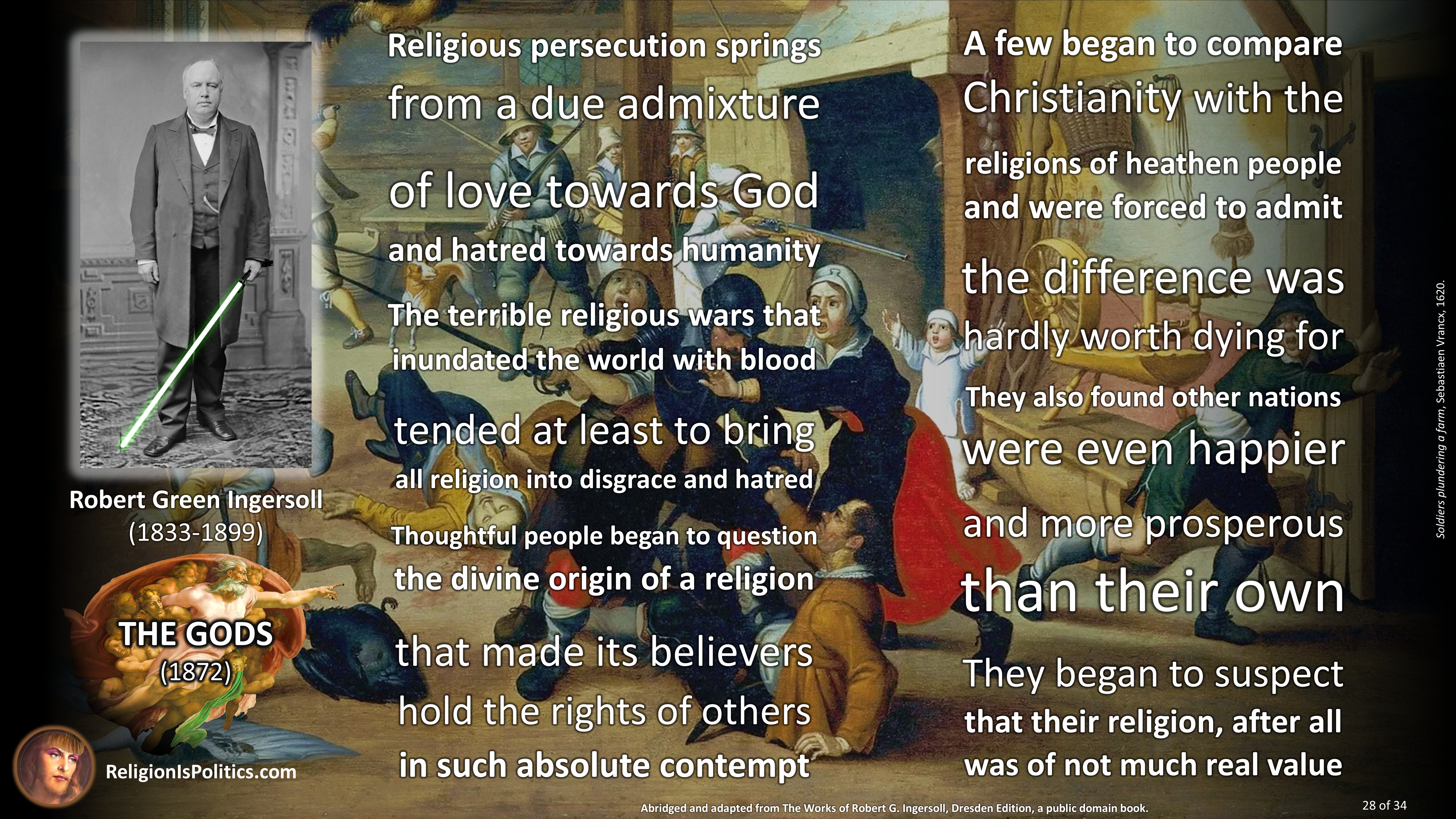
- Soldiers plundering a farm, Sebastiaen Vrancx, 1620.
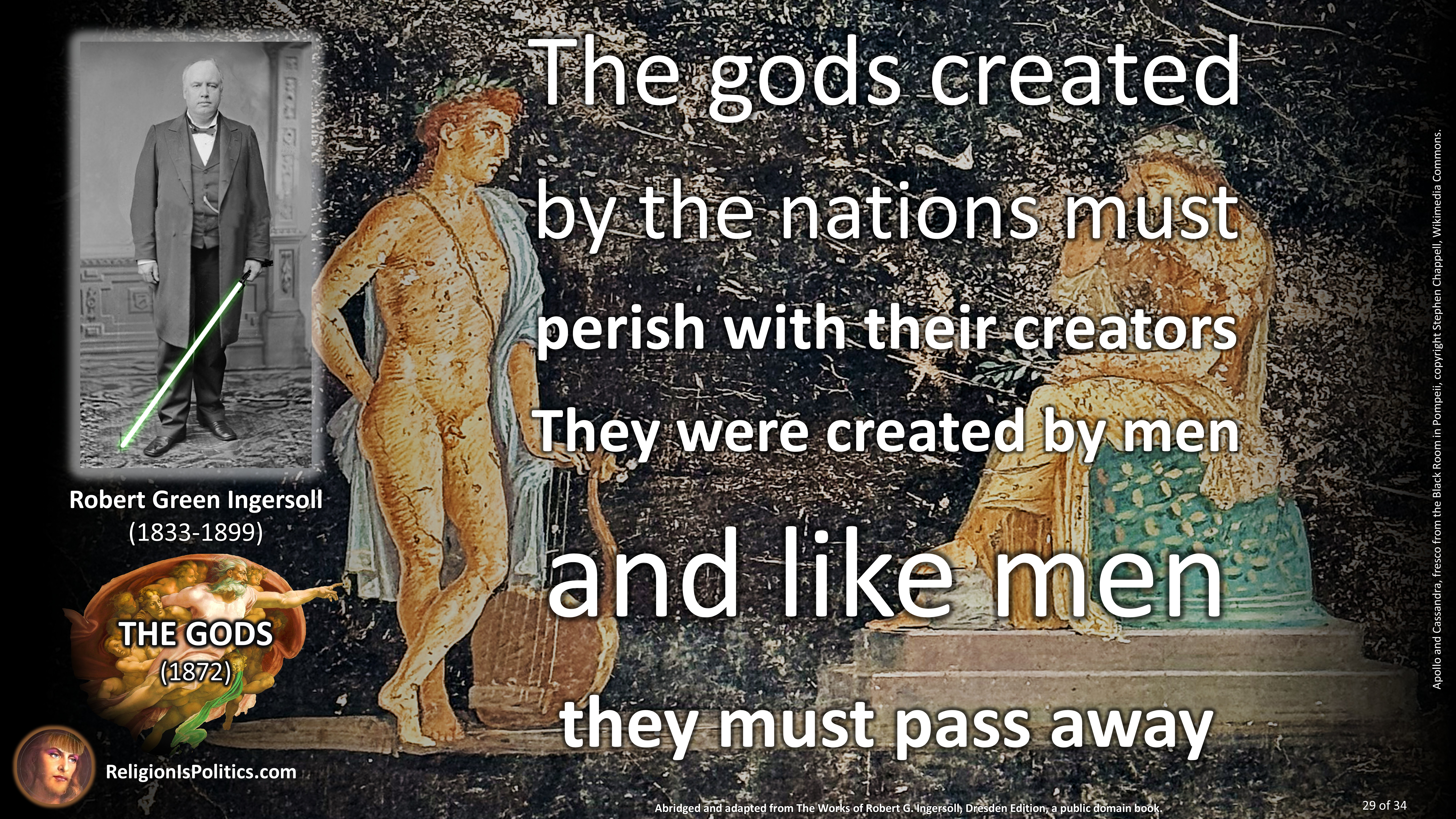
- Apollo and Cassandra, fresco from the Black Room in Pompeii, copyright Stephen Chappell, Wikimedia Commons.
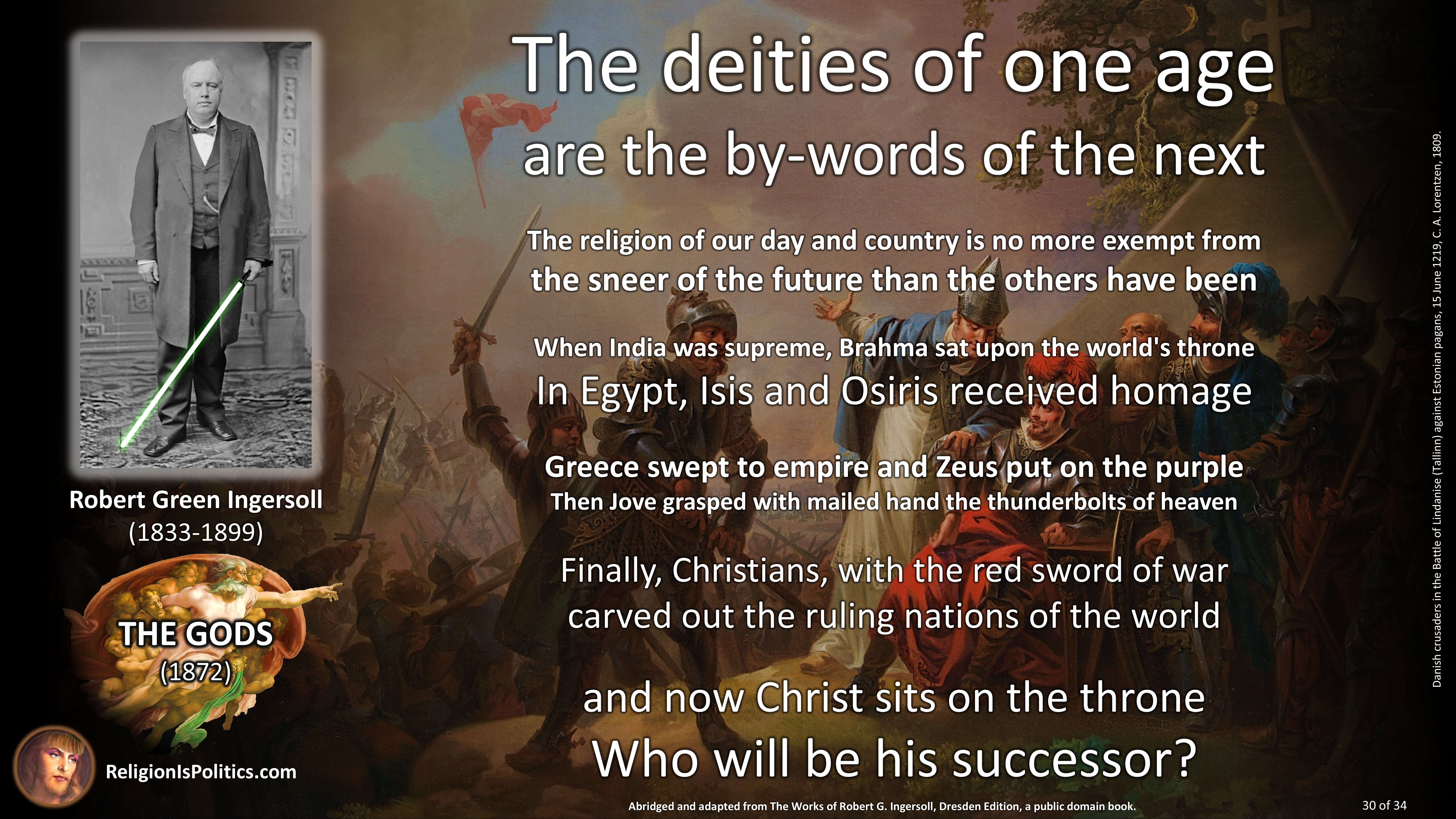
- Danish crusaders in the Battle of Lindanise (Tallinn) against Estonian pagans, 15 June 1219, C. A. Lorentzen, 1809.
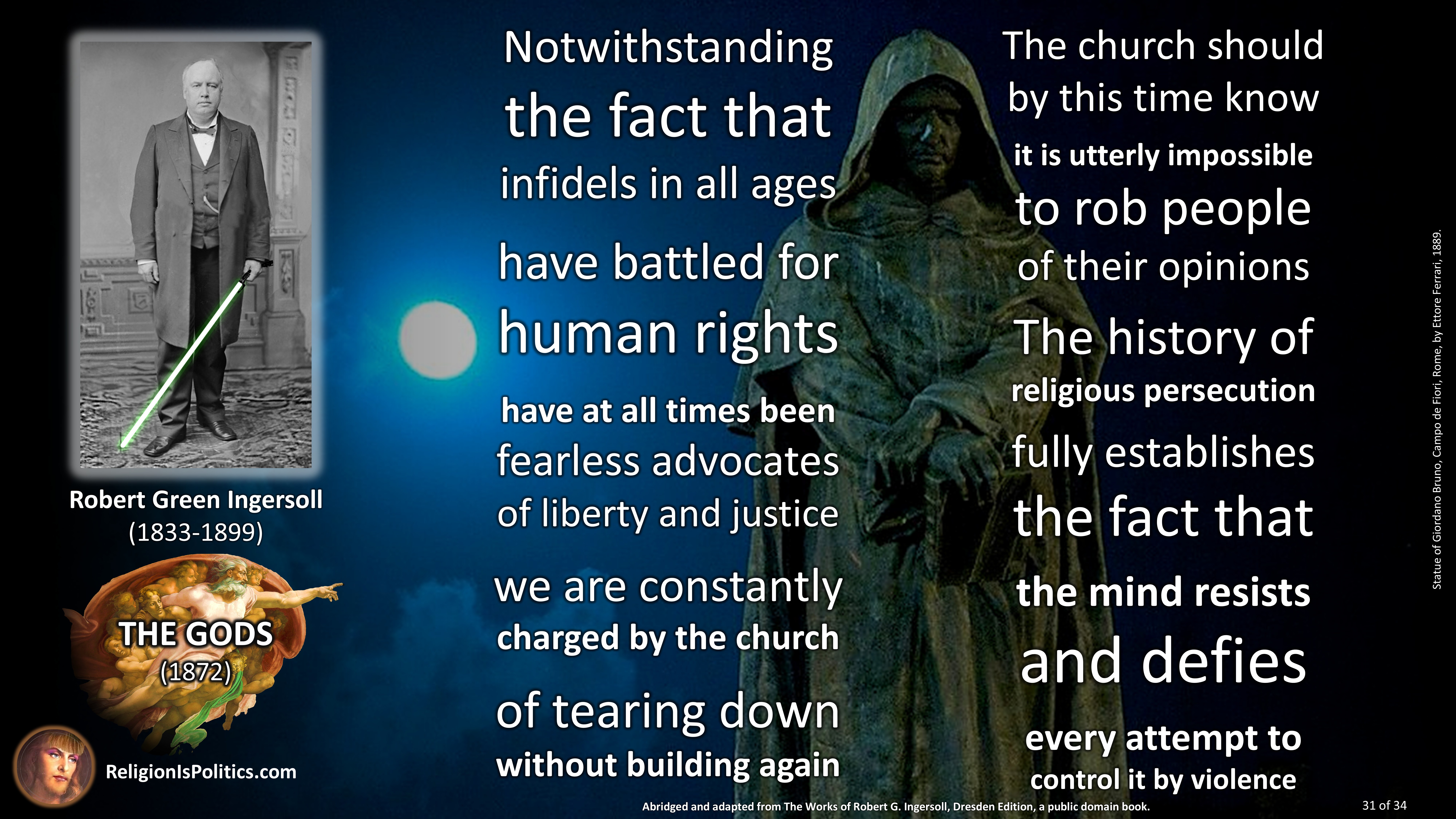
- Statue of Giordano Bruno, Campo de Fiori, Rome, by Ettore Ferrari, 1889.
- The Death of Socrates, Jacques-Louis David, 1787.
- James Webb Space Telescope Optical Alignment Image, 2022, NASA, ESA, CSA.
- The Sorrow of Telemachus, Angelica Kauffmann, 1783.
 Religion is politics about the unknown