Some Reasons Why
Why atheism?
Here are some reasons why, given by Robert G. Ingersoll in 1881.
How do they hold up?
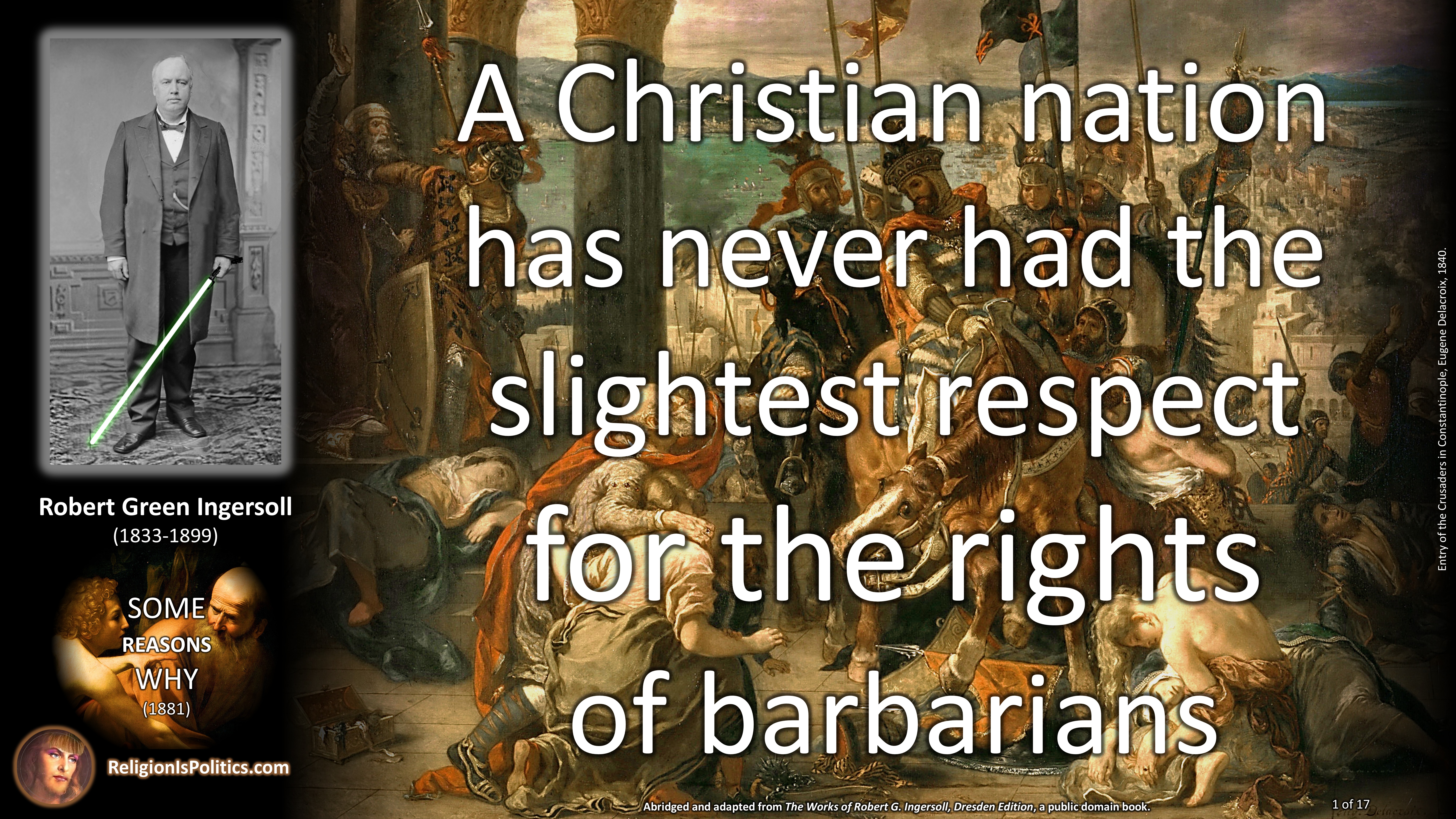
Older than history are the beliefs, the traditions, the insights of indigenous peoples, and just as true as Christianity.
Truer, actually.
Indigenous beliefs, by definition, are what missionaries exist to replace. A missionary’s job, by definition, is to talk other people out of their religious beliefs, and by definition they are also afraid of being talked out of their own.
Soldiers and missionaries always benefitted from one another’s work. What varied from place to place was whether the soldiers went first or the missionaries, whether or not they worked hand in hand and whether or not they were the same people.
The more work was done by the soldiers, the less work would have to be done by the missionaries. And vice versa.
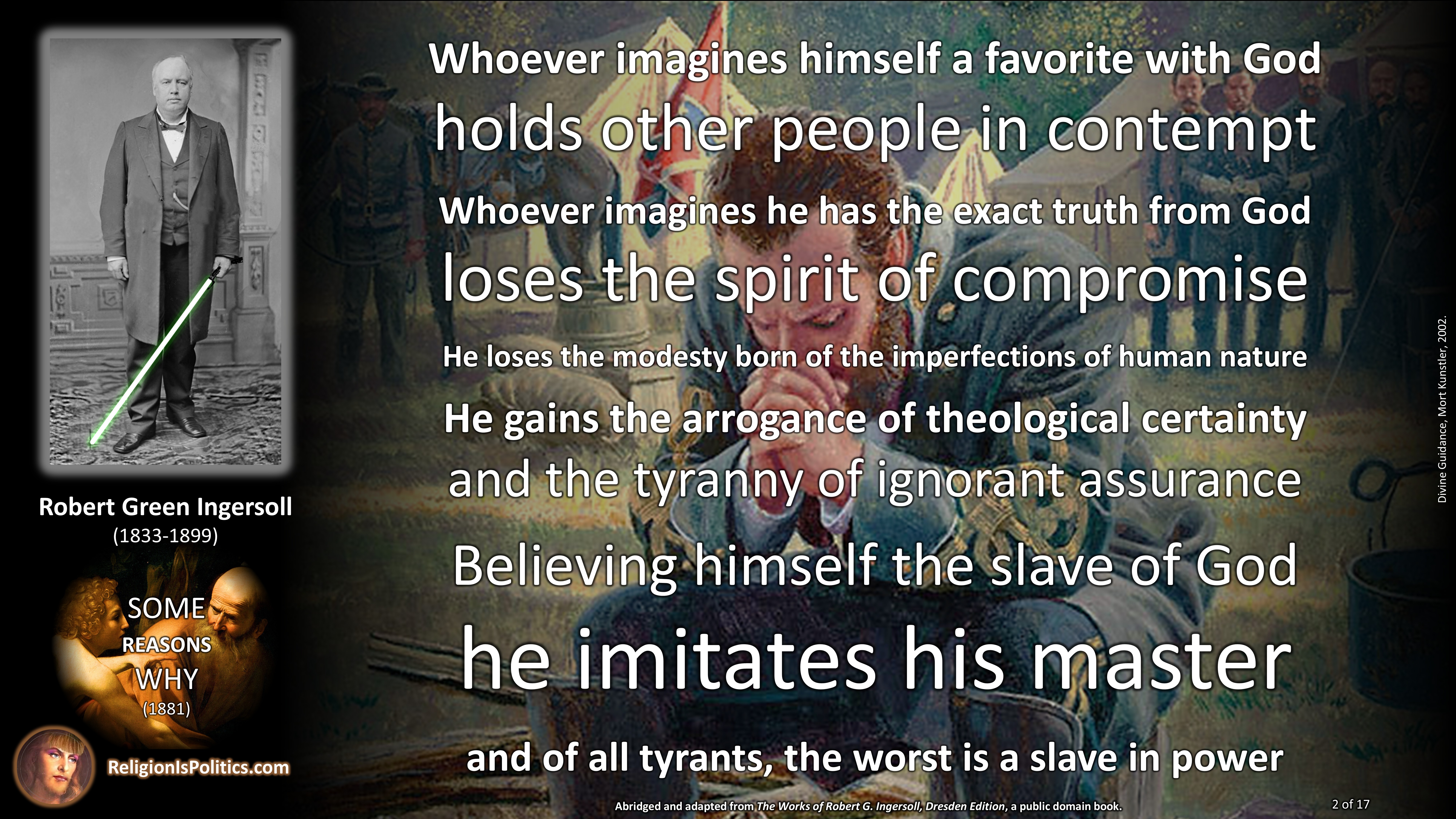
Growing up I was always taught that the Bible was a perfect book. Even when it wasn’t taken literally it was still taken seriously.
We believed it because it was absurd.
We thought we were living in an almighty game show, and we hoped by the absurdity of our beliefs to impress the host and win an eternal reward.
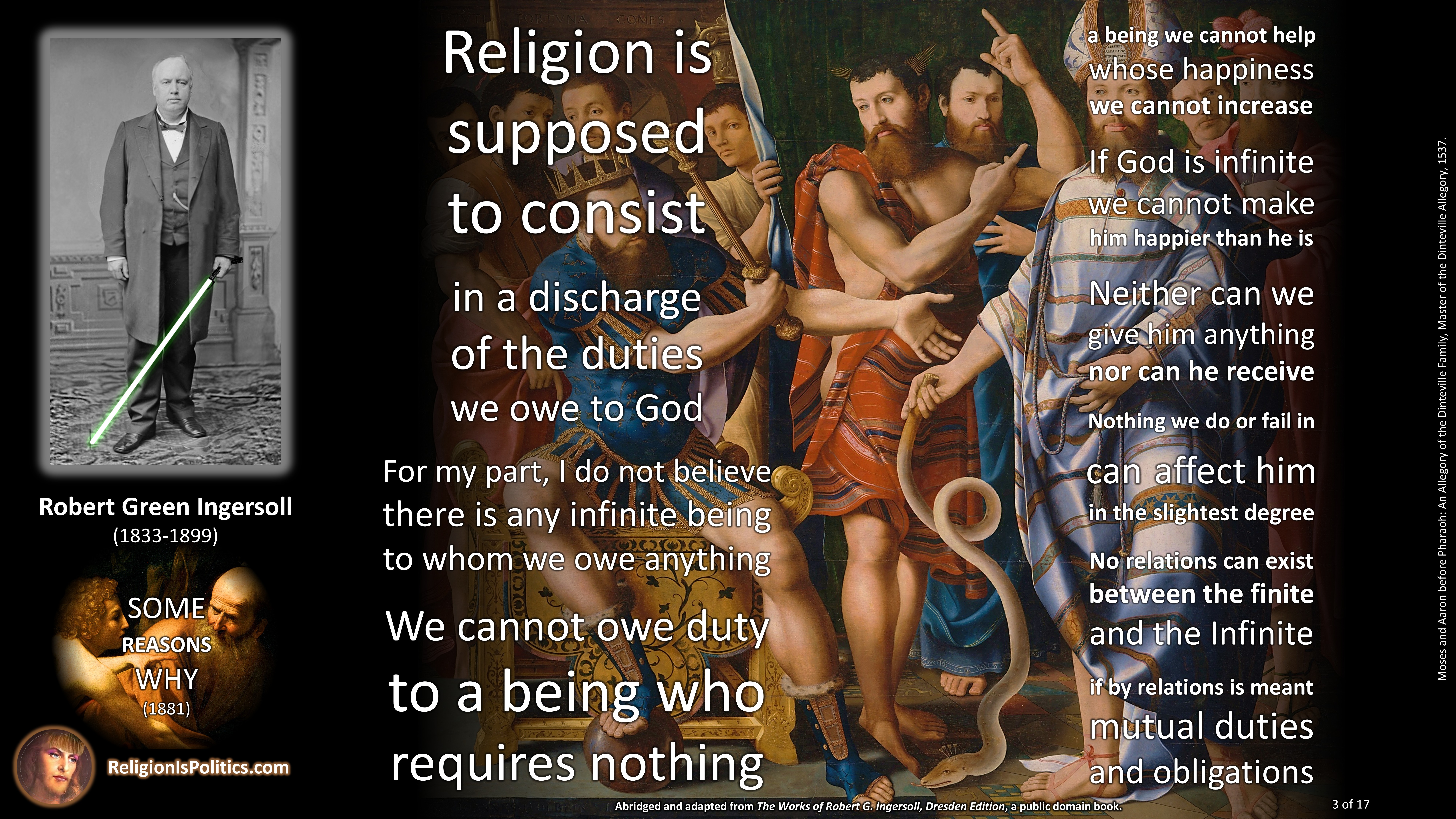
It has always seemed, without being too absurd, that a perfect author would write a perfect book.
Yet imperfect authors write better books even when they mean not to.
And every culture has better stories.
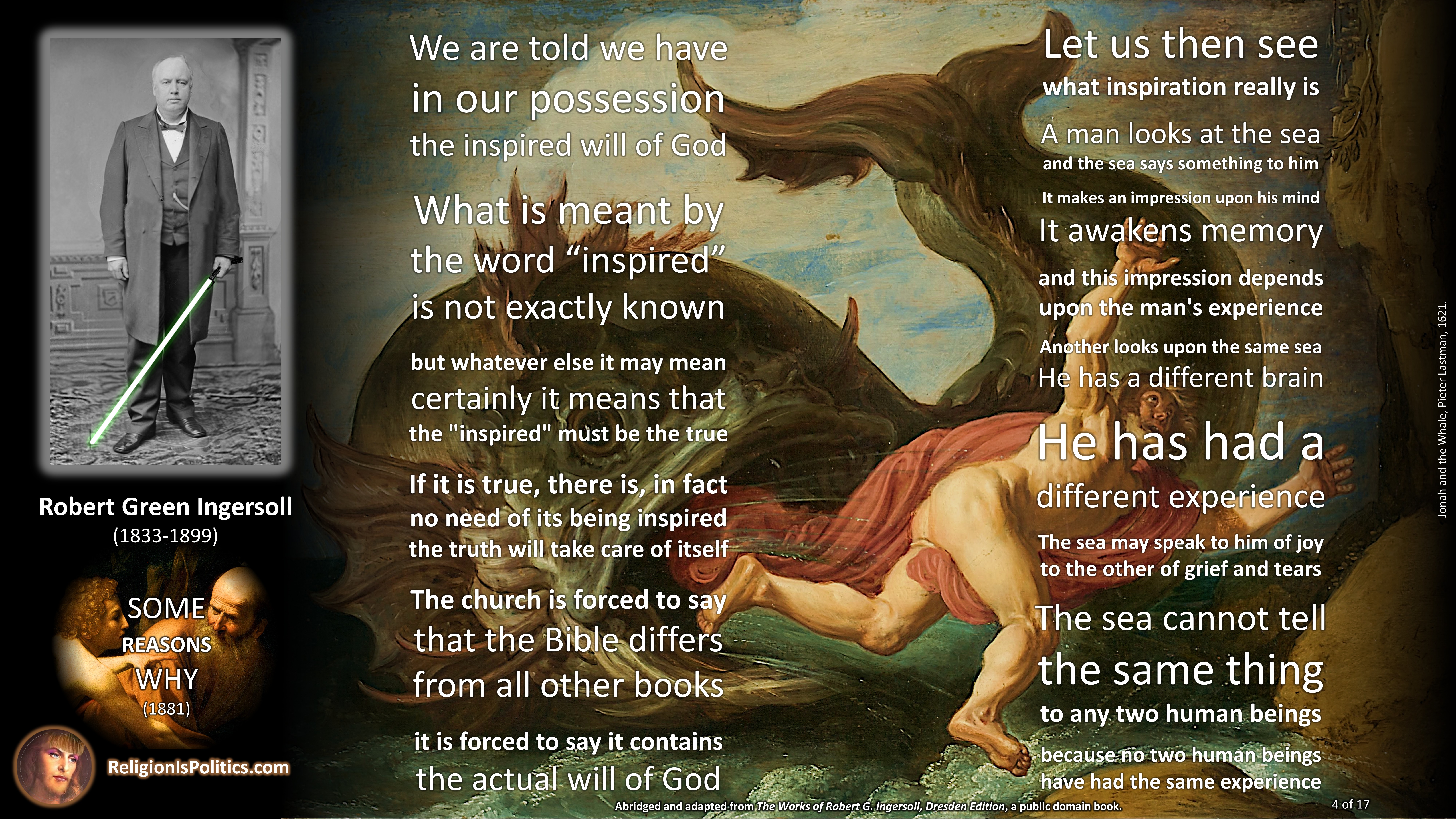
On the one hand, indigenous knowledge has always benefitted science. On the other hand, Christianity has cost science centuries. And it has cost indigenous knowledge millennia.
Scientists have a more sincere interest here than missionaries do. Scientists’ interests are sincere. Missionaries’ interests are ulterior.
Violence is the Bible’s most unambiguous quality.
It’s impossible to miss the meaning of violence in this book because in this book the violence is the meaning.

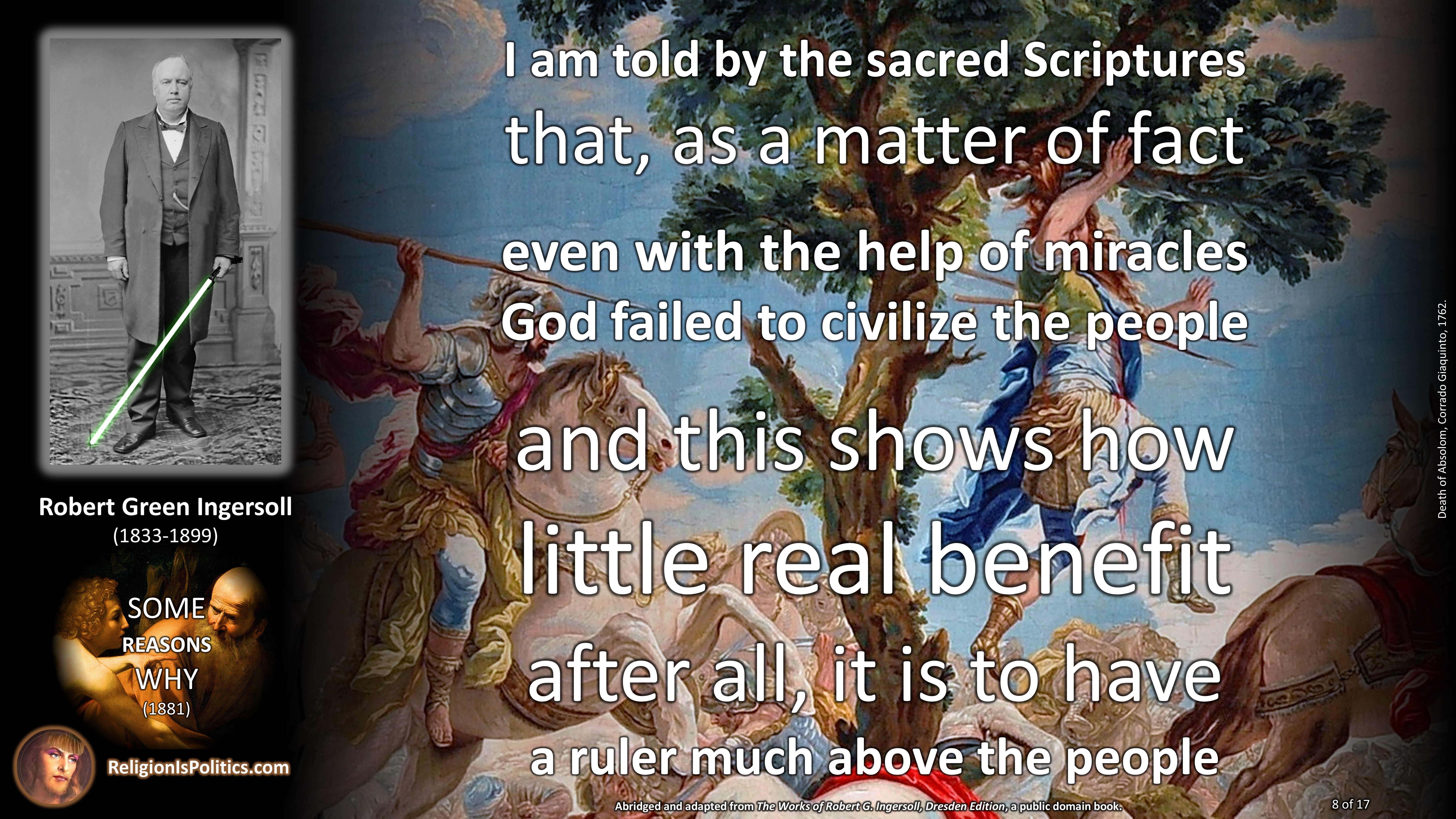
Whenever there is violence in the Bible, whether human or animal, it is always, somehow, about punishing the innocent for the crimes of the guilty and saying they deserved it.
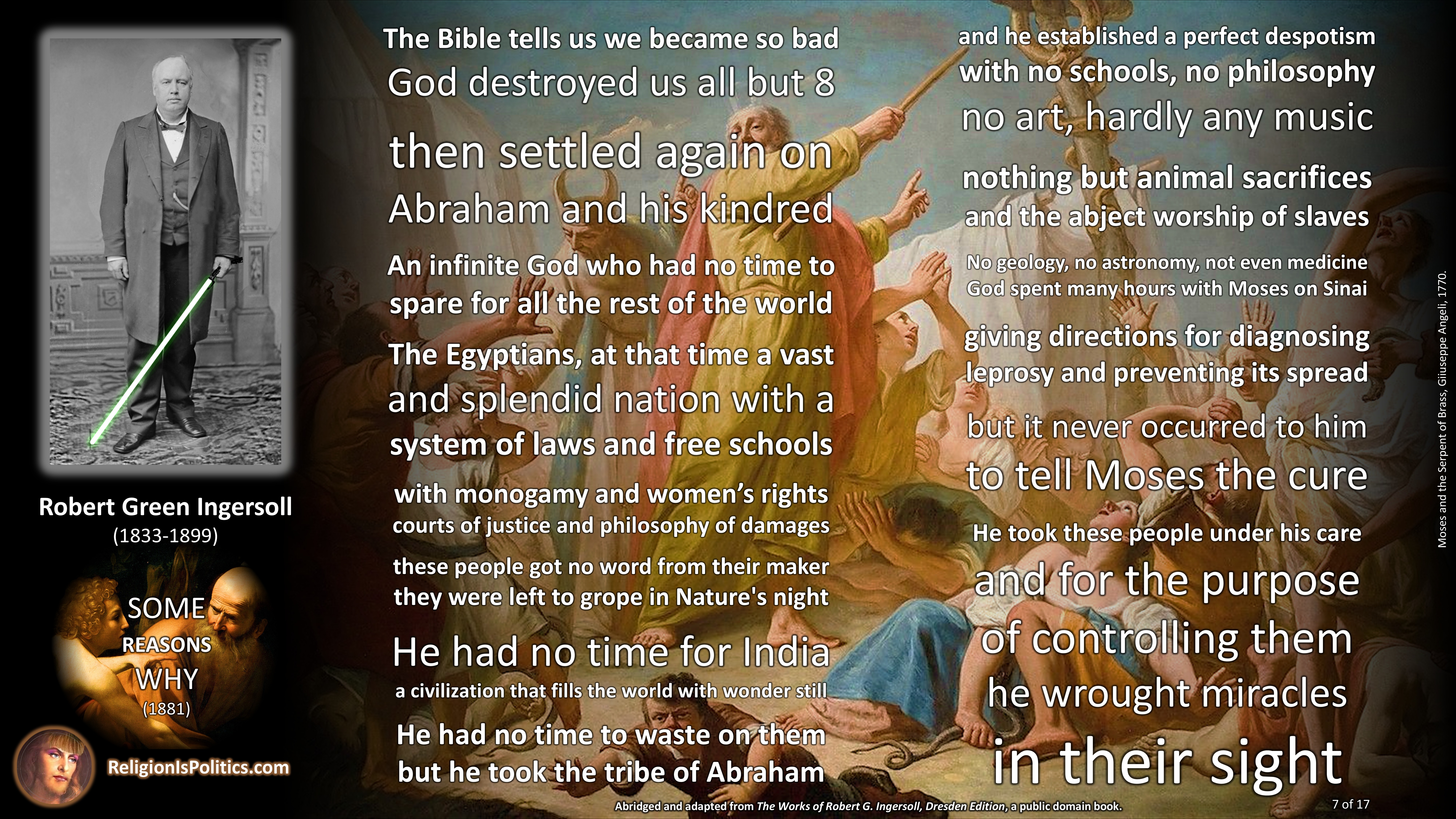
The Bible tells us even with total power the God-King of Israel still faced rebellion after rebellion from his people.
Maybe he should have been less violent with them.
All this can only go to show absolute power corrupts absolutely.
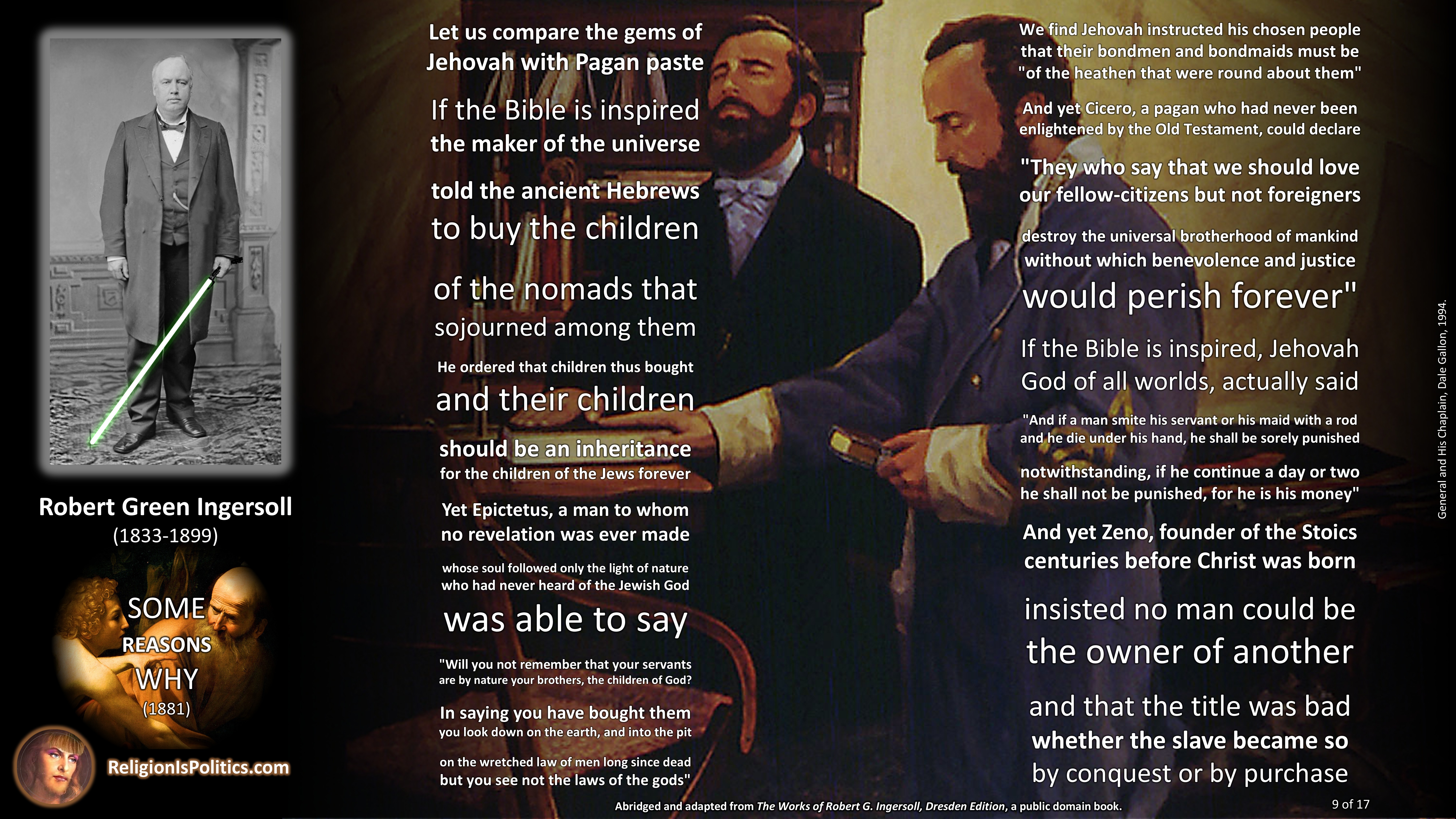
Let us compare the gems of Jehovah with pagan paste.
Let us remember the histories and lives and nations built on the Bible.
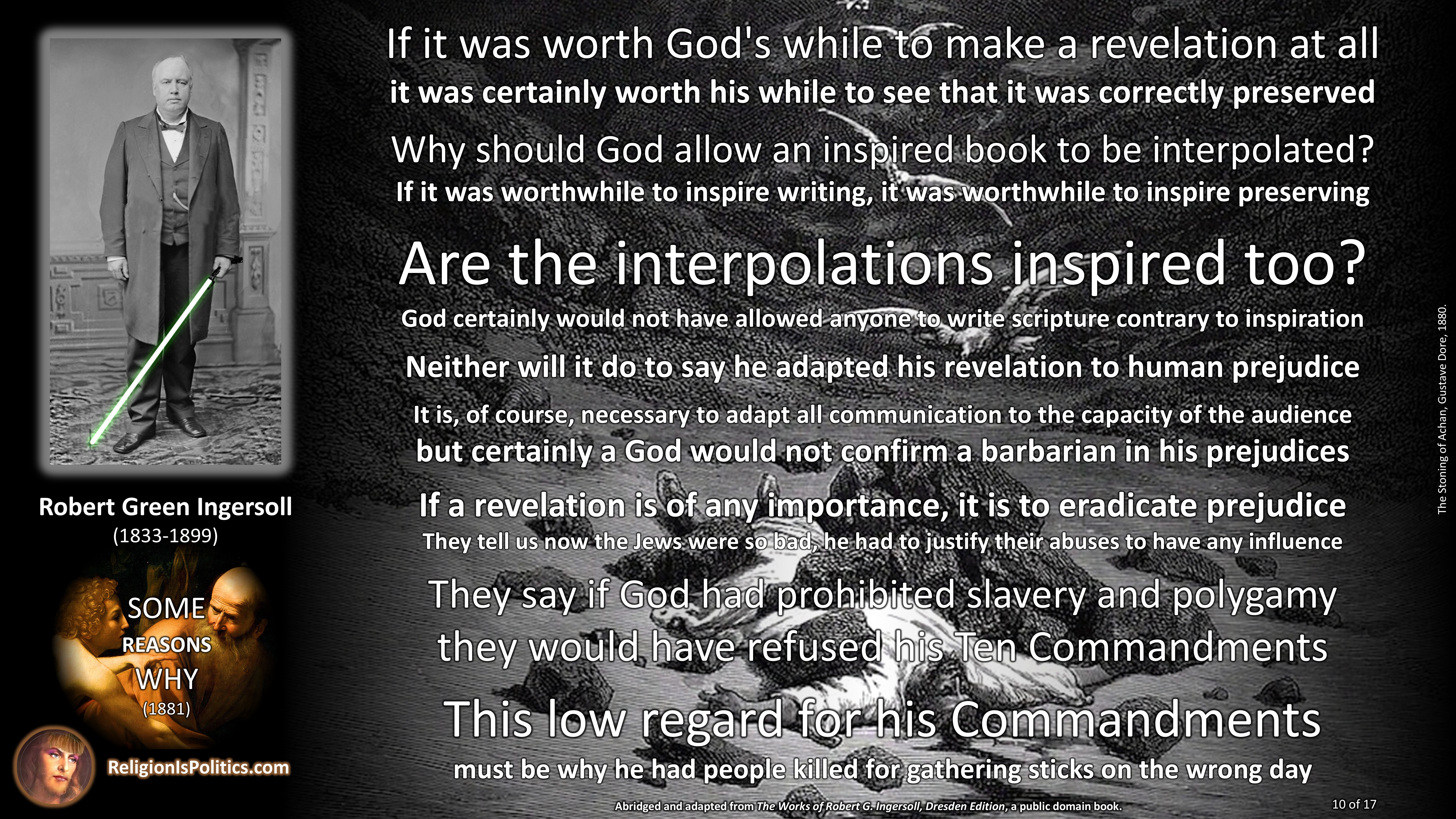
If it was worth God’s while to make a revelation, certainly the revelation would not have any problem facing critical scholarship.
The fact that every supposed revelation has such problems is a certificate that such suppositions are wrong, but this is not a problem for believers.
They believe the problem is with critical scholars.
Theology is not knowledge. It is the personification of the unknown and the idealization of the unknowable. It is what has been put in place of knowledge.
A superior being would know better.
Theology is what we have because the gods aren’t here.

If we compare the Bible with other books it will not be long before we are disappointed in the Bible. That is why believers in the Bible reject critical scholarship. That’s the only reason.
They thought critical scholarship was going to vindicate the Bible, but it turned out they were wrong, because so was the Bible.
For 2,000 years Bible believers have resisted unfavorable comparisons to other literature.
And their beliefs have resisted unfavorable comparisons from other belief systems.
Often with violence.
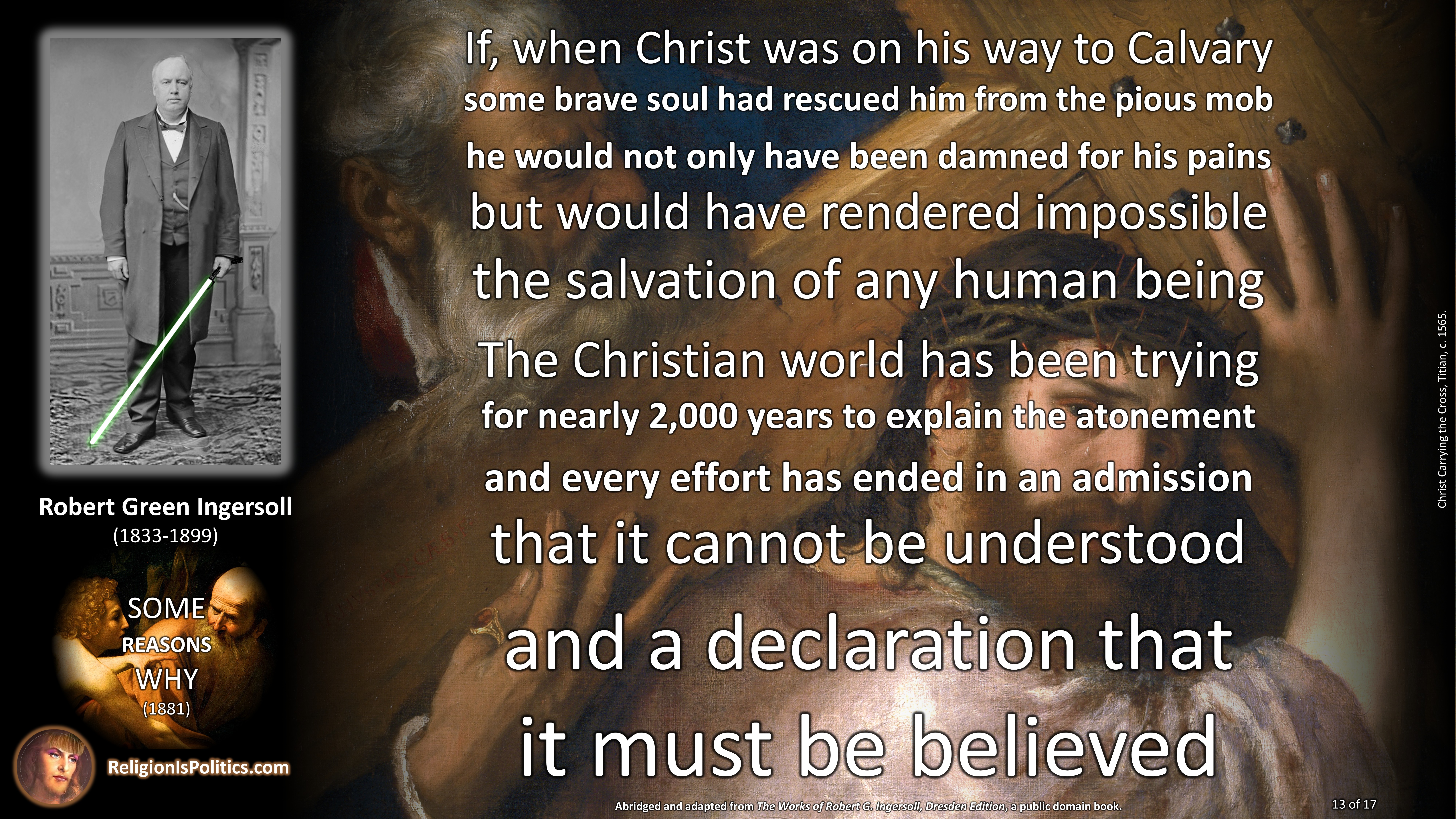
The main character was an unemployed carpenter who convinced 12 other working men to quit their jobs and wander the countryside performing confidence tricks for a living, and not one person he pretended to heal spoke up for him at his trial. Yet almost since he died people have believed he is alive, immortal and all-powerful.
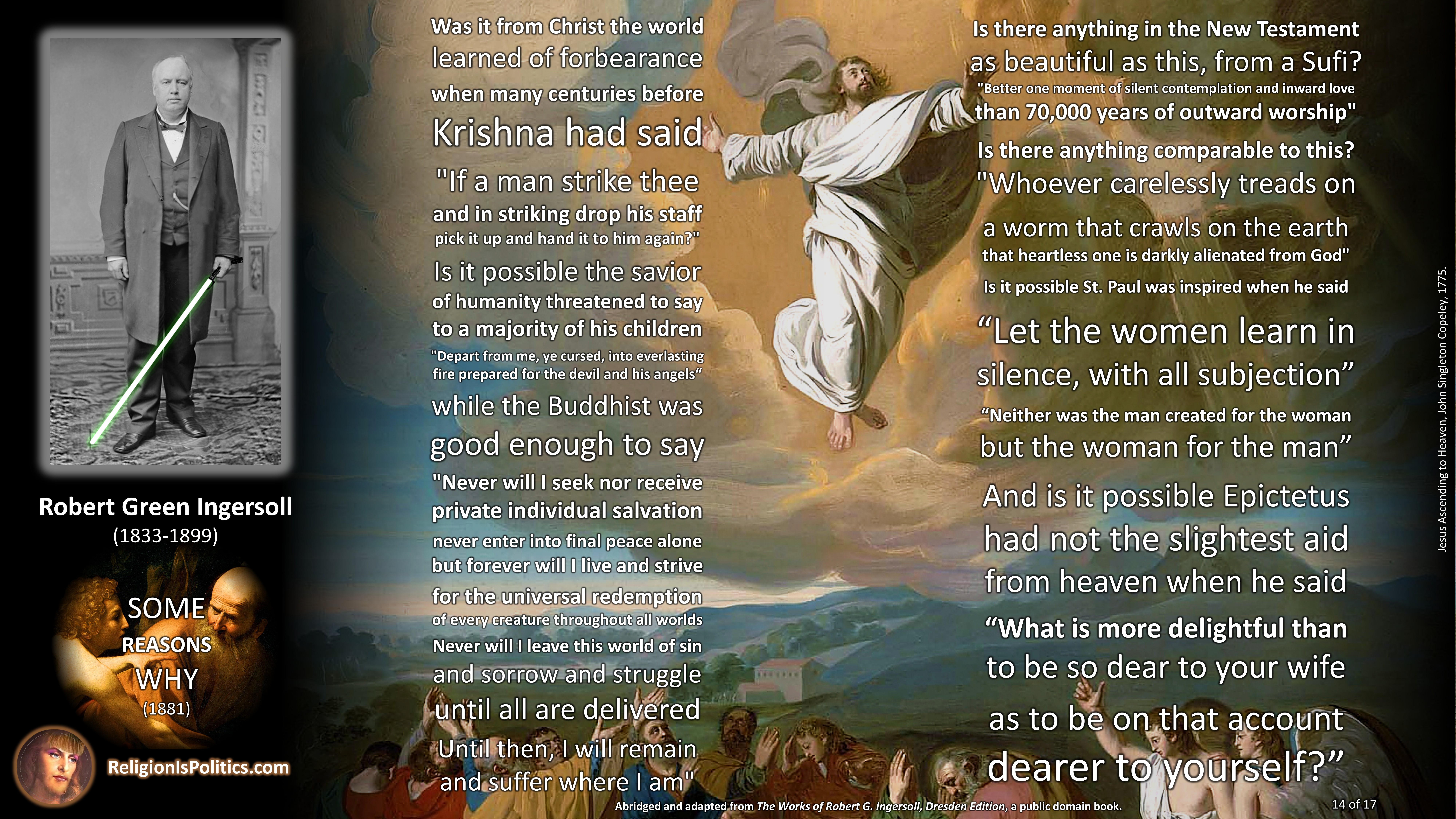
The simultaneous existence in the world of Judaism, Christianity and Islam is a certificate that Jesus of Nazareth did not know what he was doing.
The interloper Paul had more impact on his legacy than all 12 of his handpicked disciples put together.
They couldn’t beat him; they had to join him.
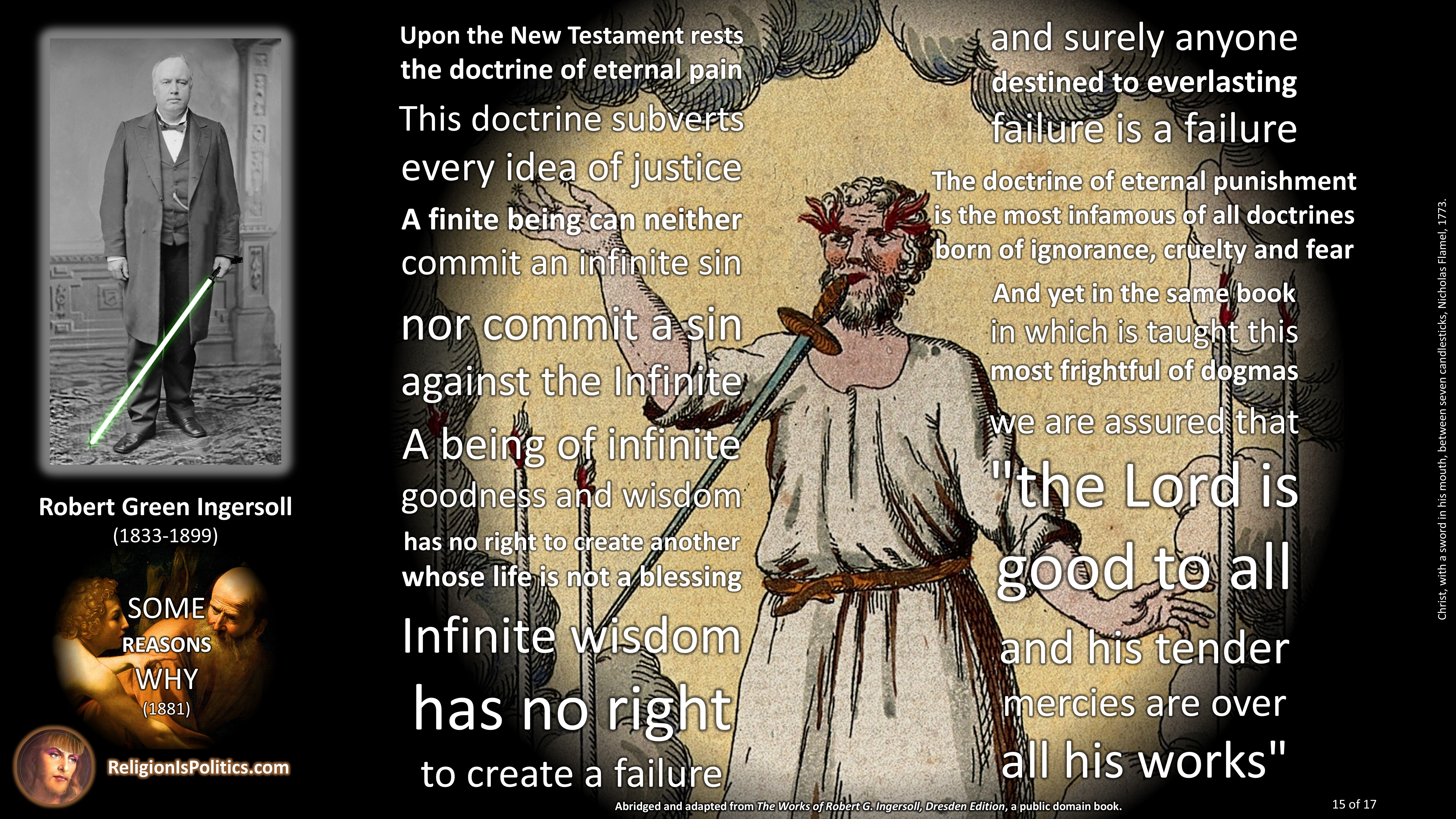
Likewise the existence of the Confederacy in US history certifies that the US founders did not really know what they were doing either.
Half of them thought they were a master race chosen by God to manifest a glorious destiny and the rest were invested in the stock market.
They sowed the seeds of injustice and we reap the harvest to this day.
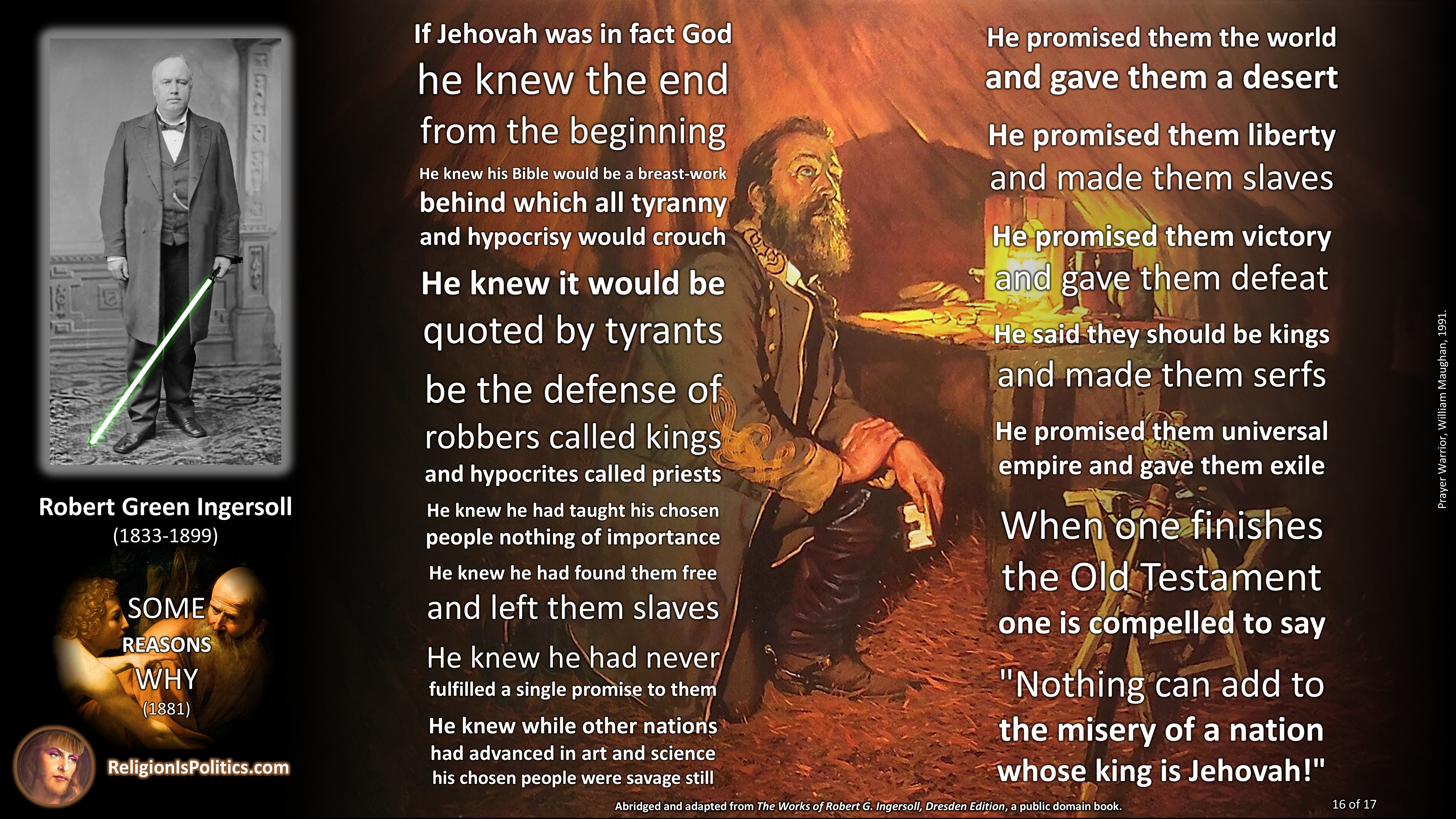
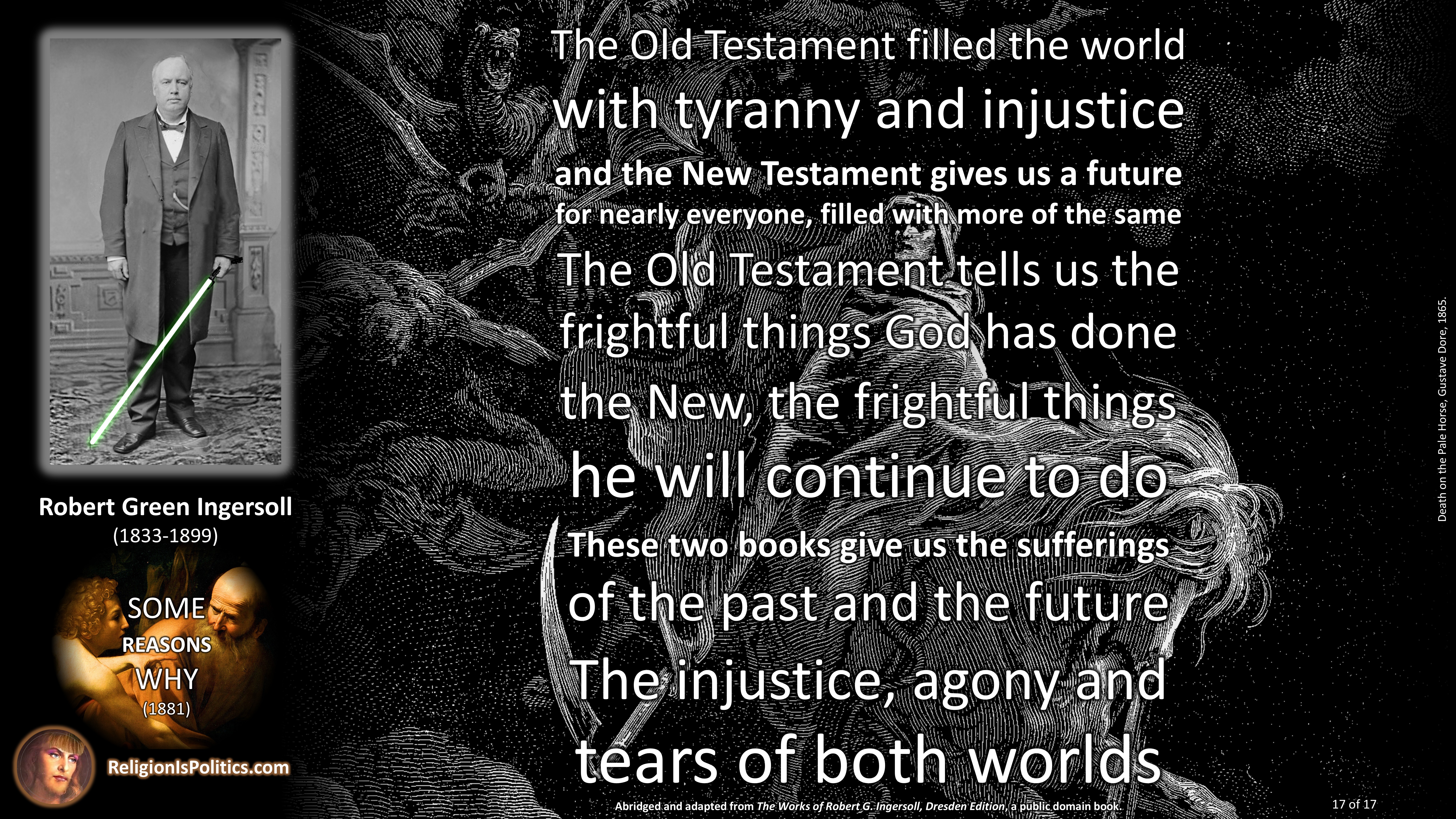
The Old Testament tells us what a monster God used to be.
The New Testament tells us what a monster he always will be.
Of course, the real monsters were ourselves all along.
And as long as we believe these Testaments are superior to all other books then we always will be.
Background art
- Entry of the Crusaders in Constantinople, Eugene Delacroix, 1840.
- Divine Guidance, Mort Kunstler, 2002.
- Moses and Aaron before Pharaoh: An Allegory of the Dinteville Family, Master of the Dinteville Allegory, 1537.
- Jonah and the Whale, Pieter Lastman, 1621.
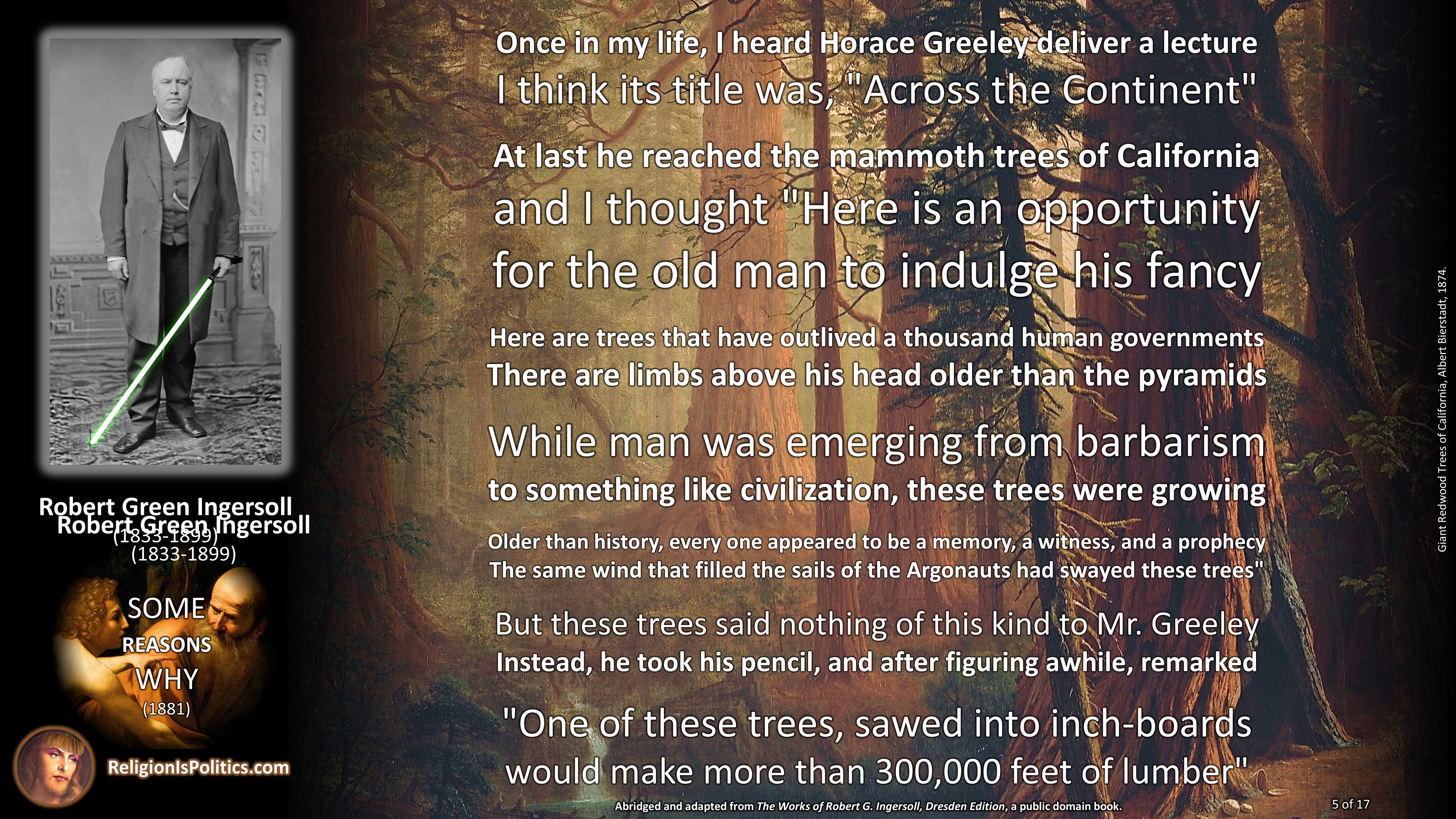
- Giant Redwood Trees of California, Albert Bierstadt, 1874.
- The Confusion of Tongues, Gustave Dore, 1897.
- Moses and the Serpent of Brass, Giiuseppe Angeli, 1770.
- Death of Absolom, Corrado Giaquinto, 1762.
- General and His Chaplain, Dale Gallon, 1994.
- The Stoning of Achan, Gustave Dore, 1880.
- Joseph in Egypt, Jacopo Pontormo, 1515.
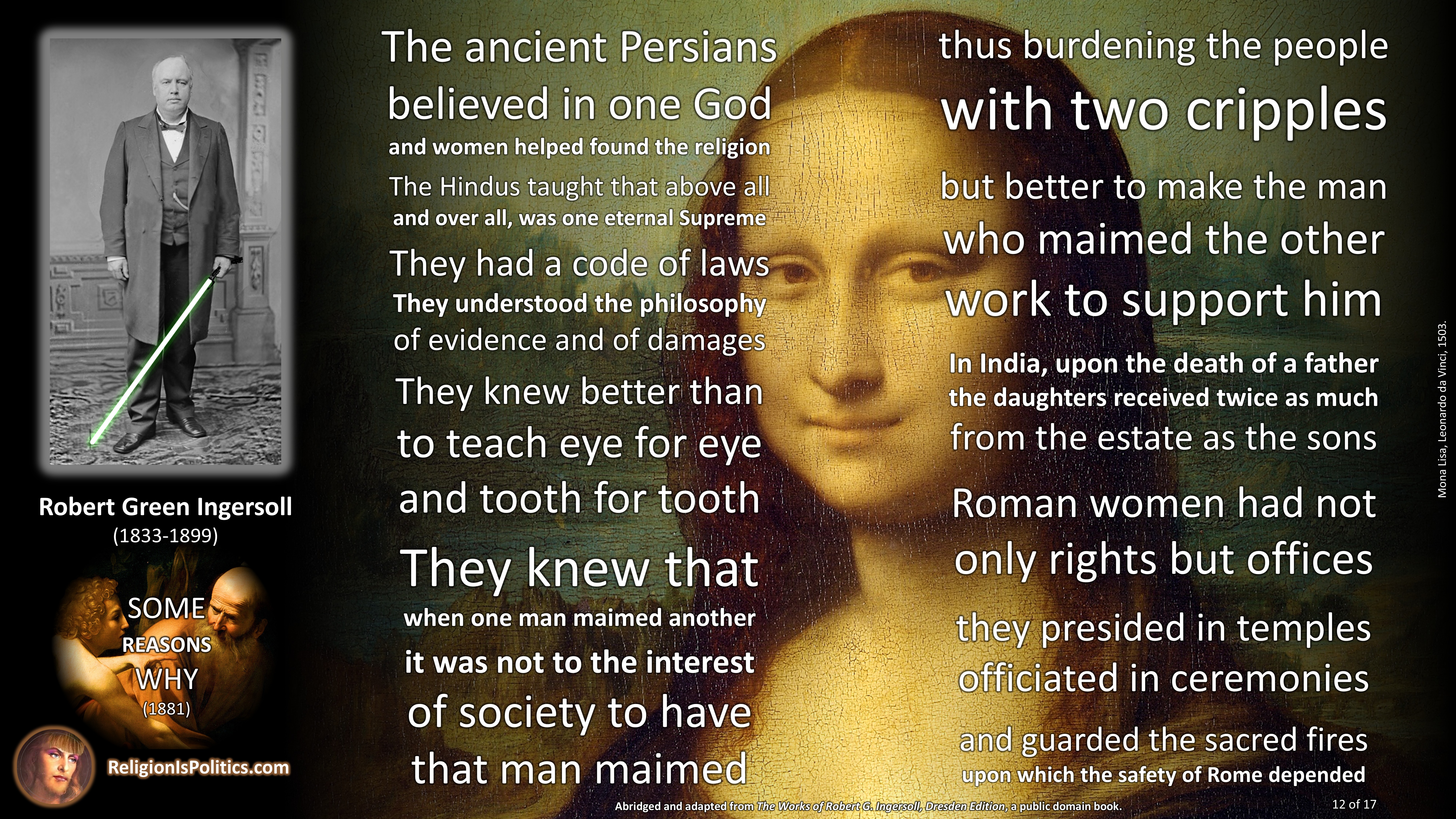
- Mona Lisa, Leonardo da Vinci, 1503.
- Christ Carrying the Cross, Titian, c. 1565.
- Jesus Ascending to Heaven, John Singleton Copeley, 1775.
- Christ, with a sword in his mouth, between seven candlesticks, Nicholas Flamel, 1773.
- Prayer Warrior, William Maughan, 1991.
- Death on the Pale Horse, Gustave Dore, 1865.
 Religion is politics about the unknown