Orthodoxy (and Fundamentalism)
In 1880, people in the US were already referring to the parts of their faith that had the most sincere prejudice as its “fundamentals.”
But these people were not yet known as “Fundamentalists.” Otherwise, Ingersoll could have called this speech “Fundamentalism,” and it would have better conveyed his themes. They are resonant again in 2025.
Fundamentalist churches around the world today are making great strides with angry young men, particularly in the US and Europe.
All churches that appeal to angry young men are essentially fundamentalist in character. This is because the ‘God’ of Christianity was and is an angry young man. And as long as Christians are faithful to the fundamental fantasy of an angry young man coming down from the sky with a sword in his mouth to enact a final solution, He always will be.
All churches think of themselves as orthodox, especially Protestant churches which are the most fundamentalist, and what “fundamentalism” means to them is exactly that.
Fundamentalist churches and orthodox churches both harken back to an imaginary past that never really happened. The difference is, fundamentalist churches grow from the bottom up while orthodox churches grow from the top down. The former center their appeal on angry young men, while the latter focus on attracting their mothers.
With “Orthodoxy,” Ingersoll delivered a powerful critique of “fundamental” / “orthodox” superstitions and provided a better example. I hope it may do some good in 2025.
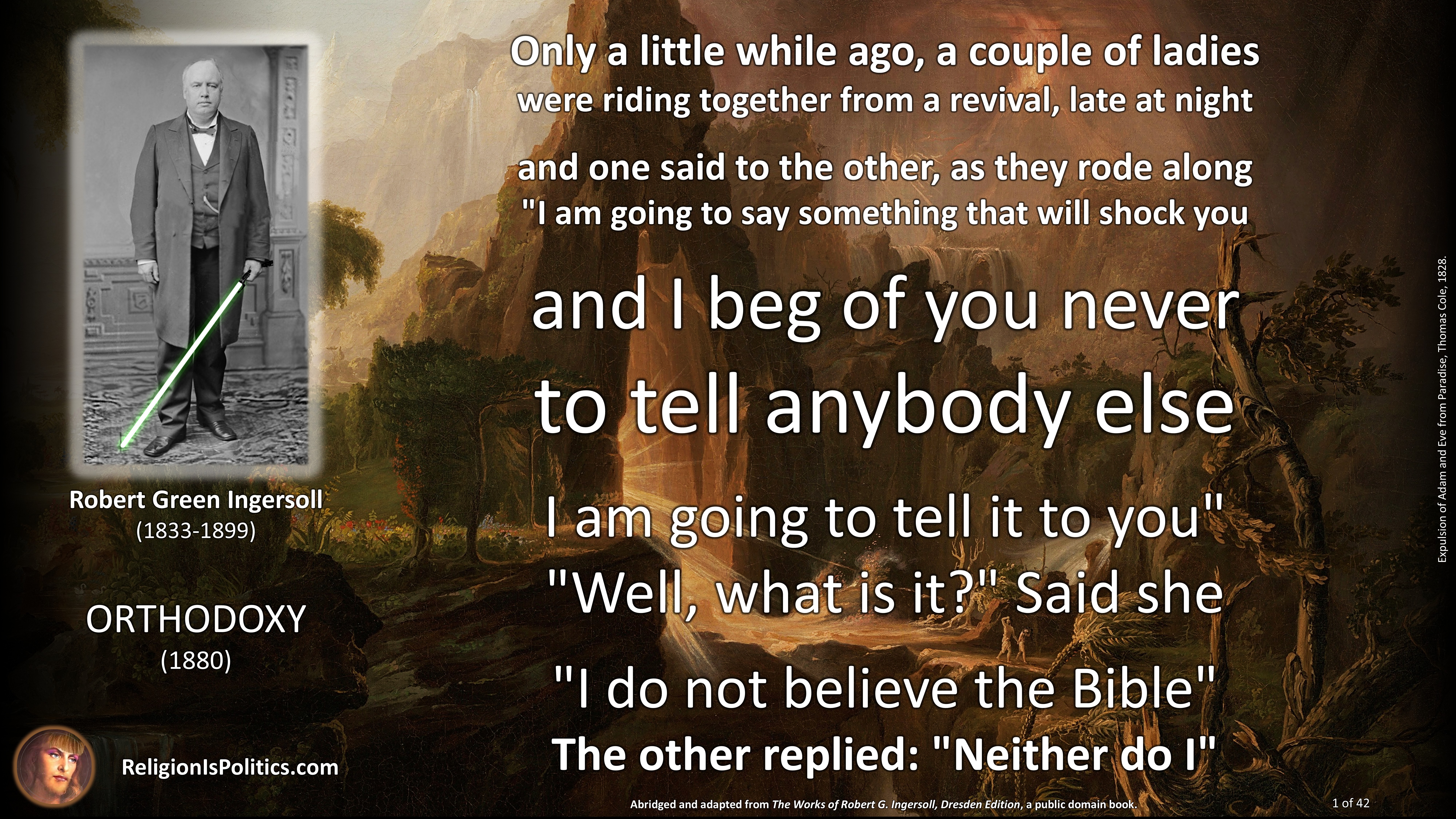
If we live in the United States, we are all used to pretending to believe in Christianity more than we really do. We all know someone who pretends to believe just to gain an advantage over believers. And it always works.
We were taught by custom and ritual. Many of us were taught early.
Some of us believed more than our parents did, some of us less. Some of us believe to this day.
A few of us fell for it later in life. When it comes to biases and scams, we all are vulnerable.
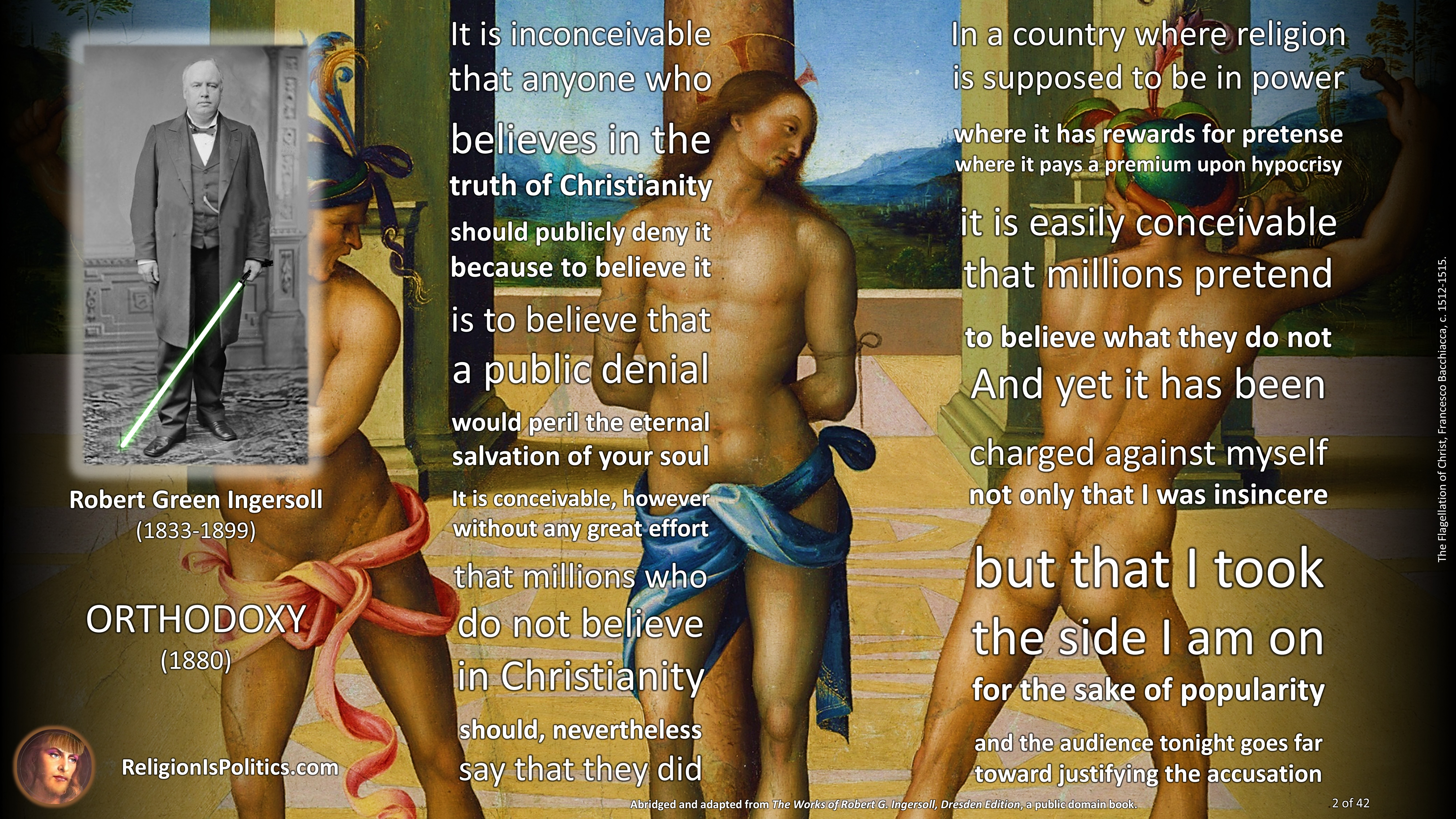
At the close of the wars of religion, there was little left in Europe besides toxic masculinity.
The doctor’s job was not public health. Lives didn’t need saving; souls did. Only God could help the public. And if the public was being harmed then the harm came either from God or from God’s enemy. Either way, the public deserved it for not praying better, and God would continue to allow it until the prayers were more to his liking.
The doctor’s job was to save soldiers, when he could. And at the time this was more art than science.
Women were forced out of European medicine in those days because their bodies were not relevant to saving soldiers’ lives except as laborers. Their practices were criminalized as witchcraft, and their knowledge was lost.
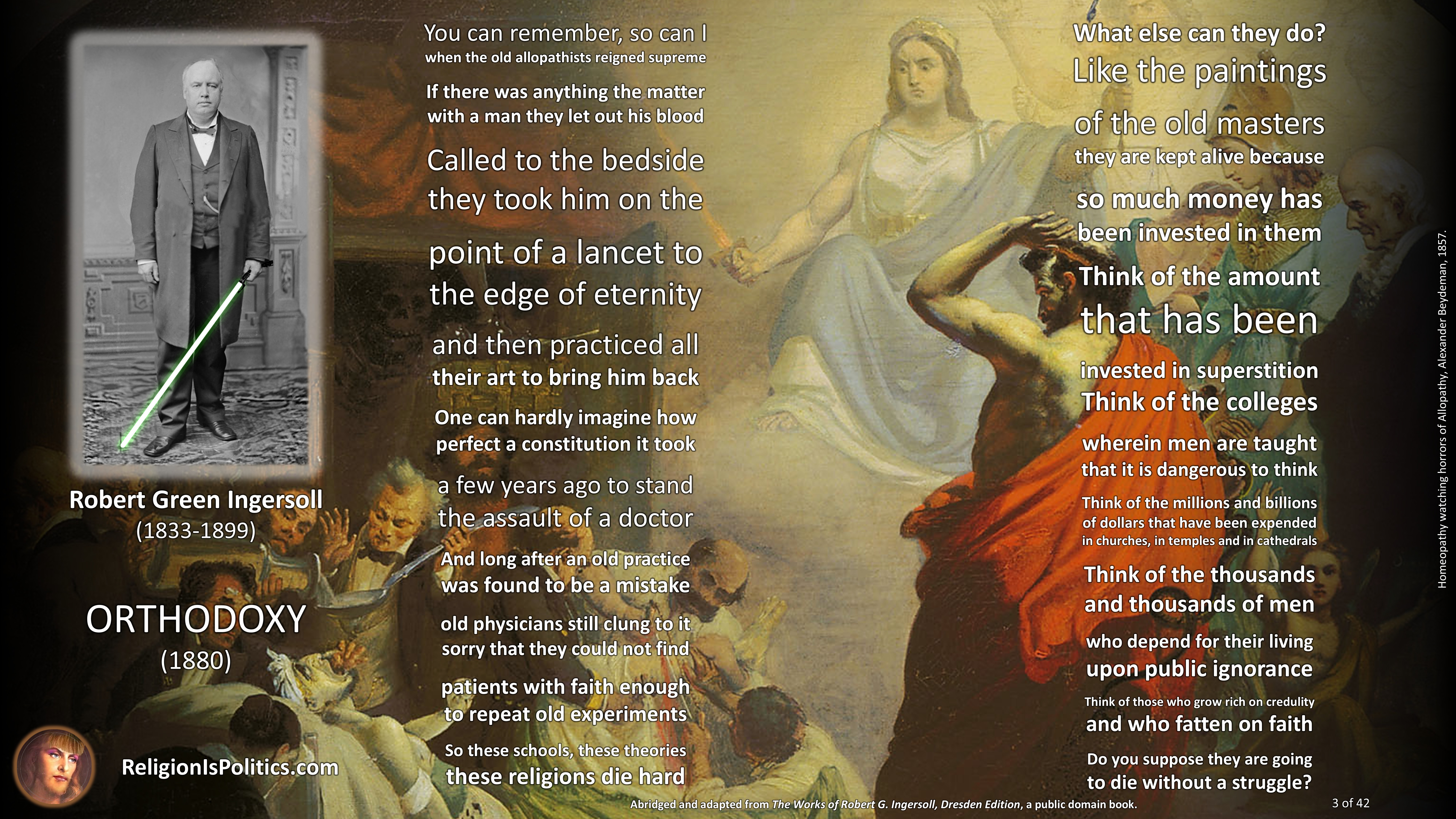
Today, every wealthy country on earth provides health care as a right, not only to citizens but noncitizen residents as well. This policy arises out of the recognition that public health is a pure common good.
Except for certain Christian nations, like the United States. Here, people do not believe in common goods unless they are wrapped in a flag and carrying a cross. Here, people stand to lose what little access they have to health care that’s already overpriced, overpromised and underdelivered, all because Christian nationalist voters were in the majority all along.
People may not believe in the efficacy of prayer when they schedule a checkup or open an envelope, but they do believe when they step in a voting booth.
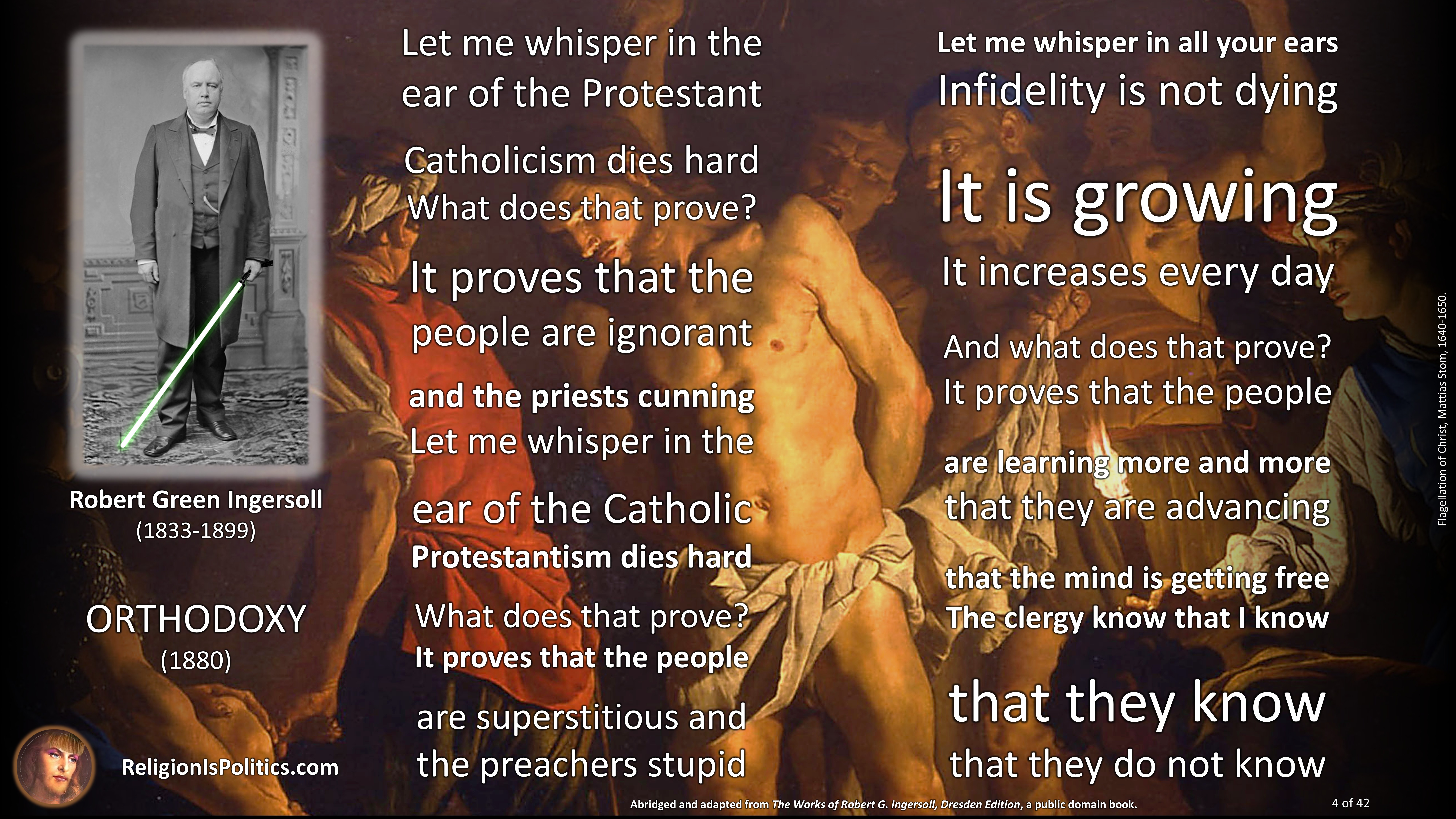
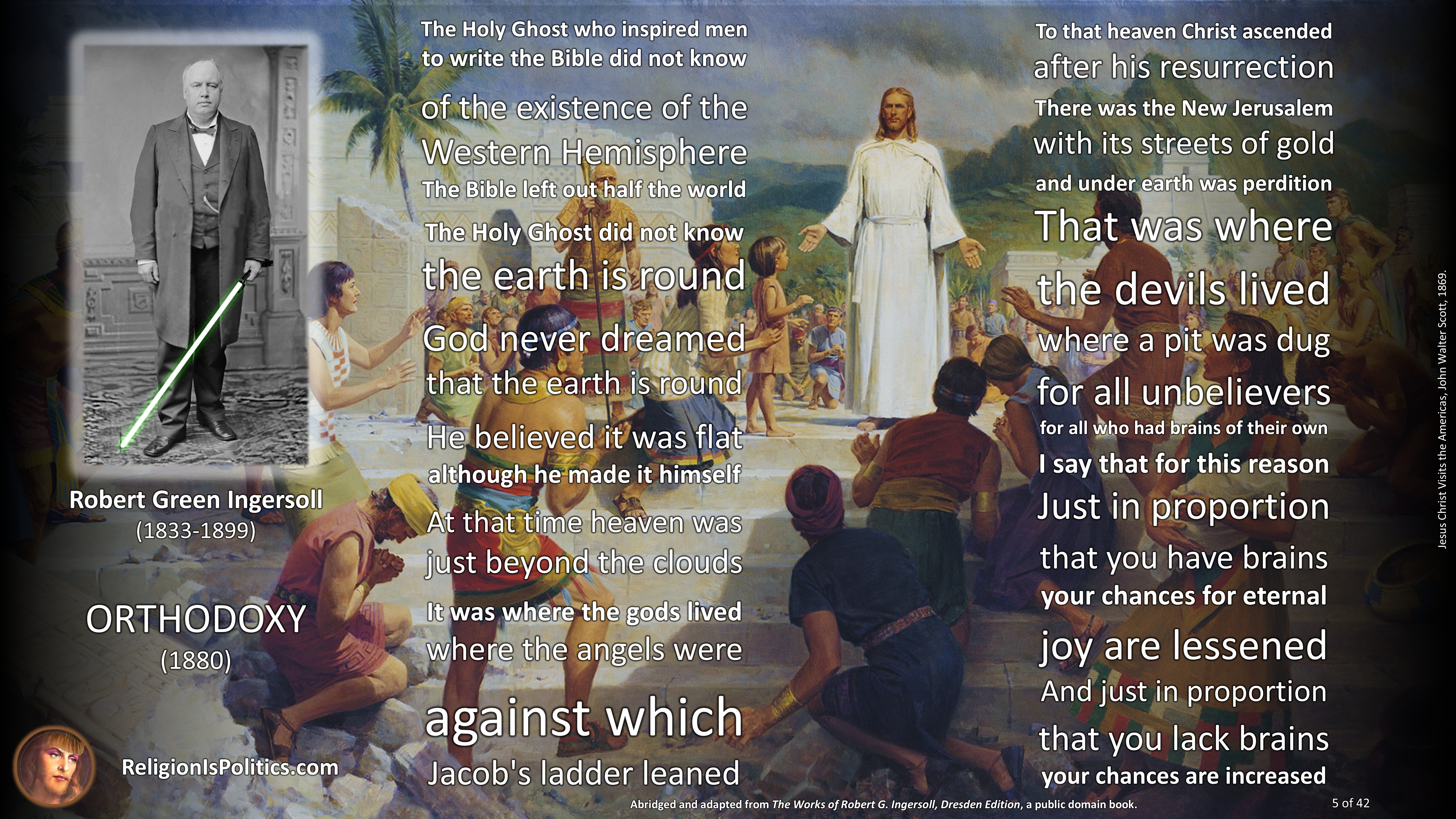
Less than 100 years after the US was founded, a new church had already arisen based on the idea that American indigenous people were Jews from the Bible who crossed the Atlantic in wooden submarines thousands of years before Columbus.
These beliefs appealed to Europeans who didn’t know better because it conveniently explained why whole continents existed with indigenous people and why the Bible didn’t mention them.
Of course, the real explanation at that time was unknown, except to the indigenous themselves. But it was even more inconvenient, and it has been inconvenient ever since. Such beliefs are contradicted both by every fact in science and by every science in fact. And yet today this is one of the richest churches on earth.
Aren’t we lucky?
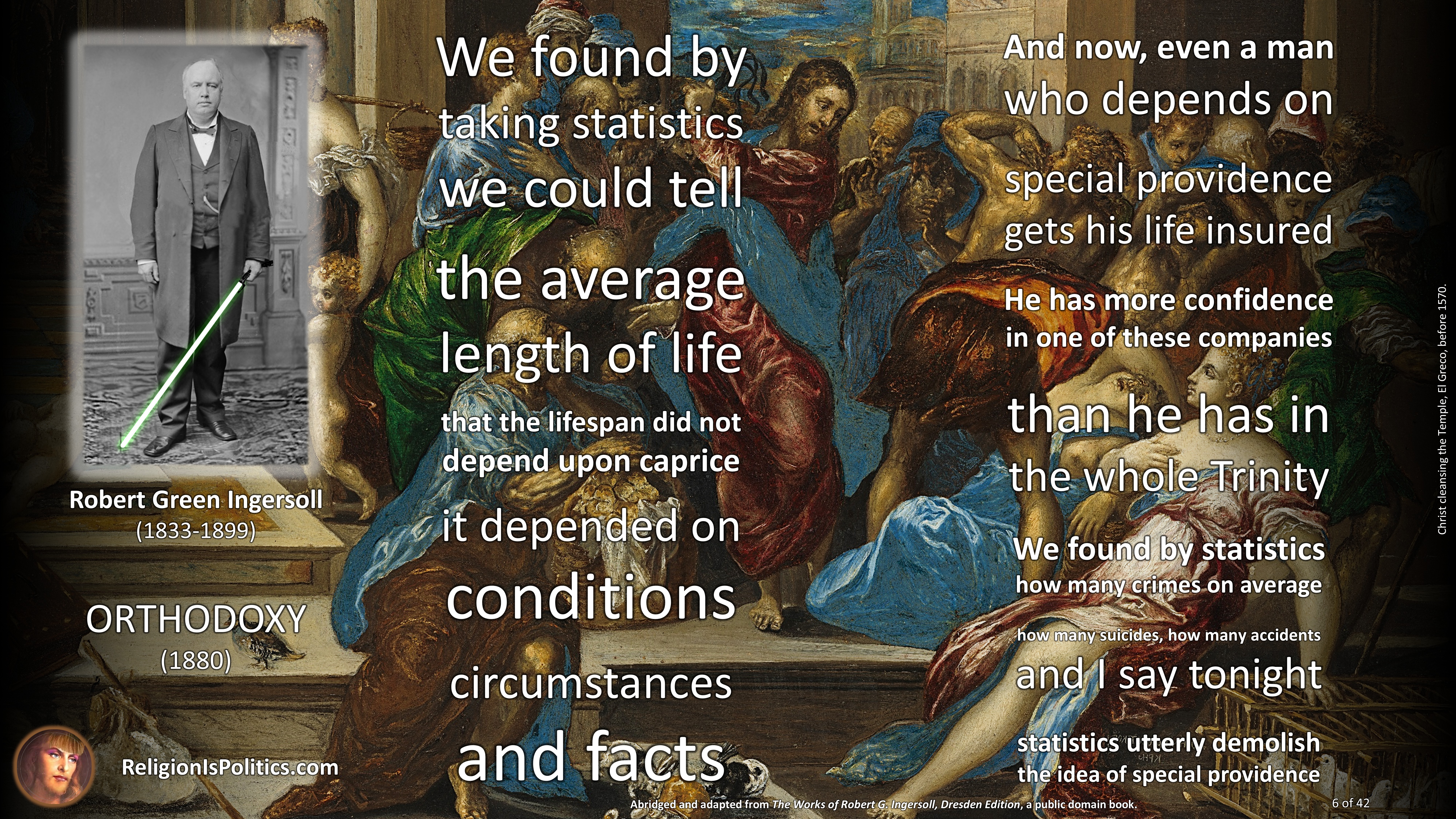
Today, even those who still do believe privileges are blessings, do still purchase life insurance.
In real terms people put more trust in one insurance company than they put in their whole belief system.
In fact they are more dependent on their financial institution than they are on their faith.
If you grow up thinking that your privileges are blessings given to you personally by the author of the universe, then narcissism will come naturally to you.
And it will take extra work to get out of.
If you grow up thinking it was good when someone suffered on your behalf and you think it was the best thing that ever happened to you then you will get used to the feeling.
It makes you more narcissistic.
It makes you heed less other people’s boundaries.
It makes you think less of their consent.
If you believe wars and natural disasters come with intention from on high rather than from the ground up, then I’m afraid your politics will always pit brother against brother in service of imaginary abusive father figures.
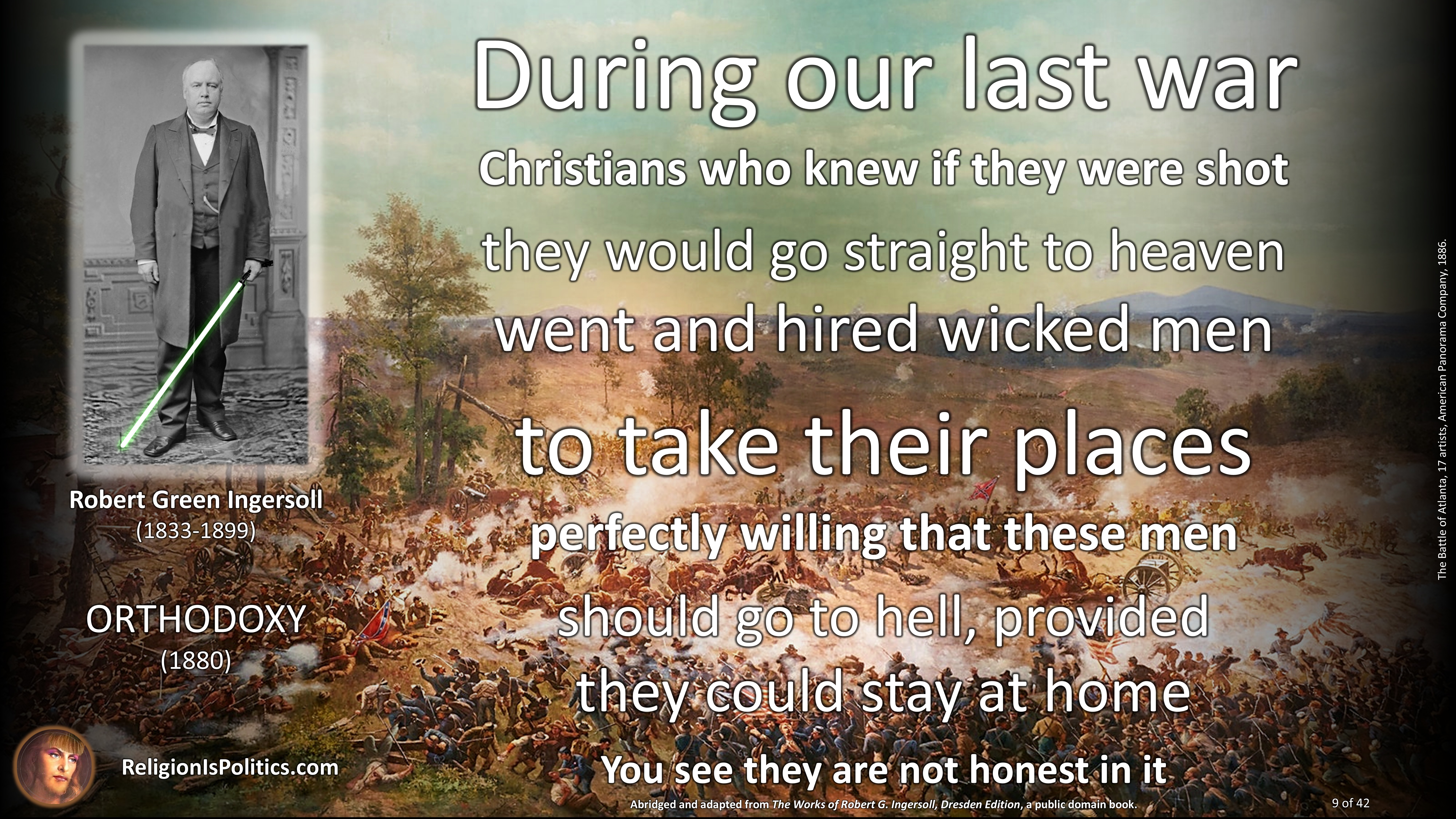
If you speak of liberty and justice for all, but you believe rights are blessings that come from a personal relationship with Jesus Christ, rather than from personal relationships with one another, then liberty and justice are not what you believe in.
What you believe in is a dictatorship.
And maybe that’s all you’re capable of.
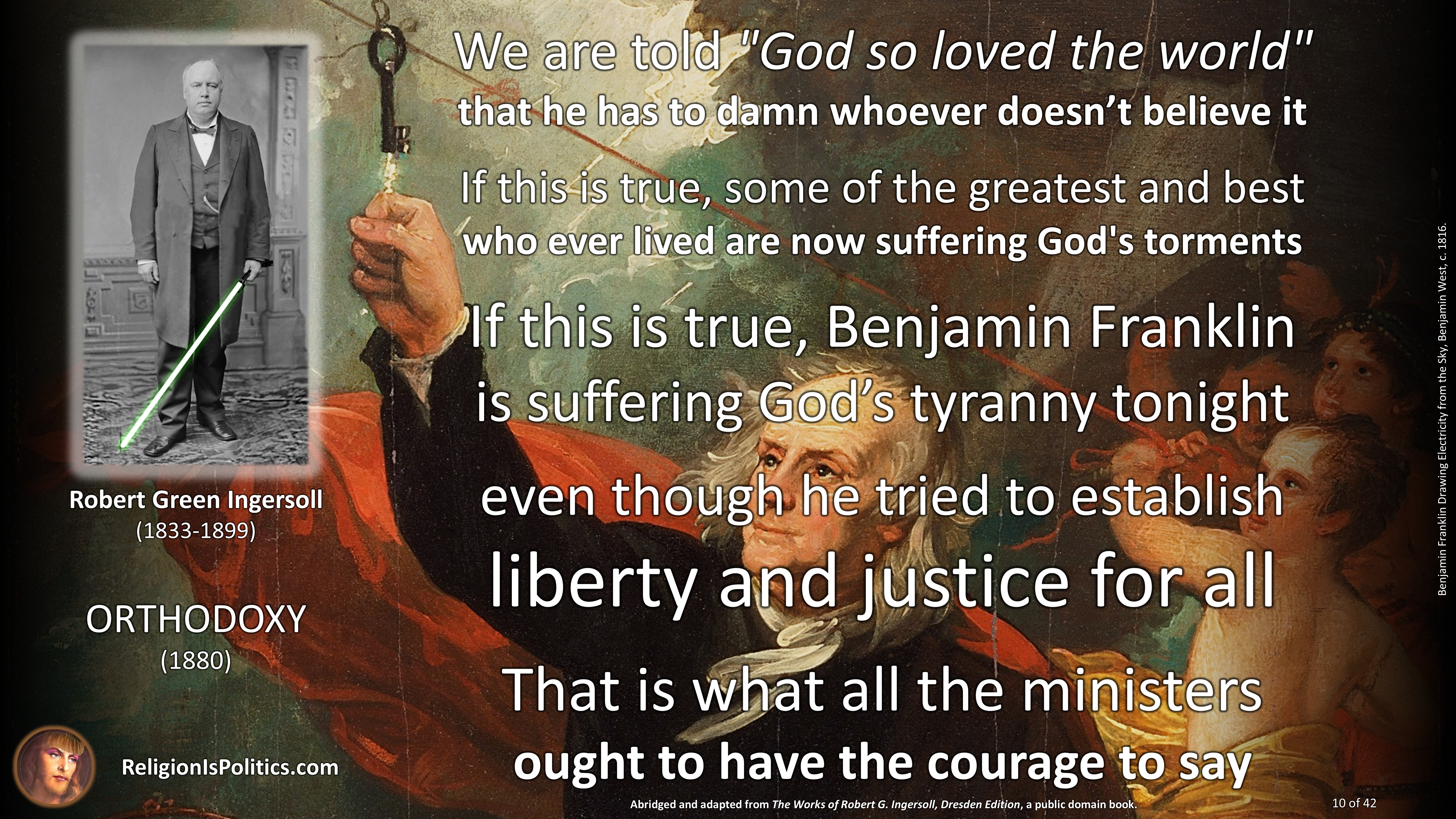
If you believe everyone is a slave to some immortal being or other, and the only way out is to pick the right one, then you’ll call yourself a slave of righteousness.
And if someone else’s slavery benefits you in the meantime you’re not going to have a fundamental problem with it.
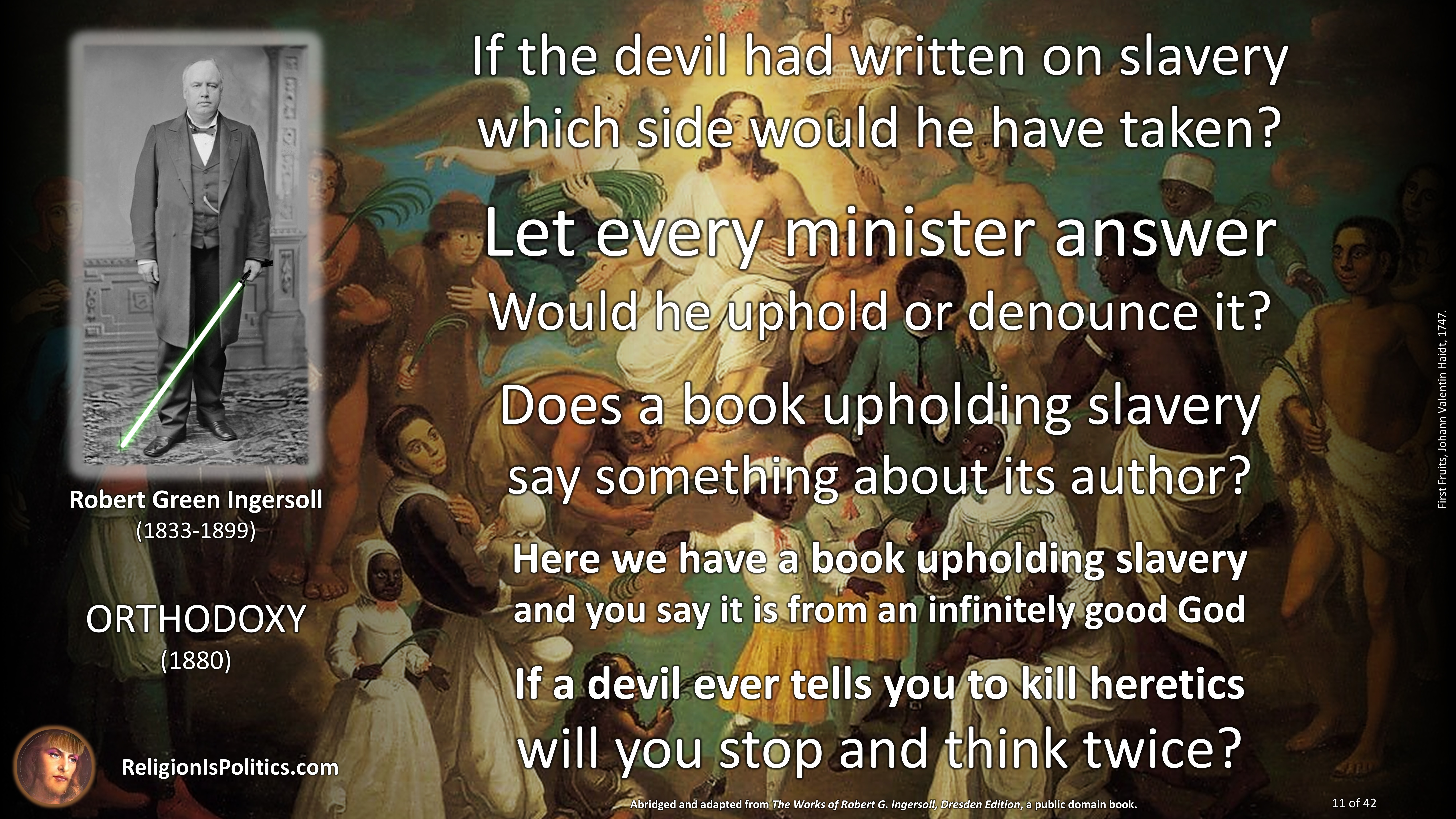
If we believe our prosperity is determined by the whims of an angry deity, rather than by the facts of nature and our own efforts, then every year we will give thanks for everything and blame for nothing.
We will give thanks to a ruler we cannot see and dare not question, simultaneously blaming ourselves for everything without ever taking responsibility.
And our efforts as well as our knowledge of nature will both go stagnant.
Disconnecting responsibility from blame like this gives dictators more control over a population.
This is how predators get impunity. It is where wolves get shepherd’s clothing.
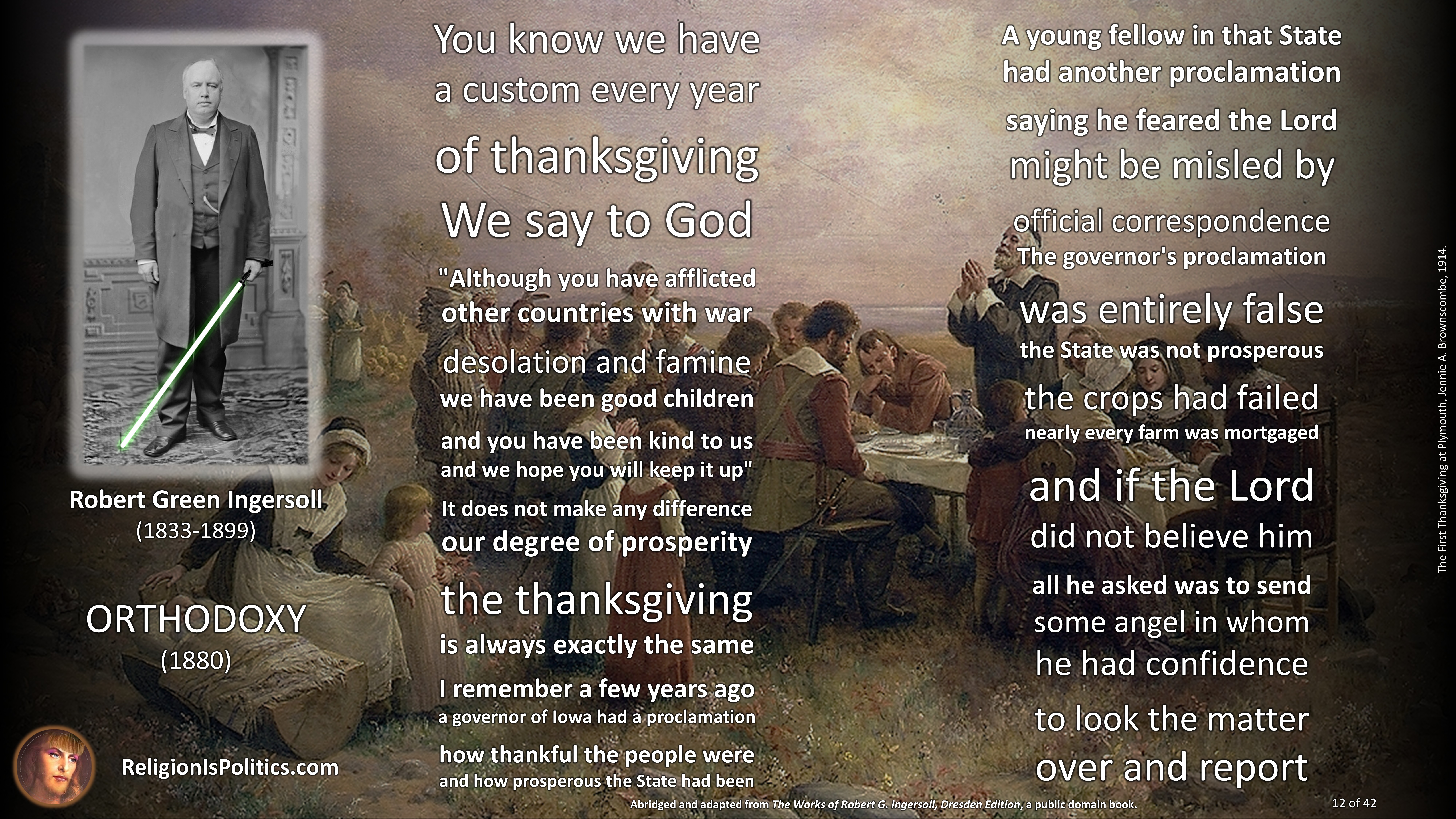
If we thank the universe for our birthright and think the universe made us to enjoy it then why would we ever think we might need to evolve to survive?
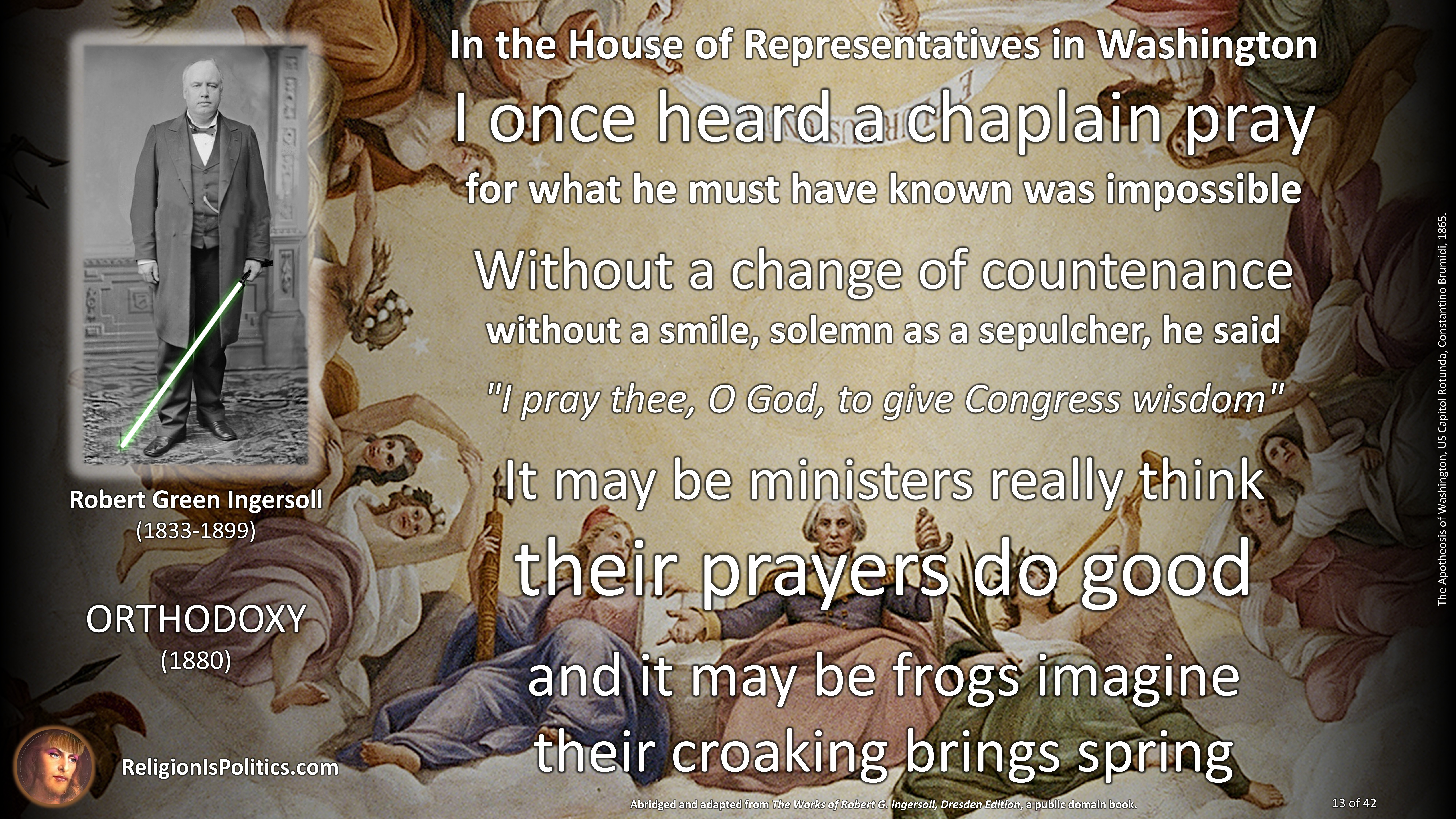
If we believe one of our books, written long ago, was and is the best book that could have ever been written anywhere, then as long as we believe it, that book will be a ball and chain on our intellect.
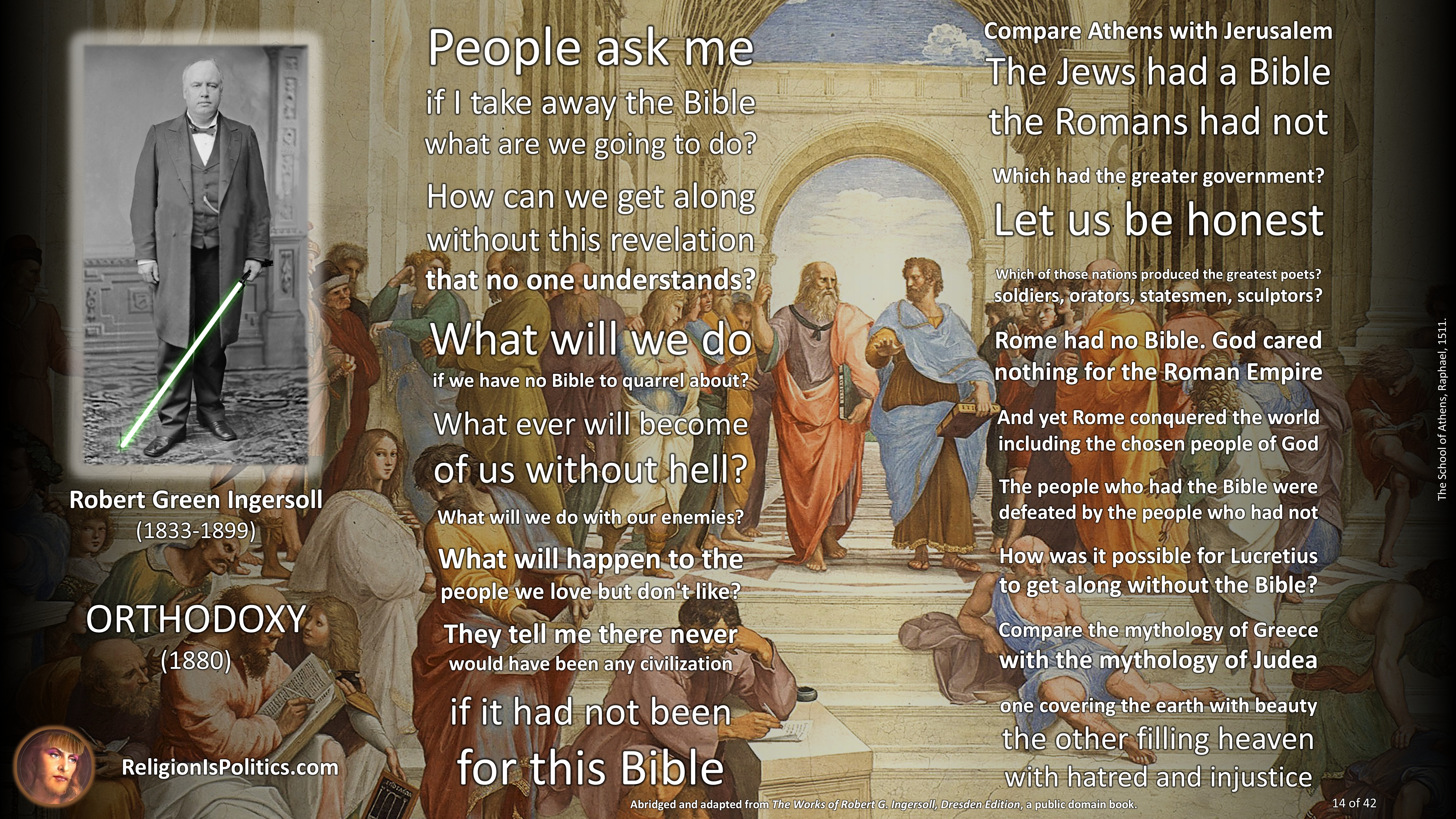
If we believe there’s one book we can’t live without then we’re missing out on all the other books that can help us lead fuller lives.
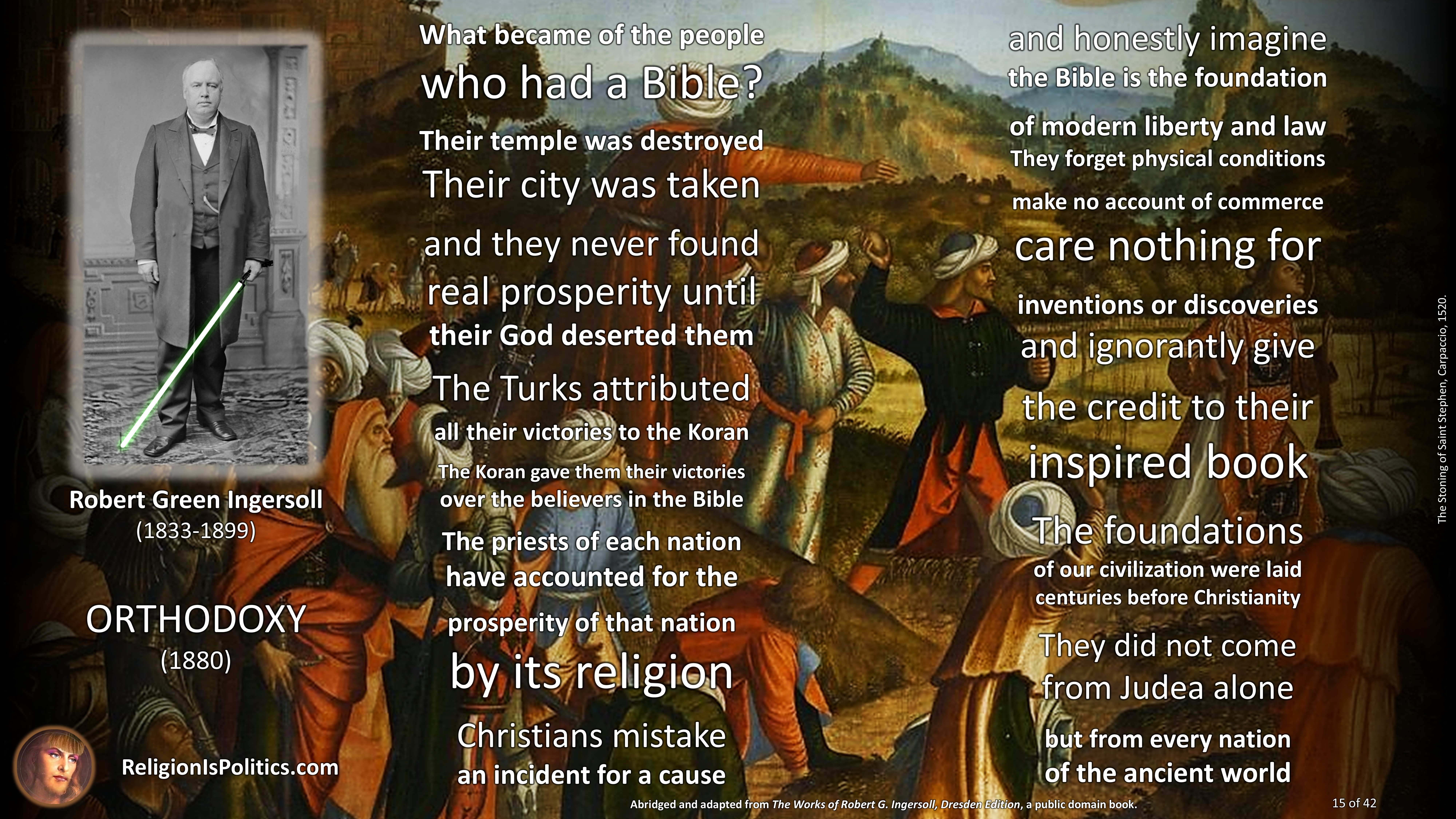
If we believe all art is intended either to glorify Jesus Christ or to seduce people away from him then I’m afraid that creates a self-fulfilling prophecy.
It isn’t Mr. Christ’s fault though. It’s ours.
If you believe all artists are either with him or against him then I believe the one who started the culture war was you.
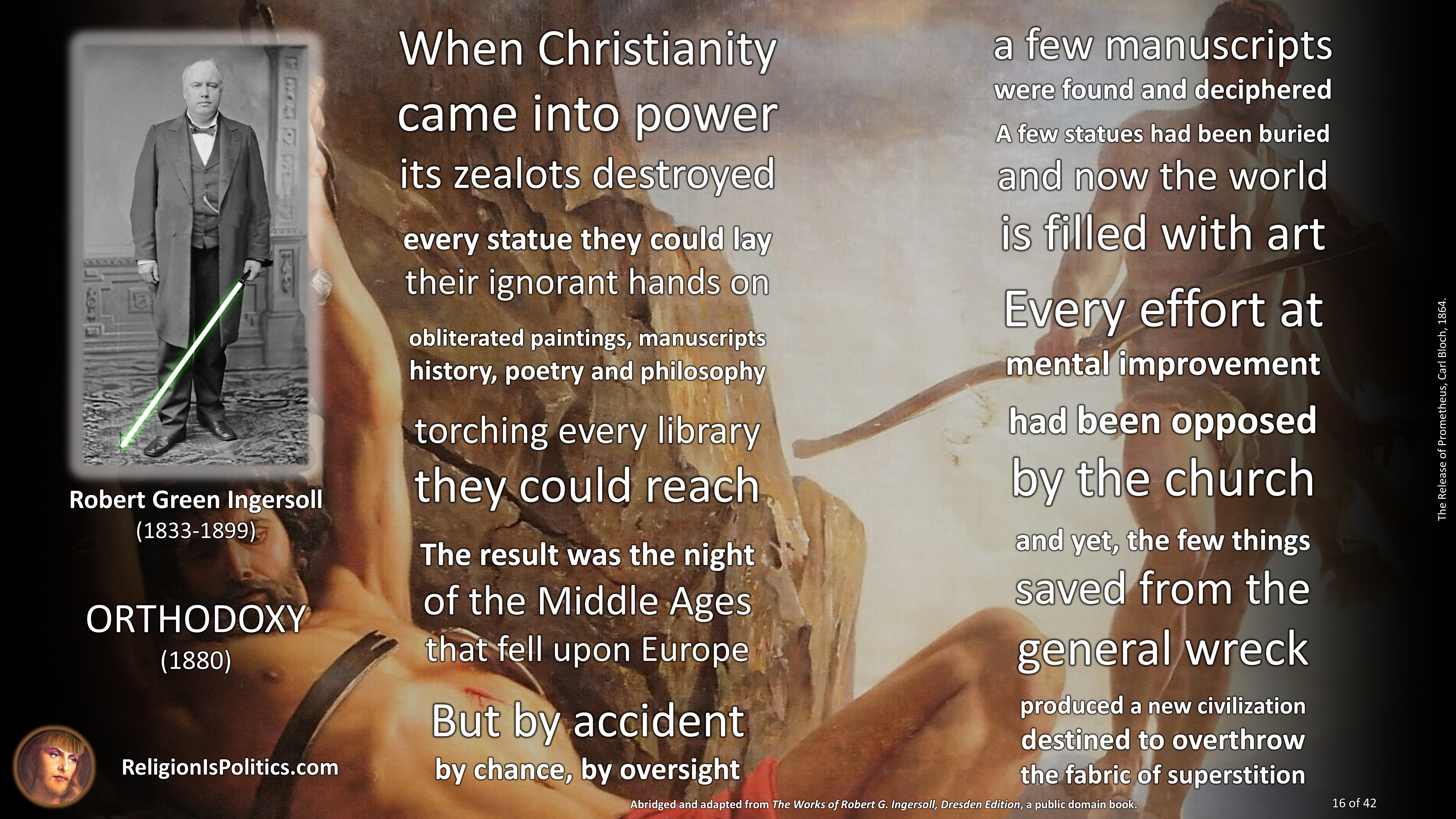
If we believe there’s an infinite reward for believing everything the Bible says about Jesus then we will have to accept some serious contradictions.
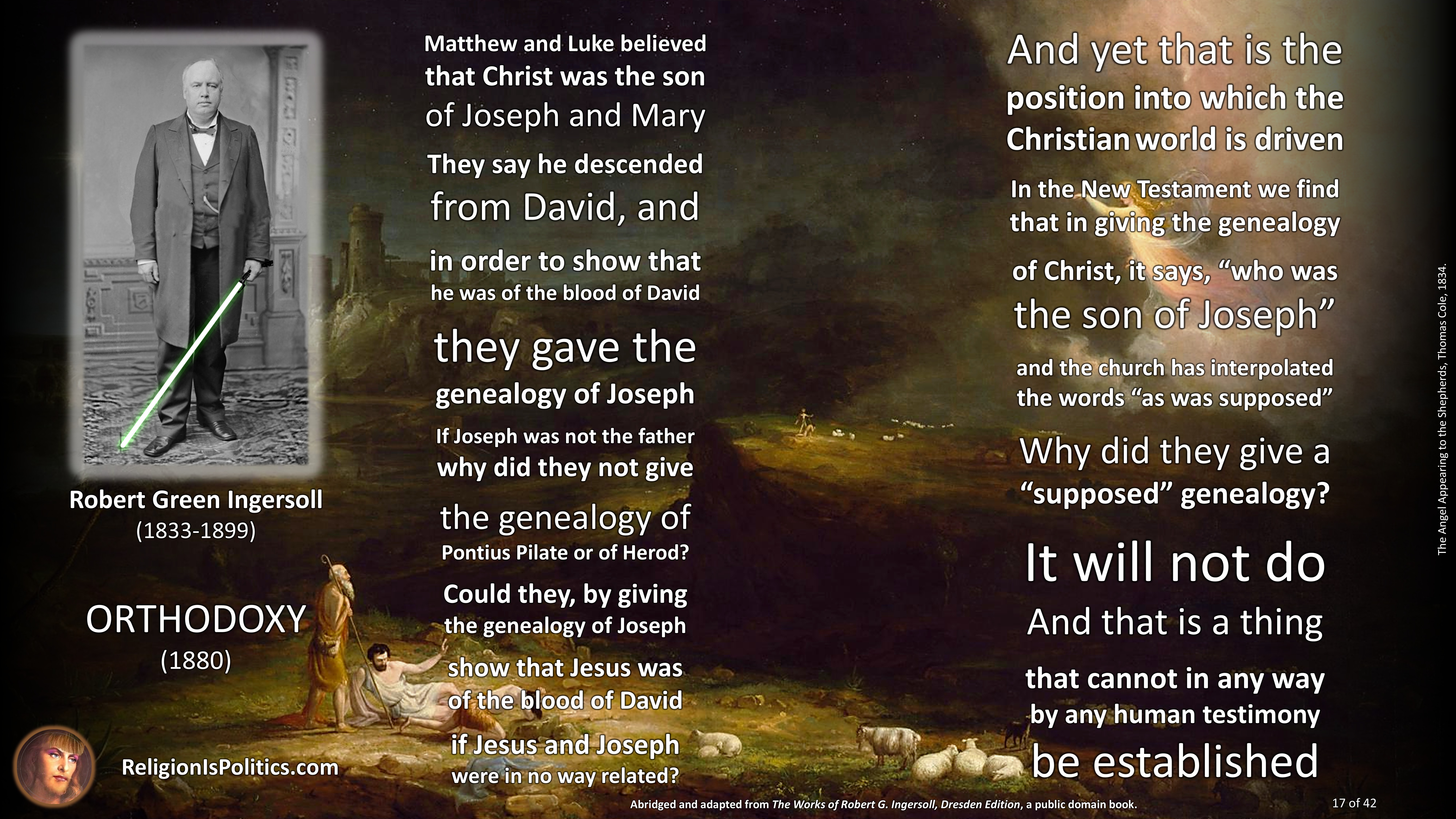
We’ll have to say one genealogy is for Joseph and the other is for Mary when in fact both genealogies name Joseph.
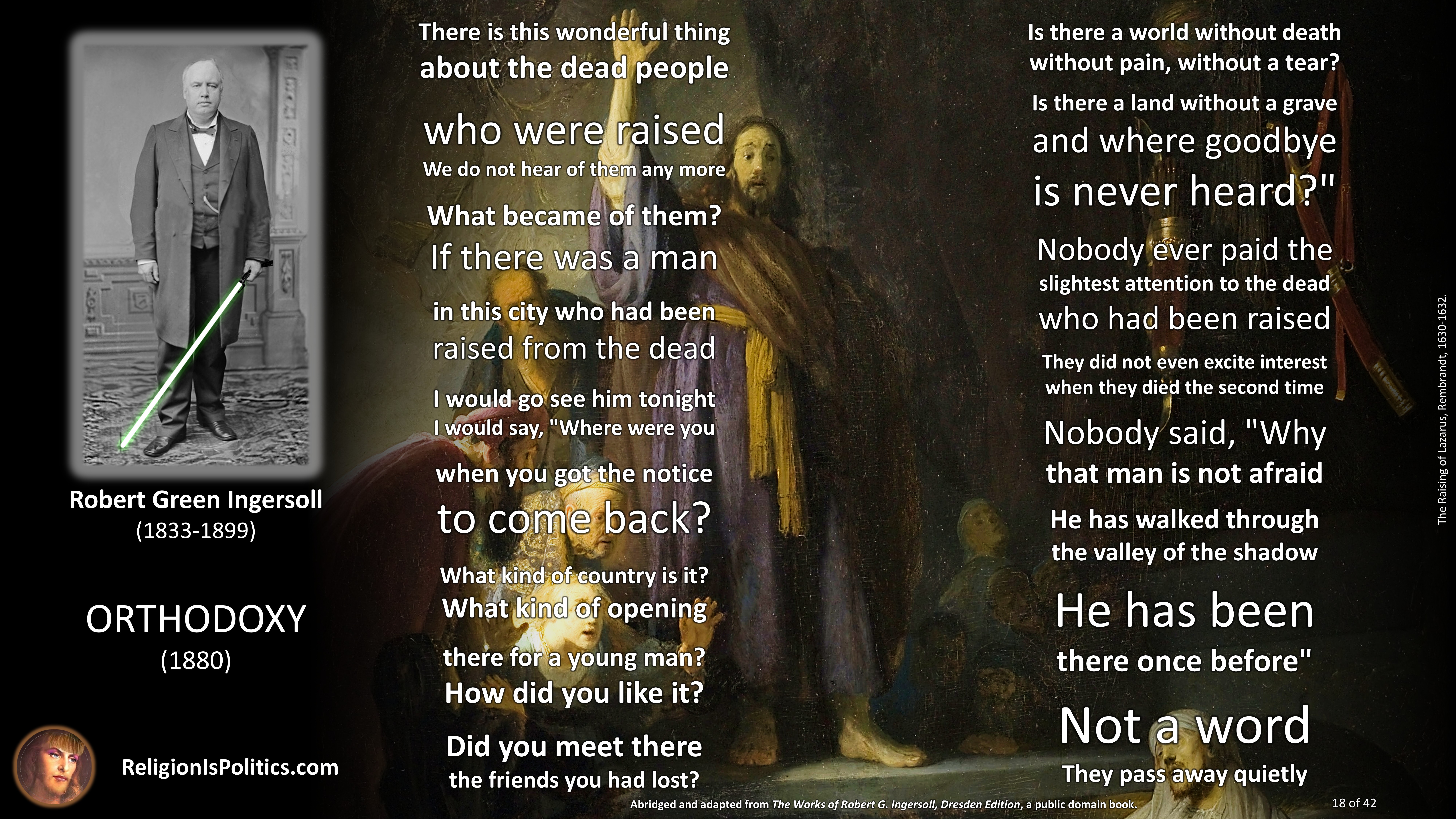
If we read the Bible from cover to cover, one of the clearest patterns to notice is the evolution of thought about eternal life.
This kind of thinking is entirely absent from the Old Testament.
If we read the literature between the testaments and around them then we know this kind of thinking evolved.
If we believe what the Bible says about chosen people and promised land then we create a perpetual incentive for holy war.
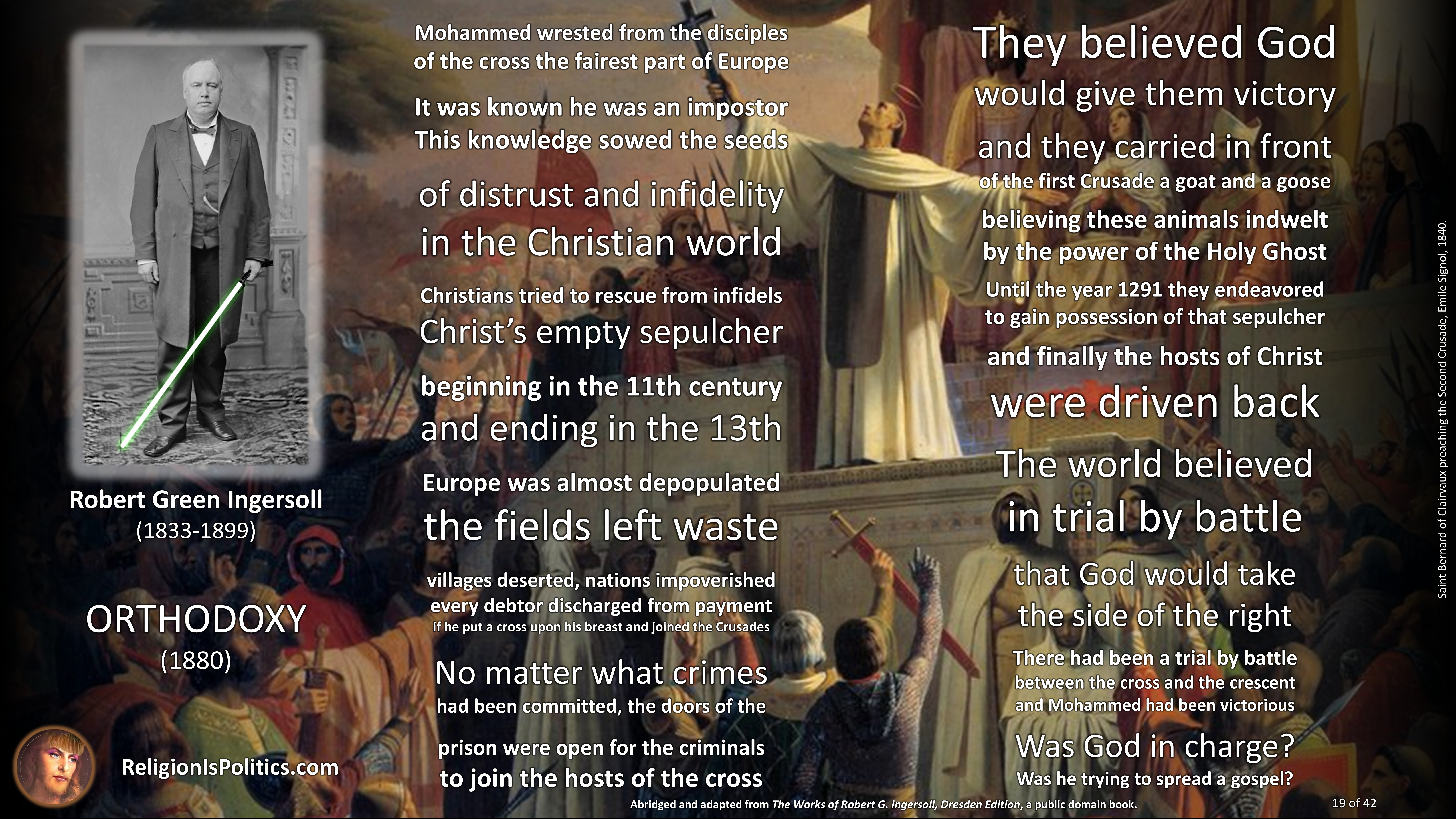
About the crusades, nothing can be plainer than their futility.
They were pious excuses for the mass industrialization of theft and murder and they all ended badly.
Besides, this, nothing else can be plainer than their sincerity.
After they met with victory, their faith was unshakable.
Not even defeat could shake their faith after that.
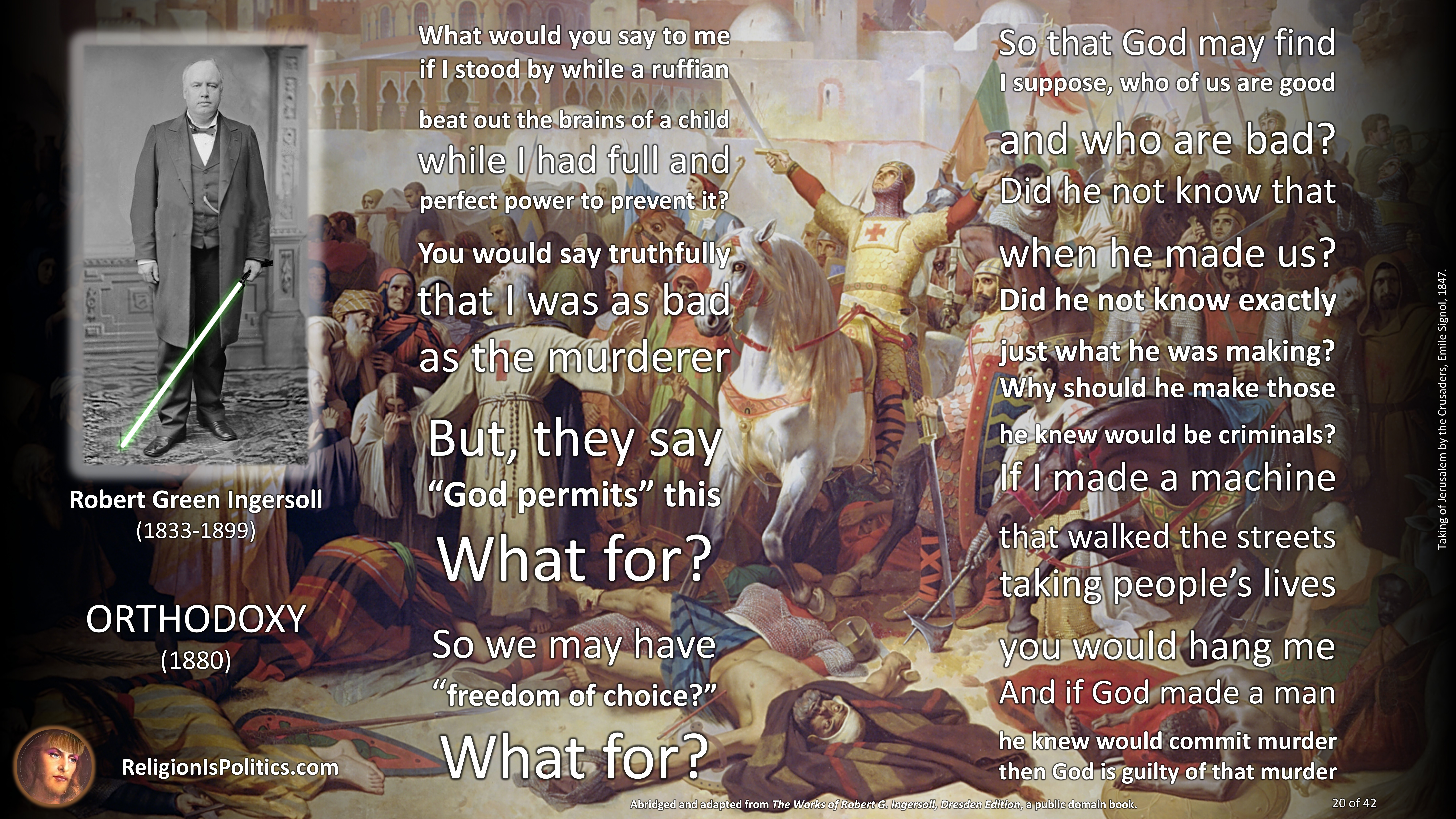
Crusaders are not so arrogant as to think God is on their side.
They are so humble as to think they are on God’s side.
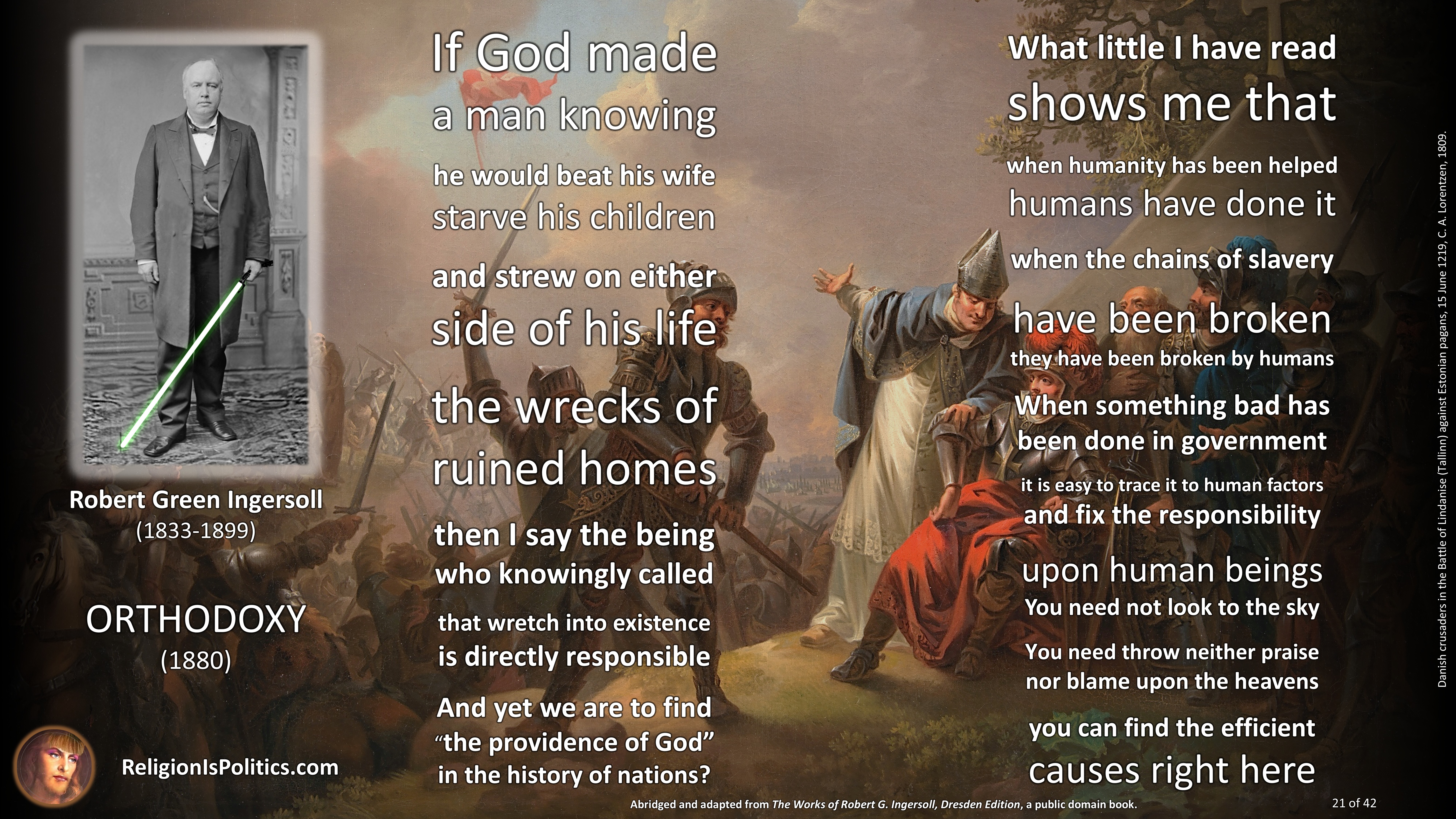
Is the world governed by God?
More than one war in the world today is marketed explicitly as a crusade.
Does God know anything about this? Does God care?
We do not know. And if theologians do not know any more in theology than they know in home economics, it is not worth mentioning.
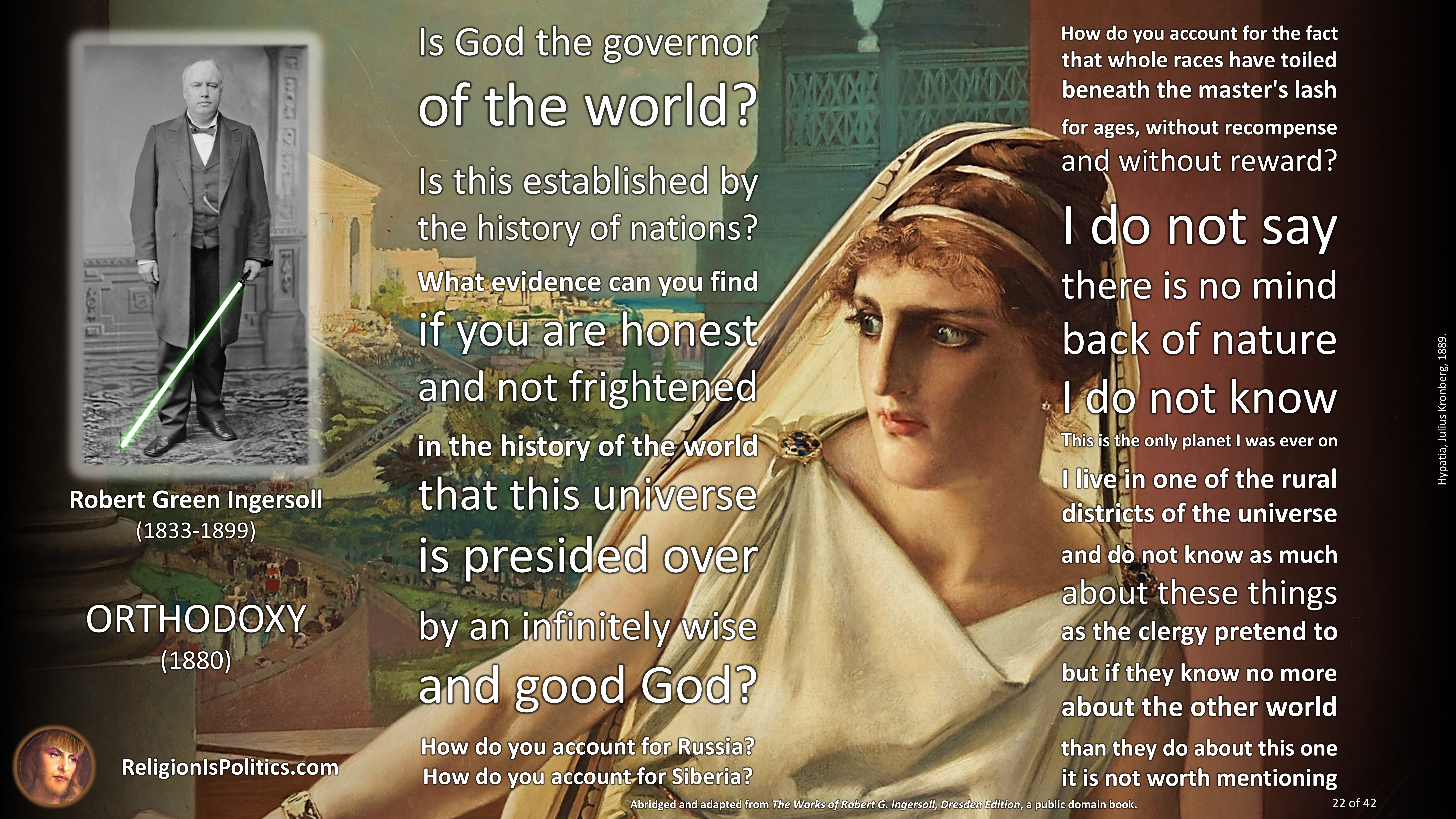
A church is always proud of a crusade in the generation it is undertaken, and usually for generations afterward. But eventually all crusades become an embarrassment and a drag on fundraising.
Then the churches divide over whether or not to apologize.
And there is only one apologetic they can give.
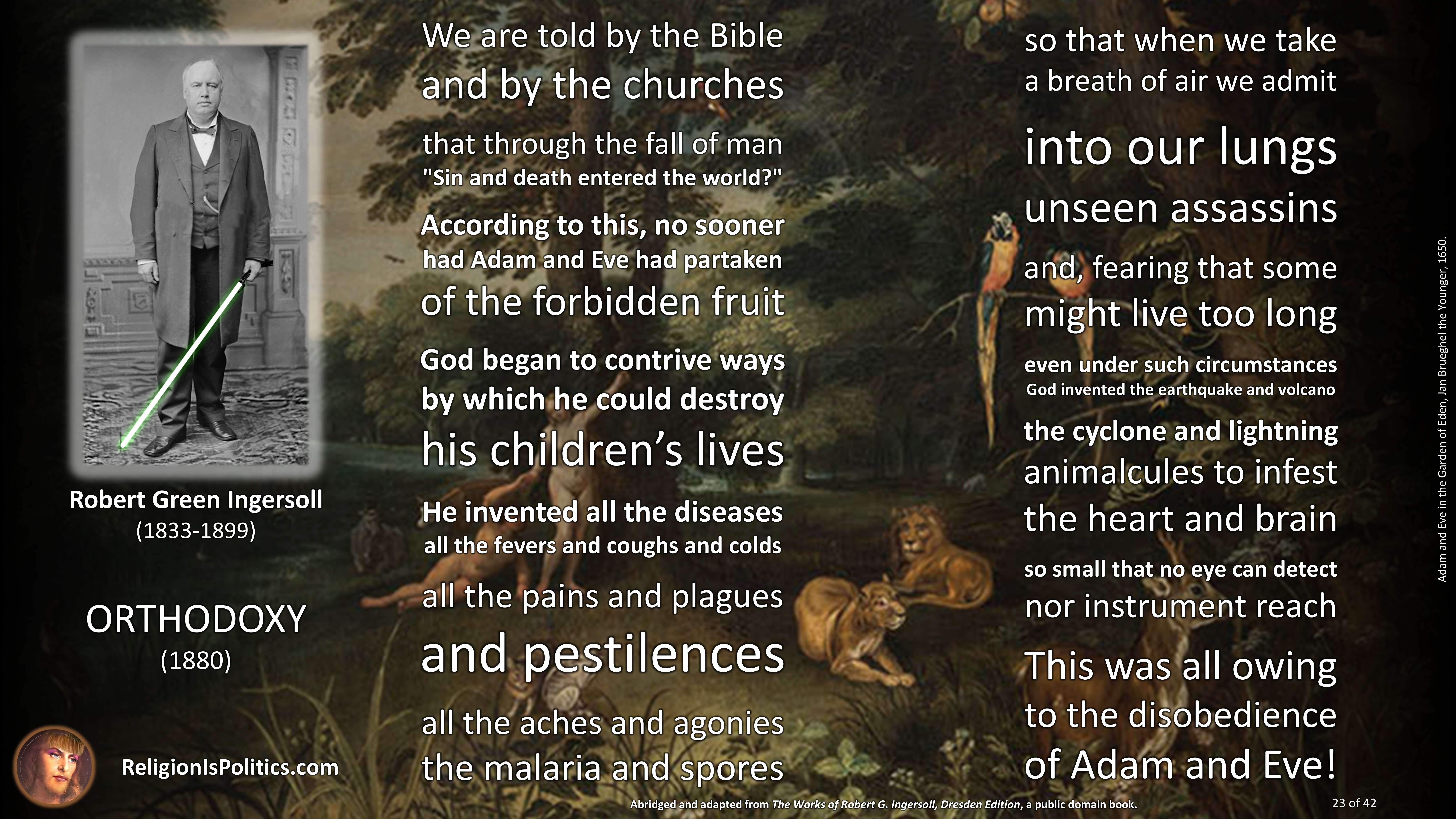
The only explanation a church has for a holy war of which they are embarrassed is to say the perpetrators were operating in bad faith.
That they didn’t really believe what they said they believed.
In other words, they were acting on false beliefs.
Just imagine if only they’d been even more zealous.
Whoever explains the crusades as an episode where atheists pretended to be Christians to get away with murder is an illustration of the point.
In those days people had to pretend to be Christians in order not to be murdered. And this was in accordance with biblical law. The Old Testament taught rulers how to subjugate the people, and the New Testament taught the people how to forgive them.
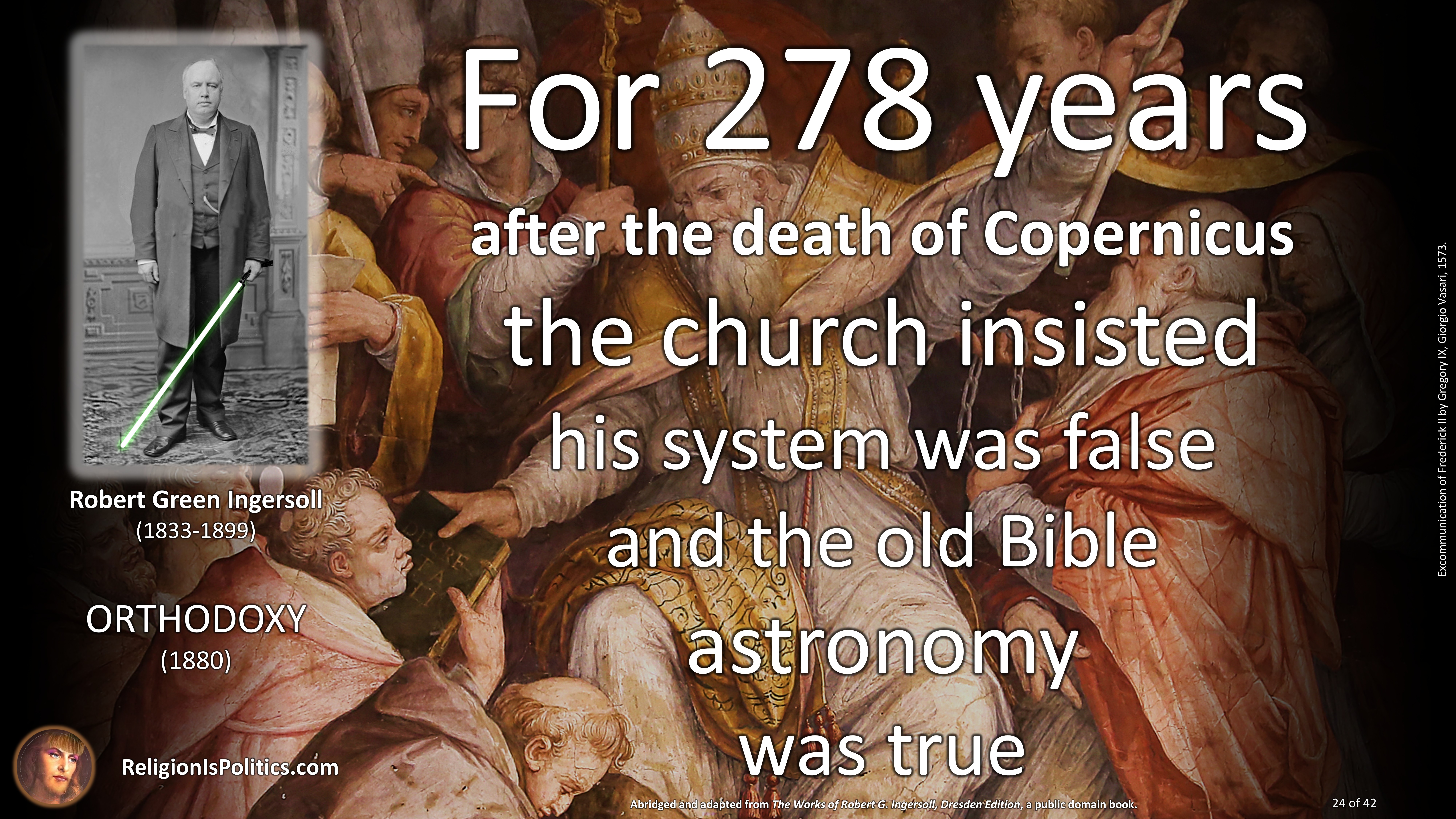
As to why the almighty all-father of the universe chose violence, his worshippers can only tell us to blame ourselves.
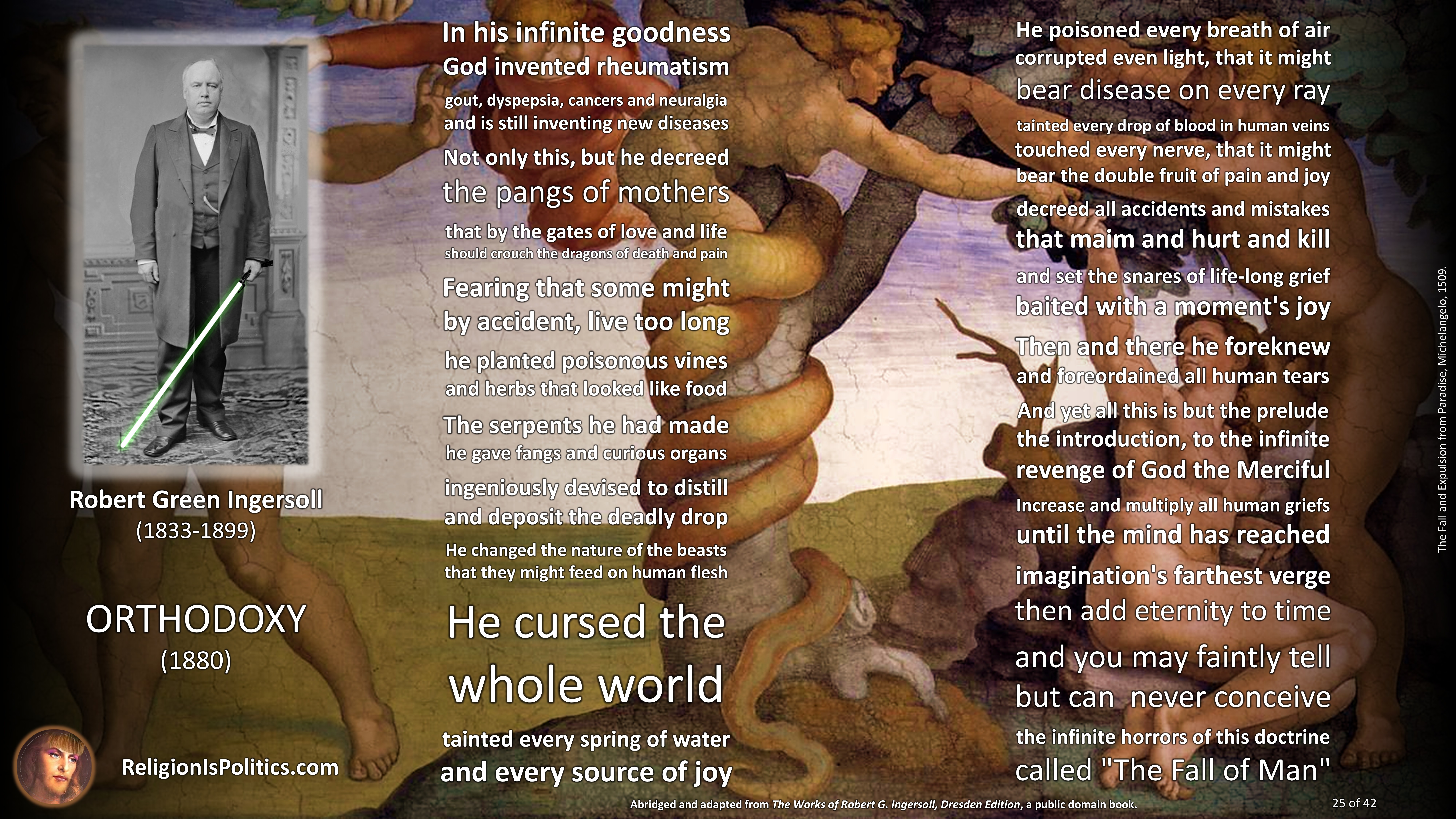
Obviously Genesis is not a record of true facts.
Like the rest of the Bible, it is an anthology of related narratives.
Some of them have multiple versions.
It was written by the few who could read to influence the many who could not.
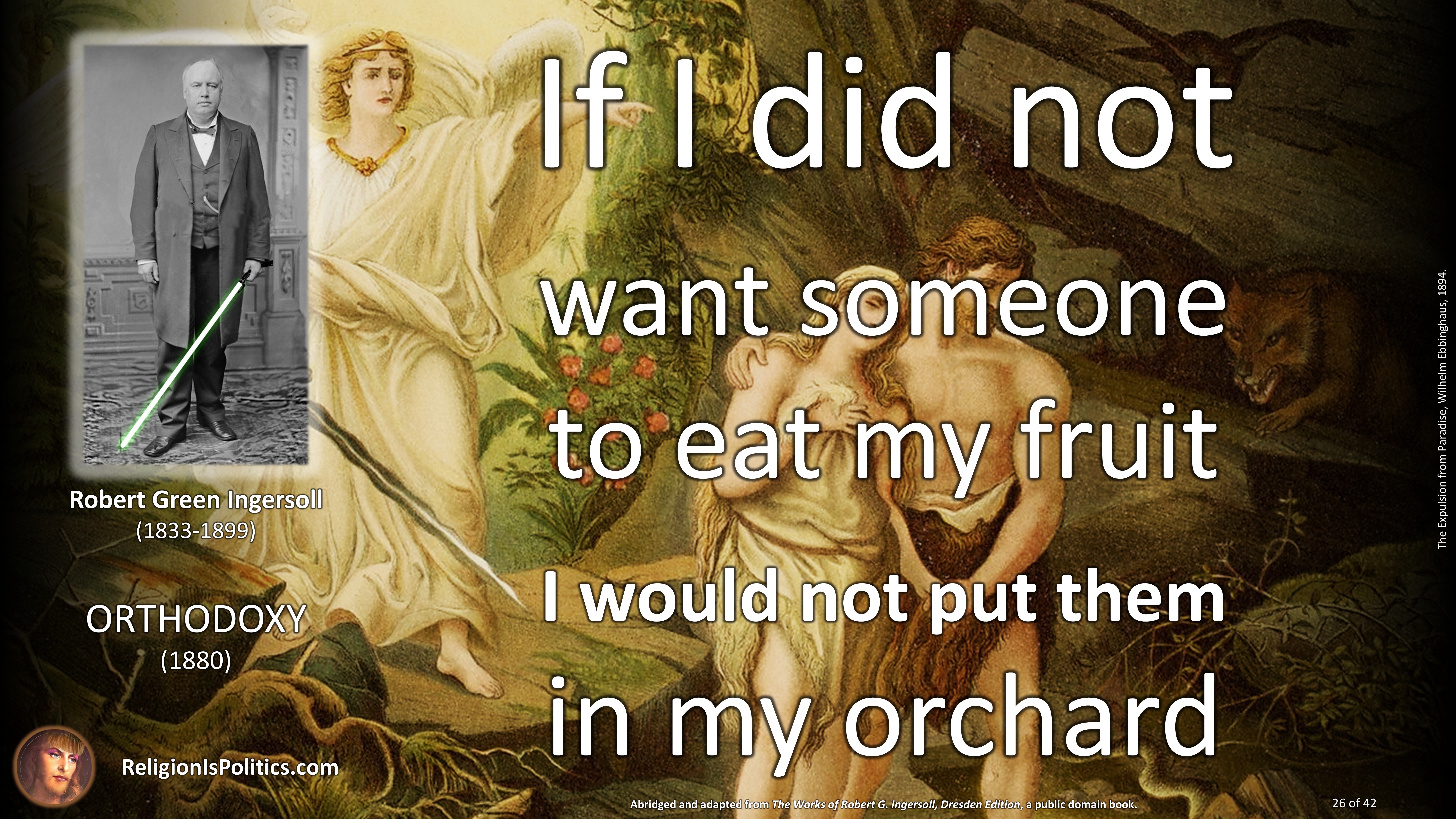
Likewise the New Testament. It is an anthology of related narratives given in multiple versions by the few who could read to influence the many who could not.
And what distinguishes the New Testament from the Old is not good news. It’s dreadful news wearing good news like a mask.
It is the proverbial wolf in sheep’s clothing.
It is not a message of fellowship and love as much as it is a message of eternal grief and pain.
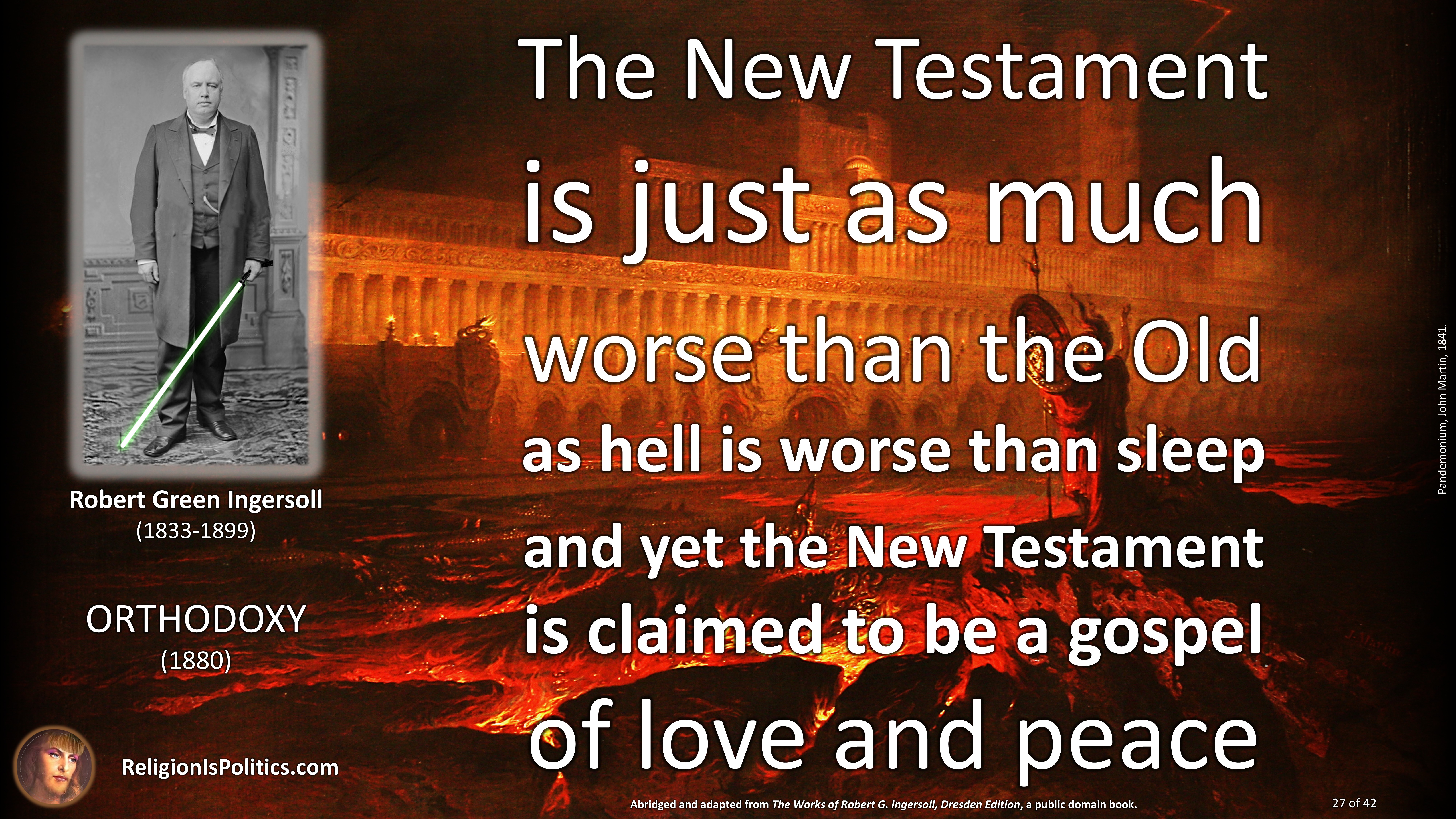
Let us compare what we got from Charles Darwin with what we got from the Old and New Testaments.
From Christianity we got a thousand years of theocracy, feudalism and holy war.
From Darwin we got the unifying theory of biology.
From Darwin at last we got the truth.
The fruit of the tree of knowledge.
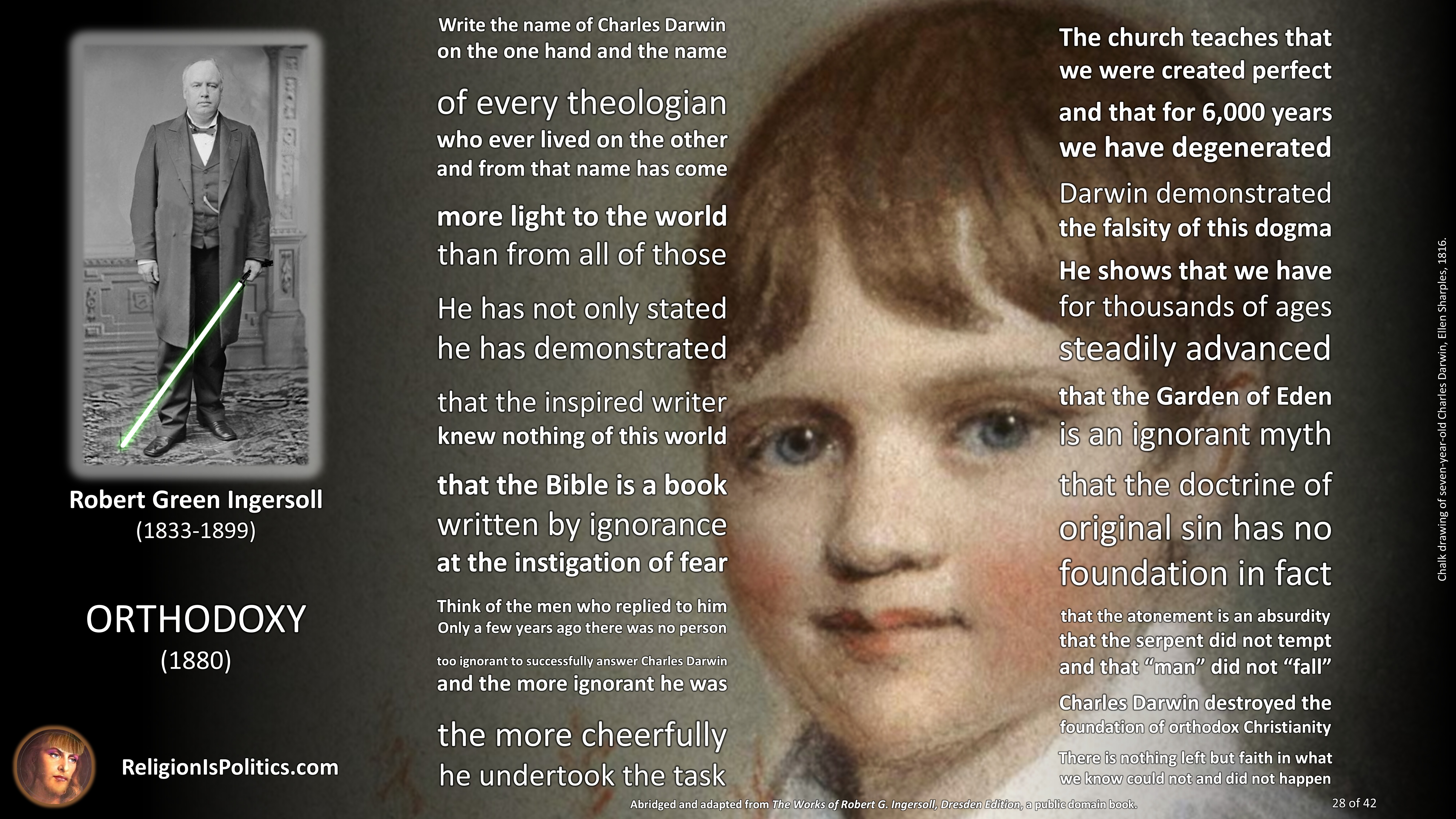
Ever since Darwin, ever since Copernicus, clergy have adopted ever more mysterious language to convey the meanings of their timeless truths.
While other sciences have solved mystery after mystery, in theology, the mystery has only increased. And it will only increase until it is omnipresent.
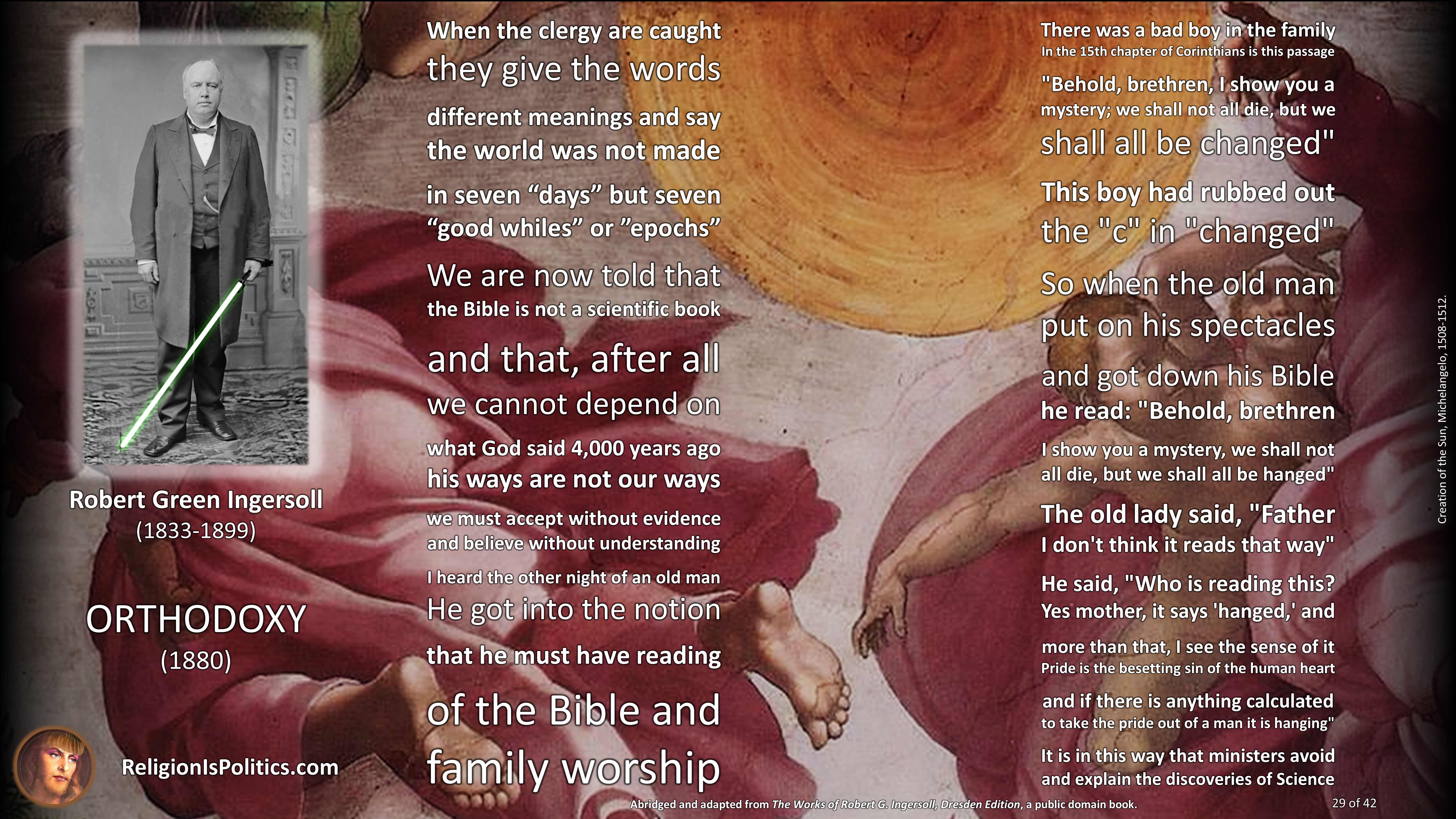
Must we be born again?
Can we hope by this device to live happily ever after?
Or should God be the one to start over?
That is, if he exists.
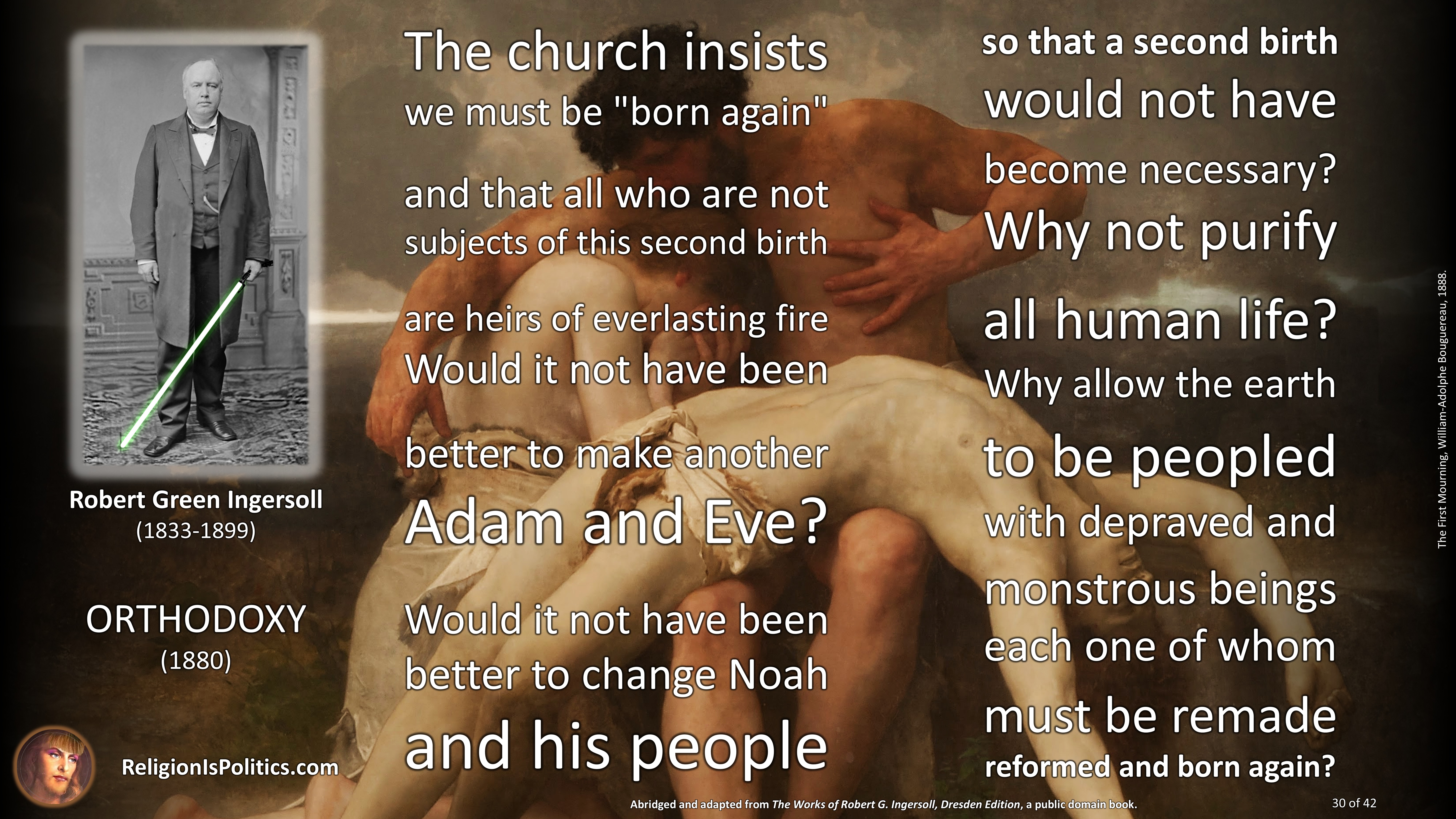
Let us consider Pascal’s wager in the light of climate change.
If we believe God is too good to damn us or we are too good to be damned, if God exists and we ignore climate change, then there is no harm to us. The world was already scheduled to be destroyed. And according to the schedule there was going to be another world created after that. A better world, where humanity’s once-mortal bodies will live forever fixed in either pleasure or pain.
But if God does not exist then the harm of ignoring climate change is total, final and absolute.
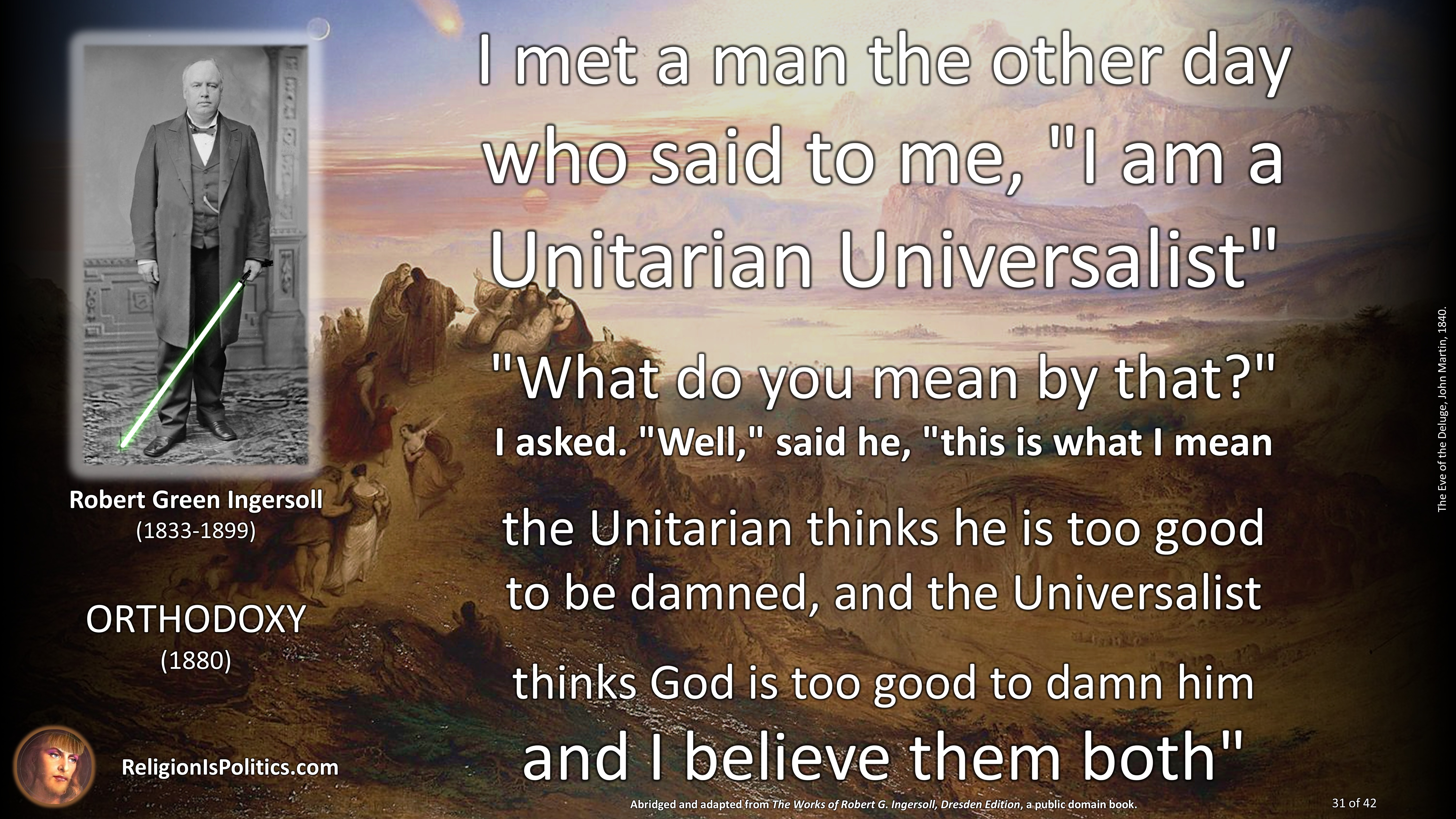
If we hold our breath waiting for a deus ex machina, we will be waiting for 2,000 years or more.
If we believe whoever isn’t with us is against us then our politics will always be about the definition of the enemy.
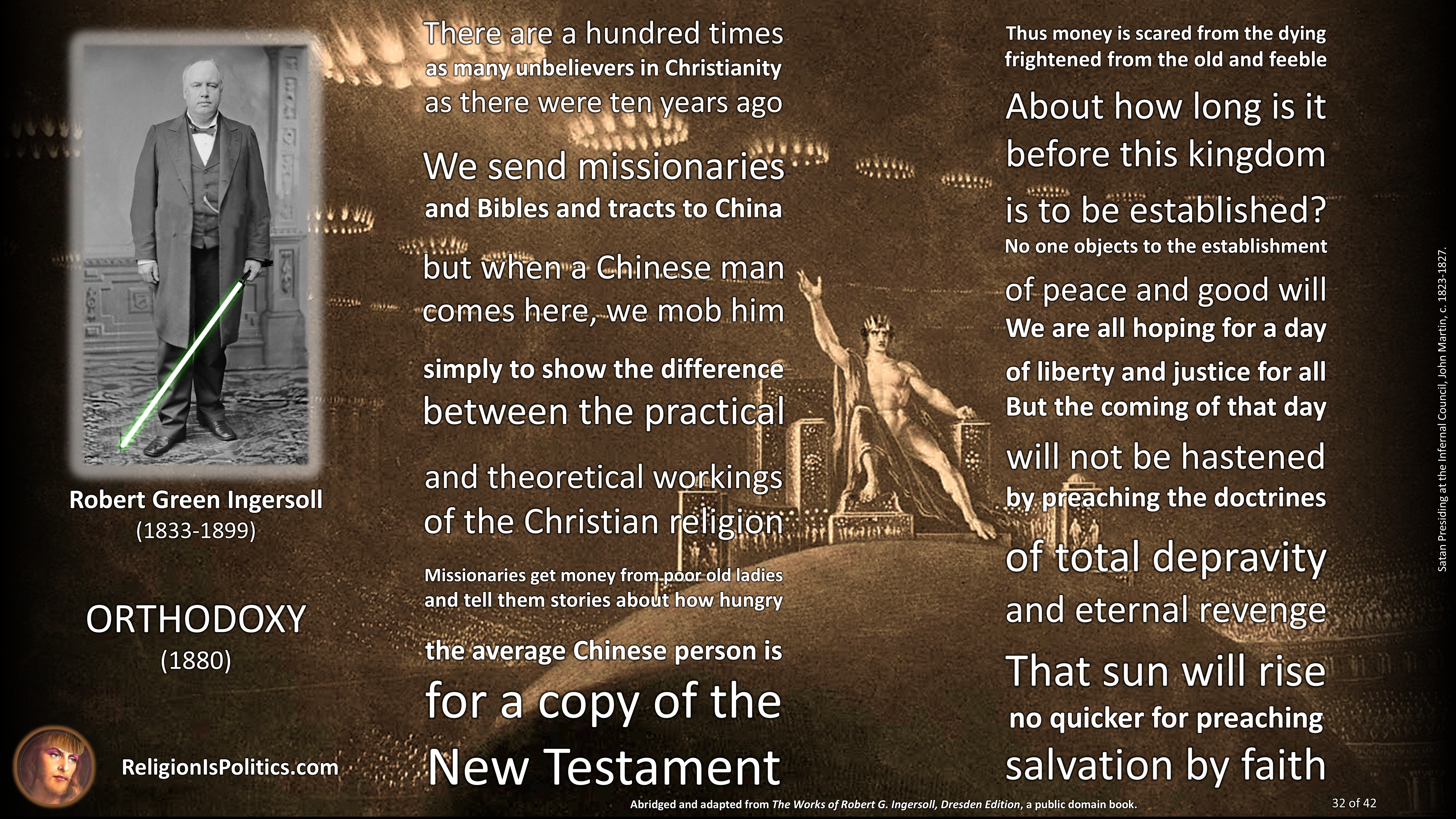
If we preach forgiveness for our enemies but what we mean is our enemies need to forgive us and our vision of the future is an eternity where we’ll never need to forgive anyone again then what we’re preaching is a hypocritical revenge fantasy.
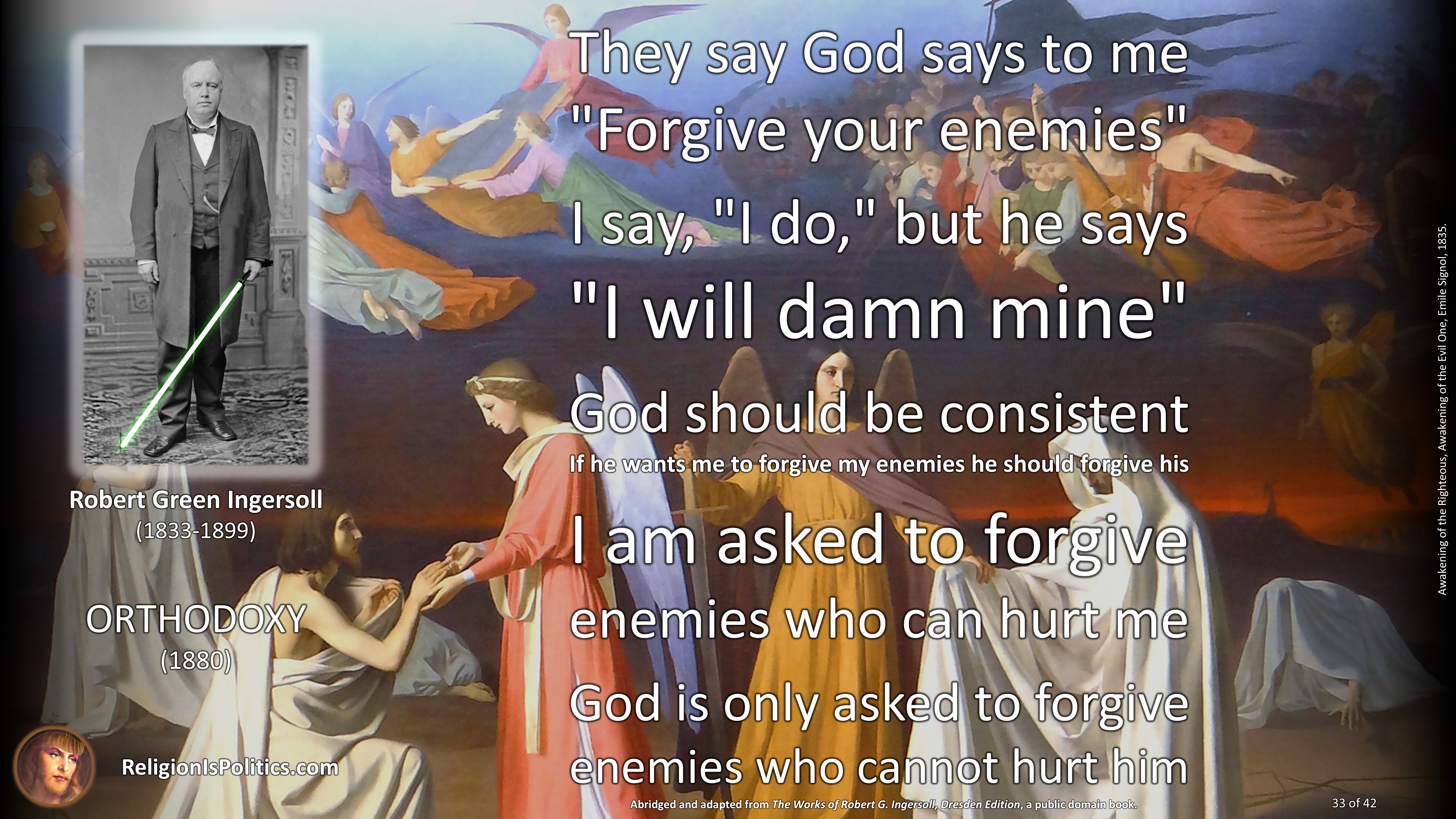
If we preach that all things will be forgiven to whoever believes and the only thing unforgivable is unbelief then the gospel we’re preaching is the good news of total depravity
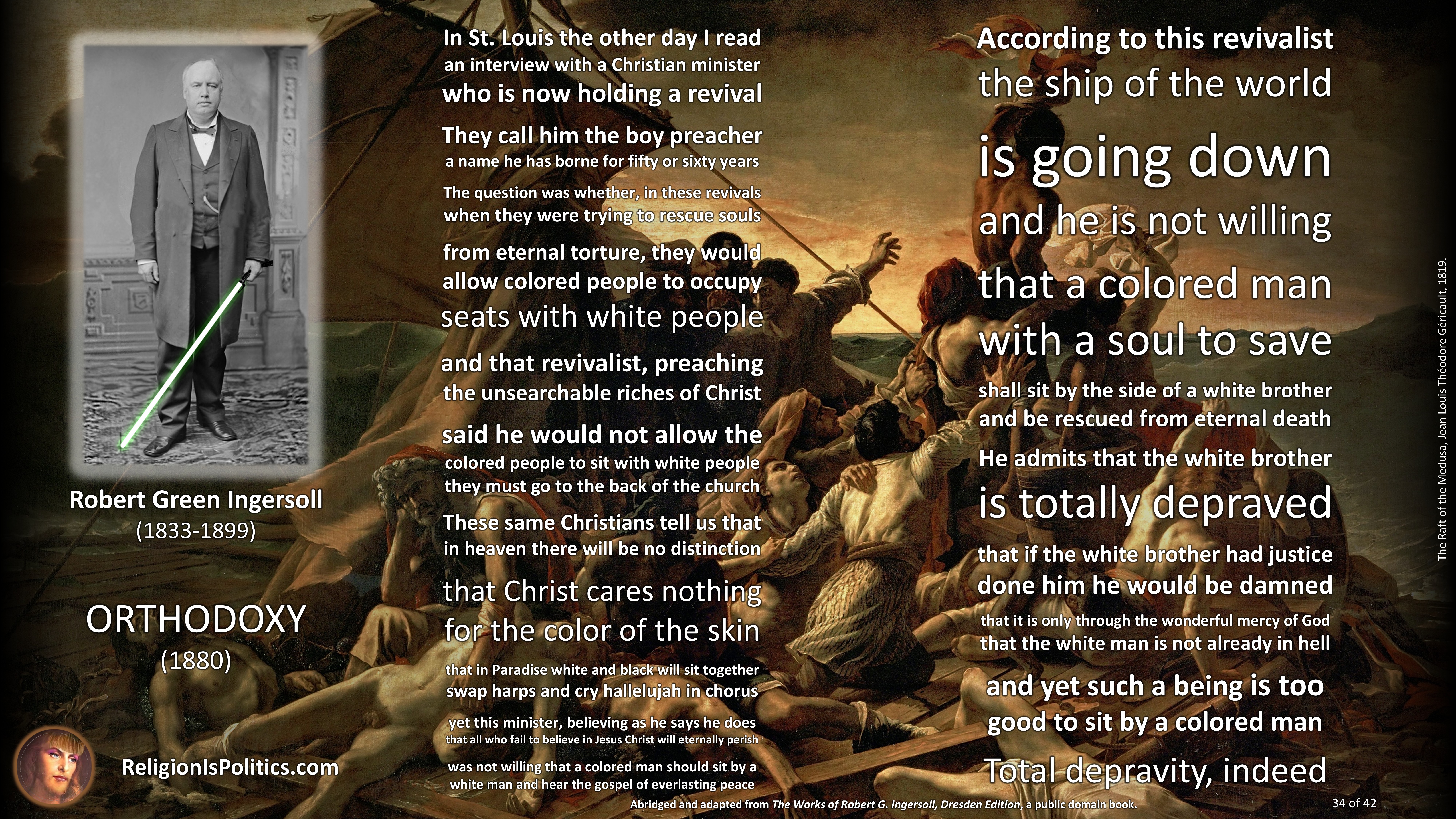
Christianity’s innovation is not peace. It is to worship the god of peace and the god of war by the same name.
Its words mean all things to all people. In this way both gods are worshipped continually.
And herein is a self-fulfilling prophecy for perpetual religious civil war.
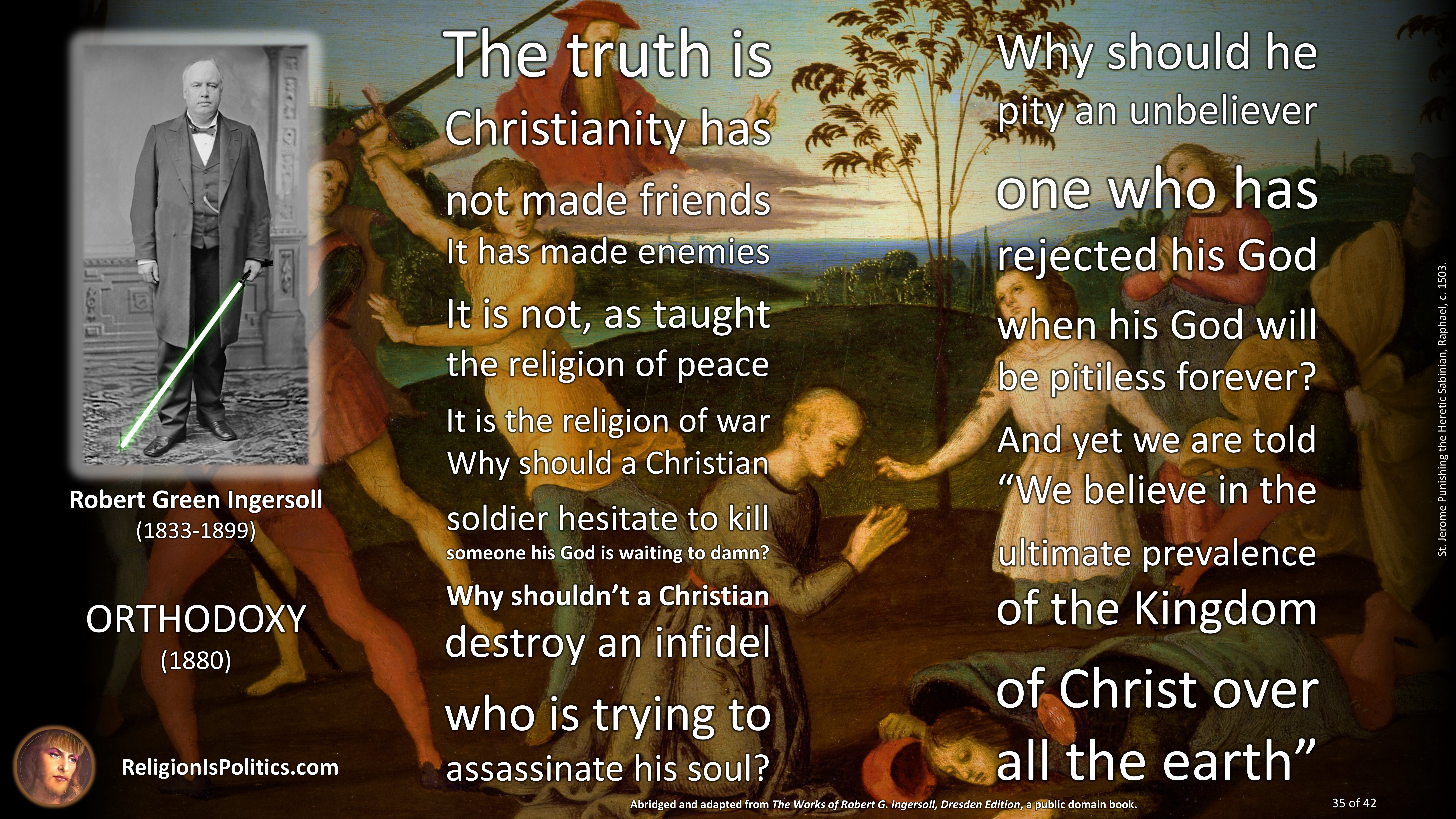
How thankful we should be that God saw fit to invent sociopaths.
Where would we be without them among us?
Where would we be if all of us had just a little more empathy?
Should we be ashamed of ourselves or should he?
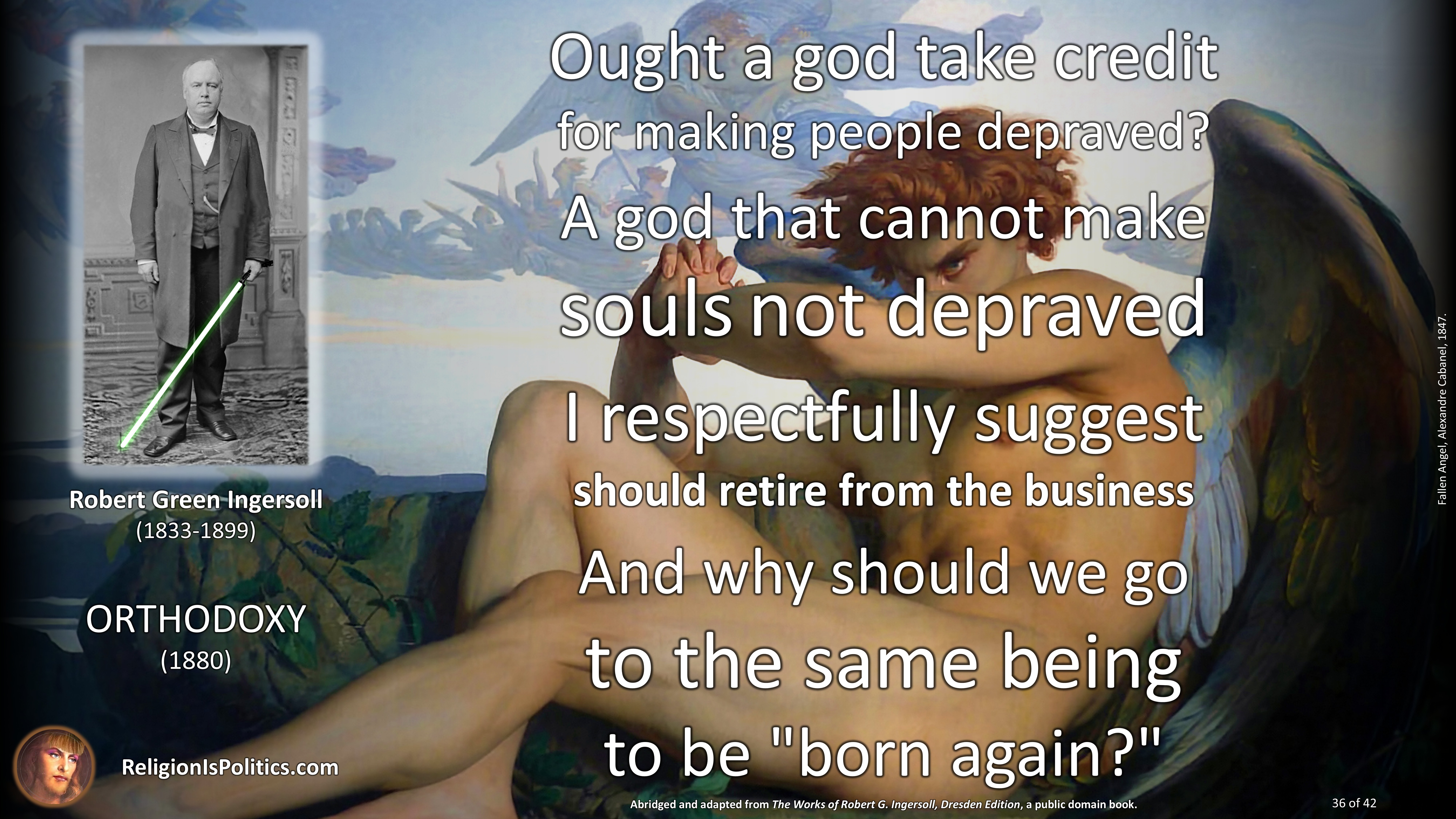
If God has a message for us, I think we can count on the message to be clear of doubt.
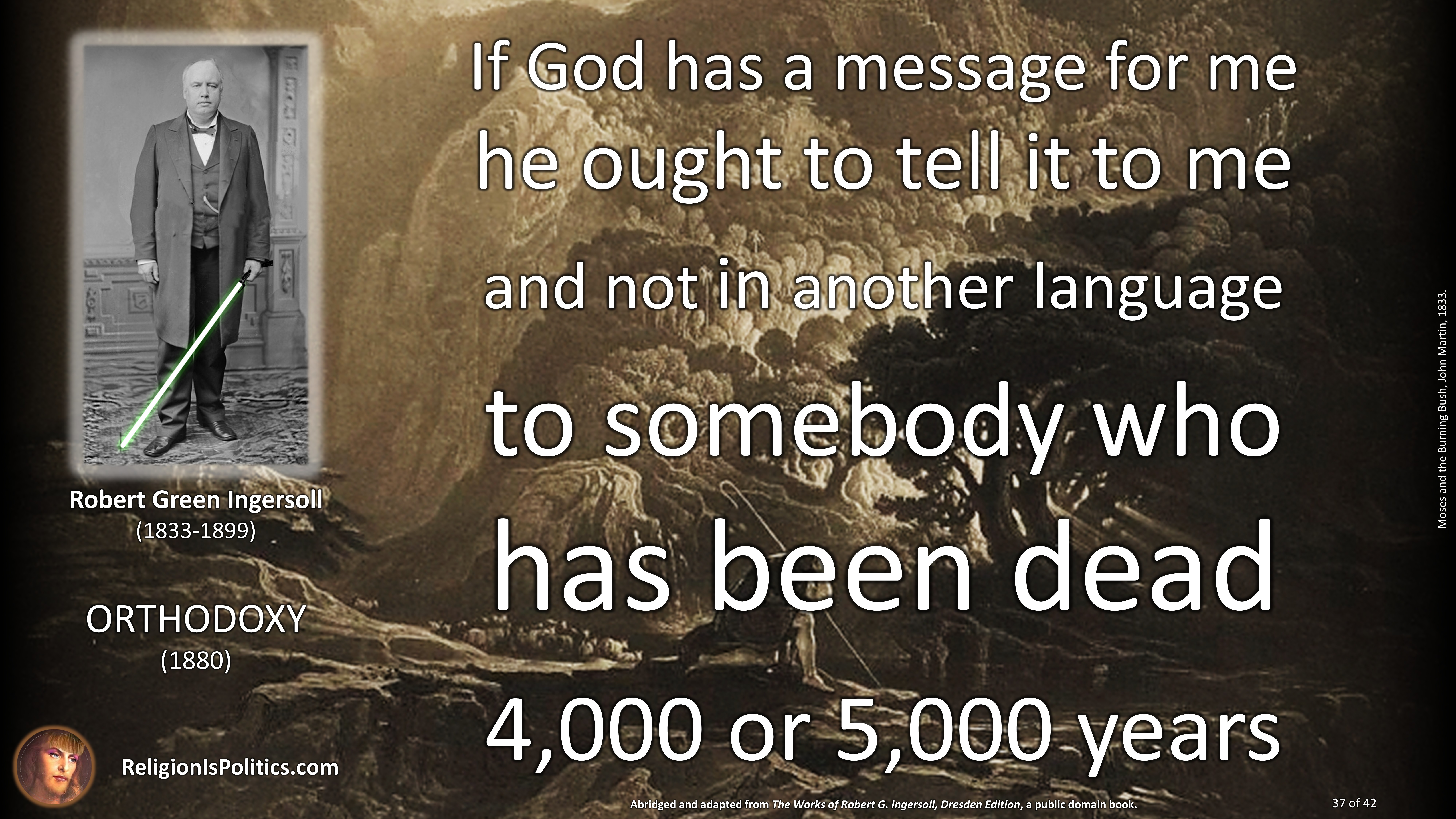
If Almighty Wisdom was real, I think it would never tell us to care about Almighty Wisdom more than we care about one another.
Compare the nations today that are still Christian with the nations that aren’t very Christian anymore.
Look anywhere you like and you will generally find that the nations that aren’t very Christian anymore have better governments and higher standards of living. And those countries that have redoubled their Christianity have accordingly degraded their governments and standards of living.
As long as we believe the author of the universe created us sick and commanded us to be well (through an act of loyalty on pain of a fate worse than death) we will be at risk for barbarism toward one another.
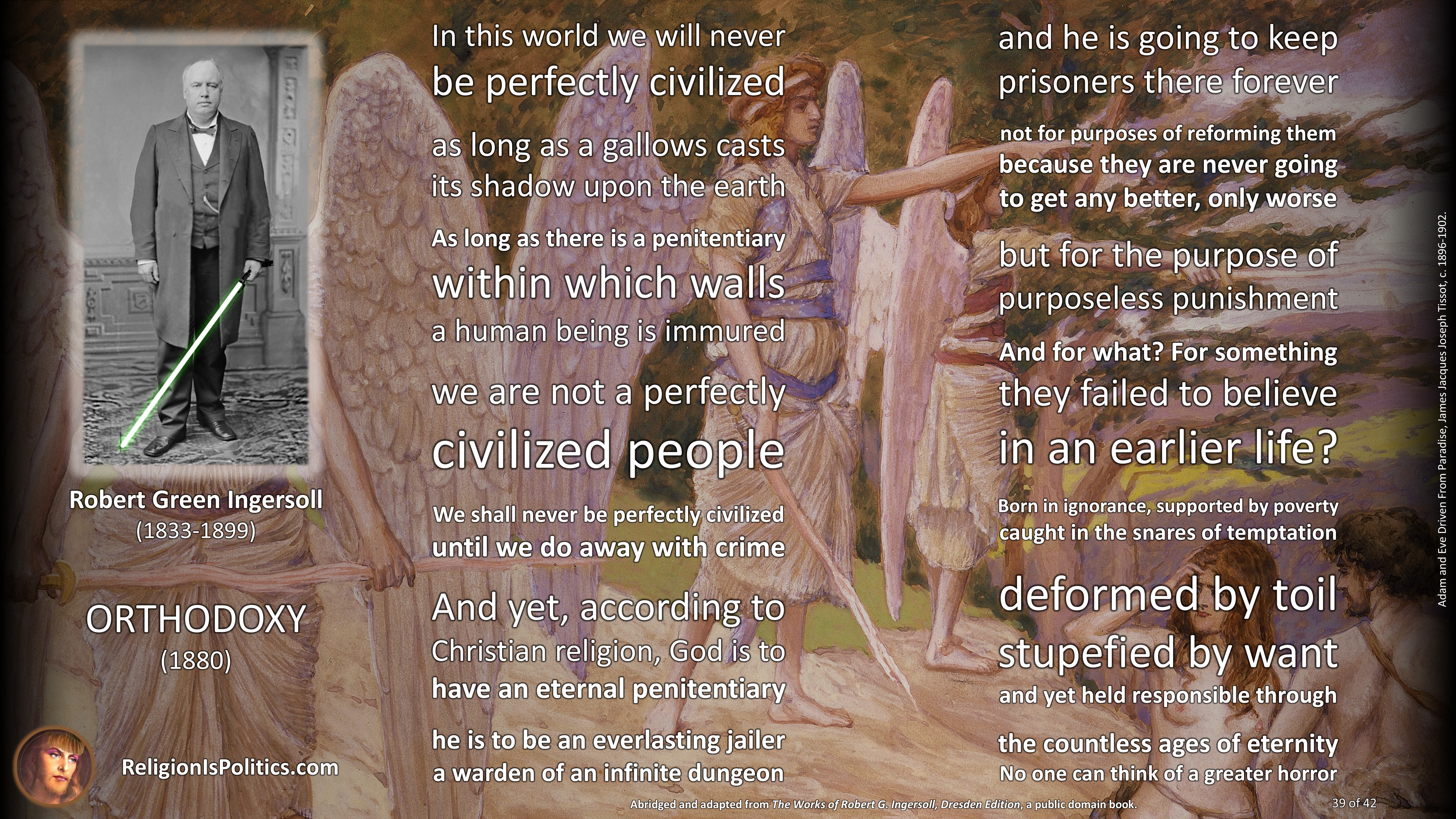
What good is there in Christianity that was not borrowed from humanity before?
Borrowed and never given back.
What good is there in Christianity that did not come in spite of it?
Should we expect mercy from someone as merciless as the God of Christianity?
Should we expect justice?
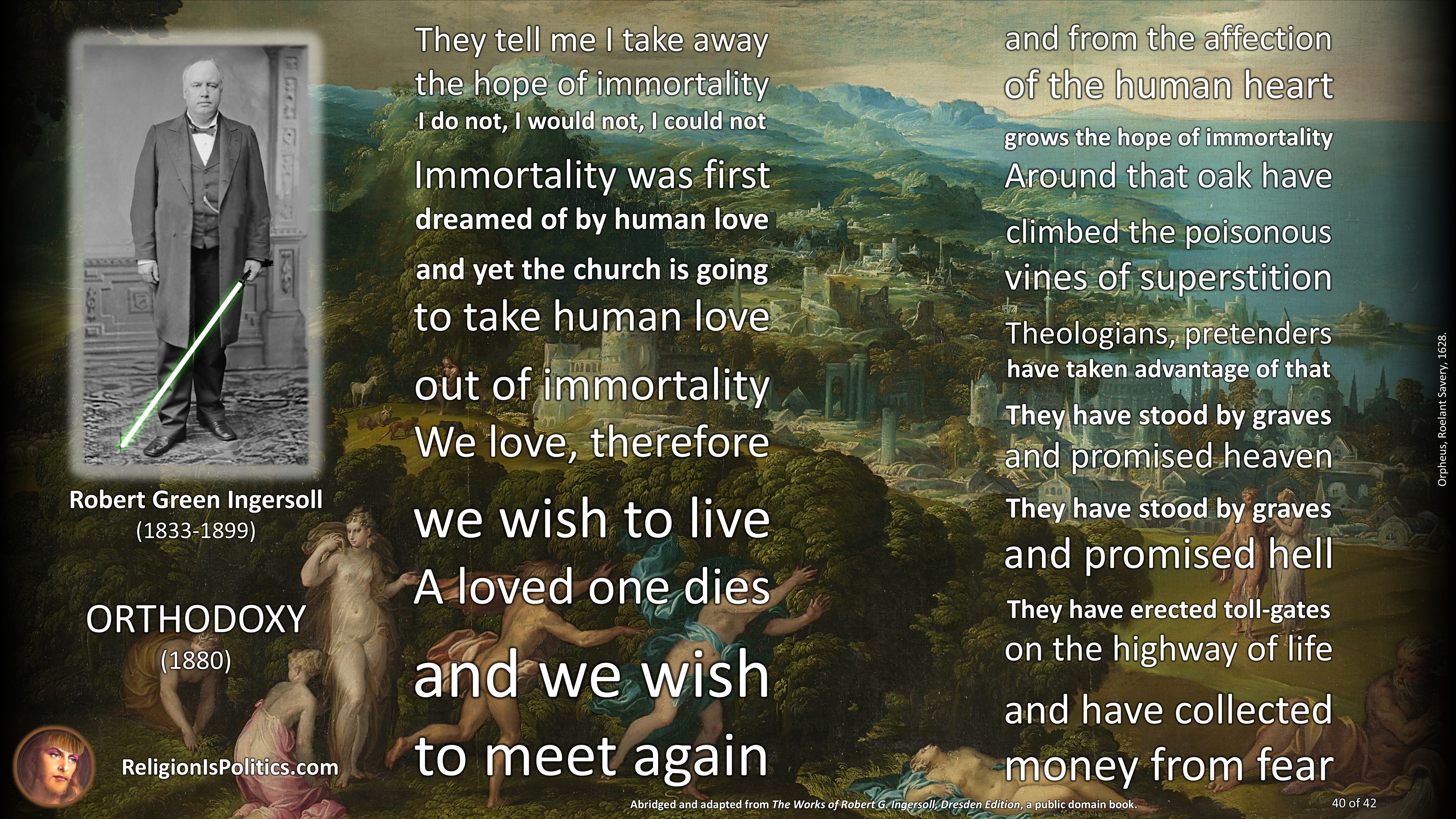
Are we in need of soldiers who fancy themselves crusaders?
Does the patriarchy need enforcers?
Is that the real reason for Christianity?
That may not be the reason for Christianity in the first place.
But it is the reason for Christianity as we know it.
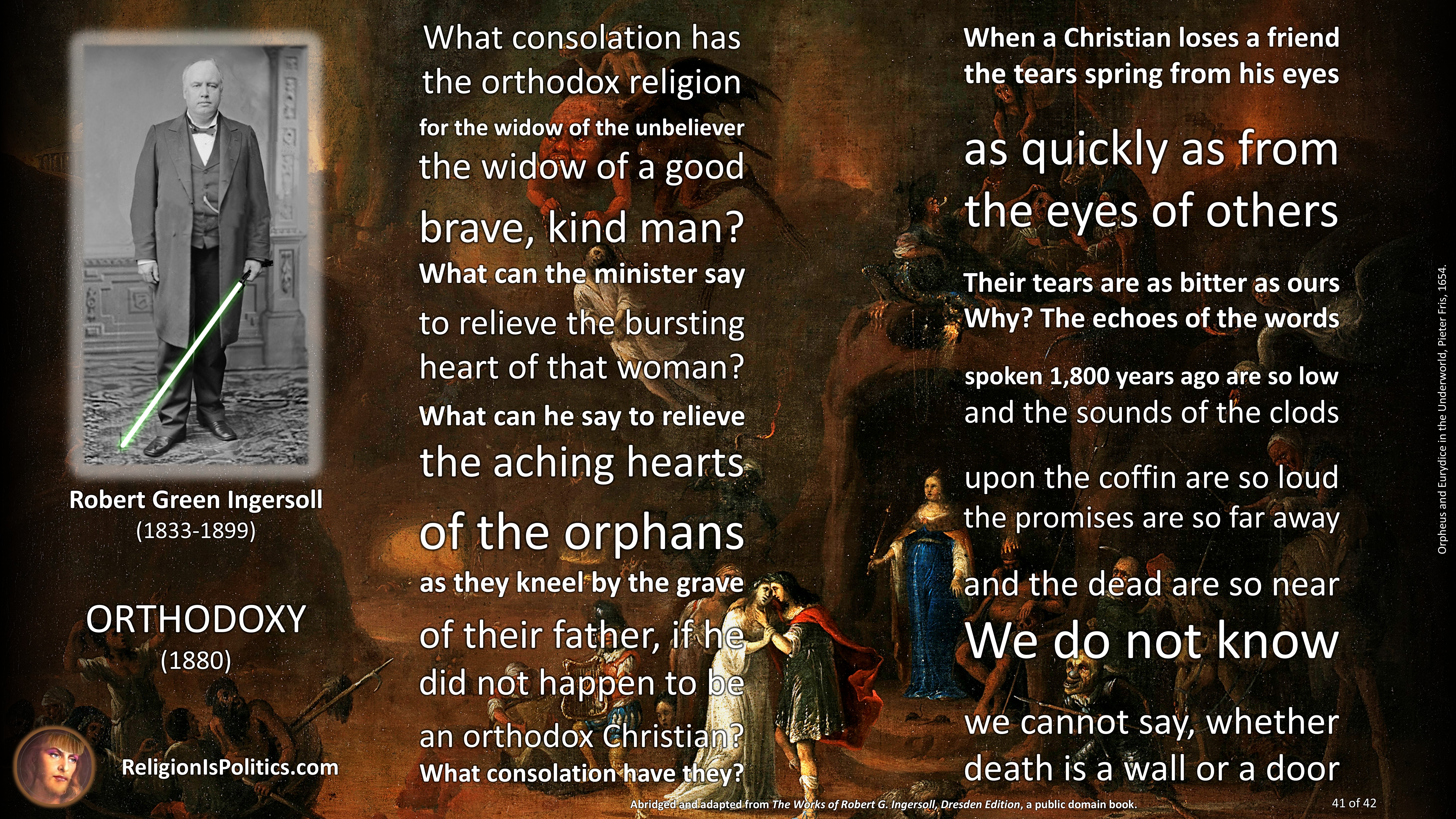
When kittens grow up, they have to learn from others what is acceptable play, and it varies by individual.
Typically they learn from stronger cats biting back.
And the most typical way men learn to be decent human beings is by a series of rejections.
But that can only happen if women are free.
END.
Have you ever had to change your mind about something?
Background art:
- Expulsion of Adam and Eve from Paradise, Thomas Cole, 1828.
- The Flagellation of Christ, Francesco Bacchiacca, c. 1512-1515.
- Homeopathy watching horrors of Allopathy, Alexander Beydeman, 1857.
- Flagellation of Christ, Mattias Stom, 1640-1650.
- Jesus Christ Visits the Americas, John Walter Scott, 1869.
- Christ cleansing the Temple, El Greco, before 1570.
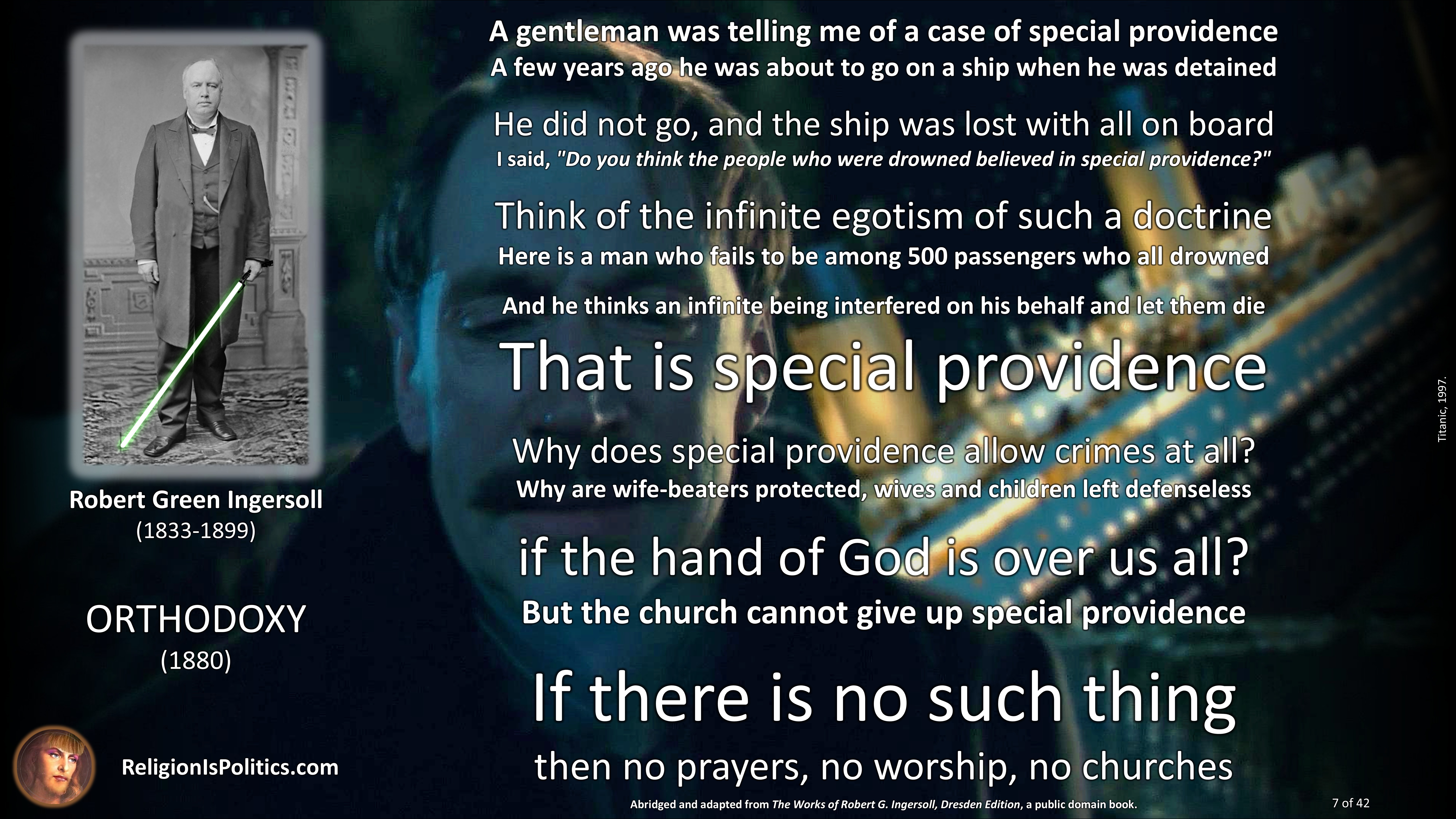
- Titanic, 1997.
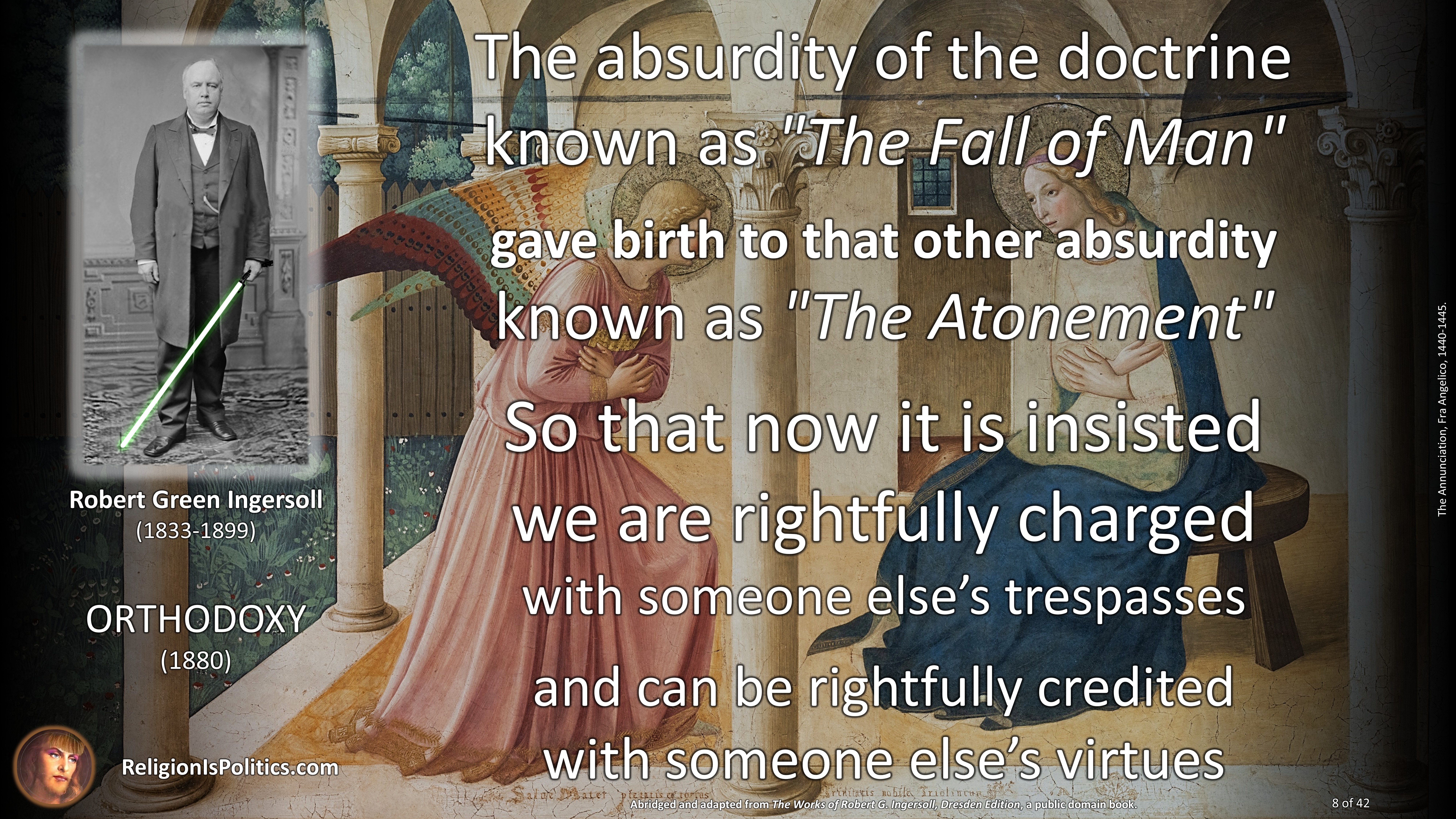
- The Annunciation, Fra Angelico, 1440-1445.
- The Battle of Atlanta, 17 artists, American Panorama Company, 1886.
- Benjamin Franklin Drawing Electricity from the Sky, Benjamin West, c. 1816.
- First Fruits, Johann Valentin Haidt, 1747.
- The First Thanksgiving at Plymouth, Jennie A. Brownscombe, 1914.
- The Apotheosis of Washington, US Capitol Rotunda, Constantino Brumidi, 1865.
- The School of Athens, Raphael, 1511.
- The Stoning of Saint Stephen, Carpaccio, 1520.
- The Release of Prometheus, Carl Bloch, 1864.
- The Angel Appearing to the Shepherds, Thomas Cole, 1834.
- The Raising of Lazarus, Rembrandt, 1630-1632.
- Saint Bernard of Clairvaux preaching the Second Crusade, Emile Signol, 1840.
- Taking of Jerusalem by the Crusaders, Emile Signol, 1847.
- Danish crusaders in the Battle of Lindanise (Tallinn) against Estonian pagans, 15 June 1219, C. A. Lorentzen, 1809.
- Hypatia, Julius Kronberg, 1889.
- Adam and Eve in the Garden of Eden, Jan Brueghel the Younger, 1650.
- Excommunication of Frederick II by Gregory IX, Giorgio Vasari, 1573.
- The Fall and Expulsion from Paradise, Michelangelo, 1509.
- The Expulsion from Paradise, Wilhelm Ebbinghaus, 1894.
- Pandemonium, John Martin, 1841.
- Chalk drawing of seven-year-old Charles Darwin, Ellen Sharples, 1816.
- Creation of the Sun, Michelangelo, 1508-1512.
- The First Mourning, William-Adolphe Bouguereau, 1888.
- The Eve of the Deluge, John Martin, 1840.
- Satan Presiding at the Infernal Council, John Martin, c. 1823-1827.
- Awakening of the Righteous, Awakening of the Evil One, Emile Signol, 1835.
- The Raft of the Medusa, Jean Louis Théodore Géricault, 1819.
- St. Jerome Punishing the Heretic Sabinian, Raphael, c. 1503.
- Fallen Angel, Alexandre Cabanel, 1847.
- Moses and the Burning Bush, John Martin, 1833.
- The Garden of Eden, Thomas Cole, 1828.
- Adam and Eve Driven From Paradise, James Jacques Joseph Tissot, c. 1896-1902.
- Orpheus, Roelant Savery, 1628.
- Orpheus and Eurydice in the Underworld, Pieter Fris, 1654.
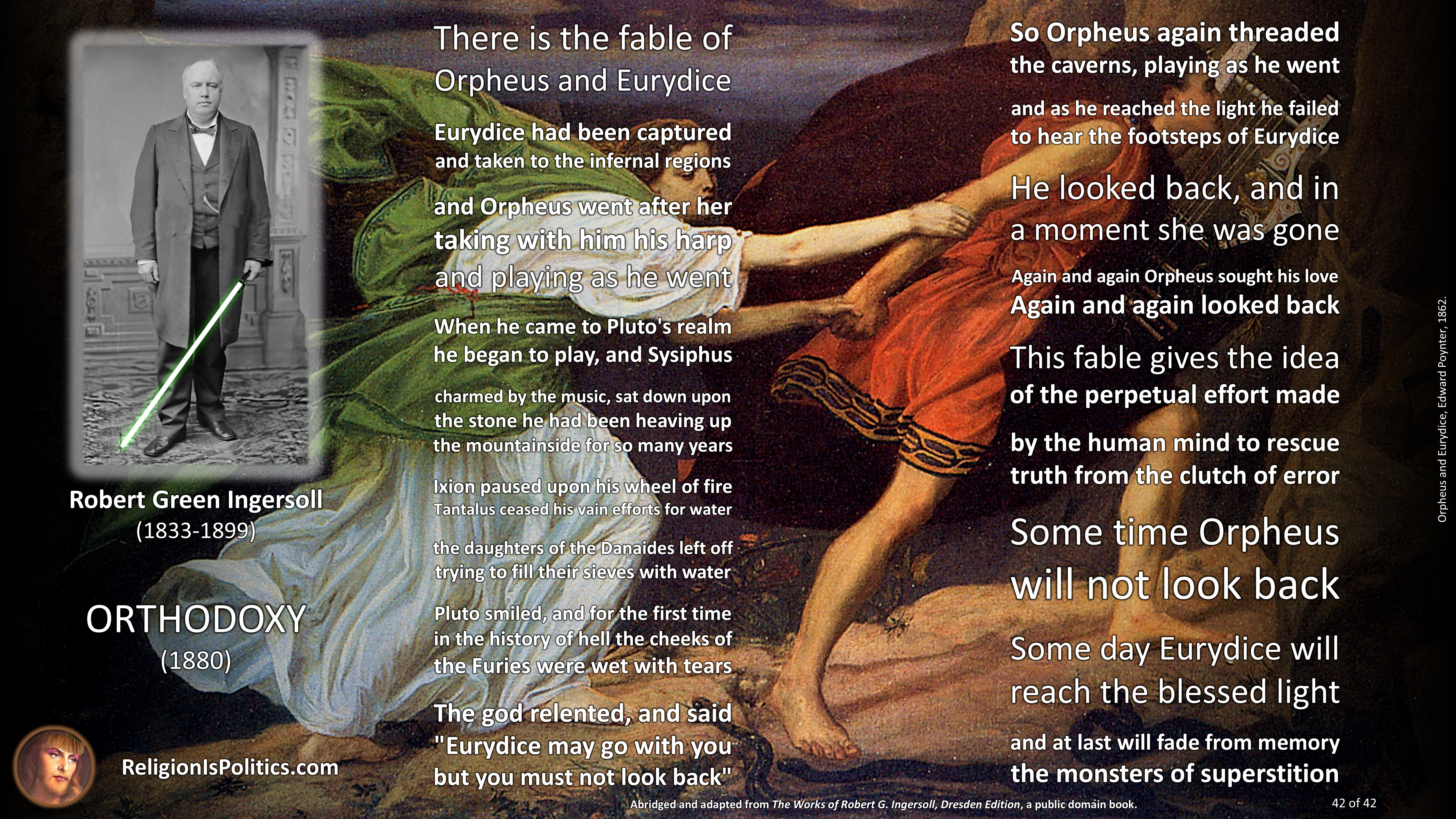
- Orpheus and Eurydice, Edward Poynter, 1862.
 Religion is politics about the unknown