Crimes Against Criminals
The further back we look in history, the more brutal punishments we see. People inflicted cruel punishments to show the strength of their state, tribe or clan. For a long time, this was done as a legal proceeding, and often these proceedings were everyday.
And torture is still inflicted today, for the same reasons.
However, rarely is it done publicly or on a legal basis. Generally it is done privately, extrajudicially, by people who still believe in the old ways but don’t want to be known for them.
Well, if there’s anything to learn from history about cruel and unusual punishments, it’s that, in the long term, they undermine the state. They inspire resentment. They create internal enemies. And they make them right.
They teach us that when words fail violence is the only solution. This makes everyone more violent and makes words fail more often. It creates jobs that only a psychopath would want and it grooms psychopaths to fill them.
Whoever believes in hell already believes torture works, already believes it is the only thing that does work, and already believes in it for its own sake.
This belief teaches everyone who holds it that almighty wisdom and almighty power are absolutely helpless to provide liberty and justice for all. It teaches them that the one and only thing they can do about poverty is escape from it personally and concentrate it on scapegoats forever.
It is the bane of democracy.
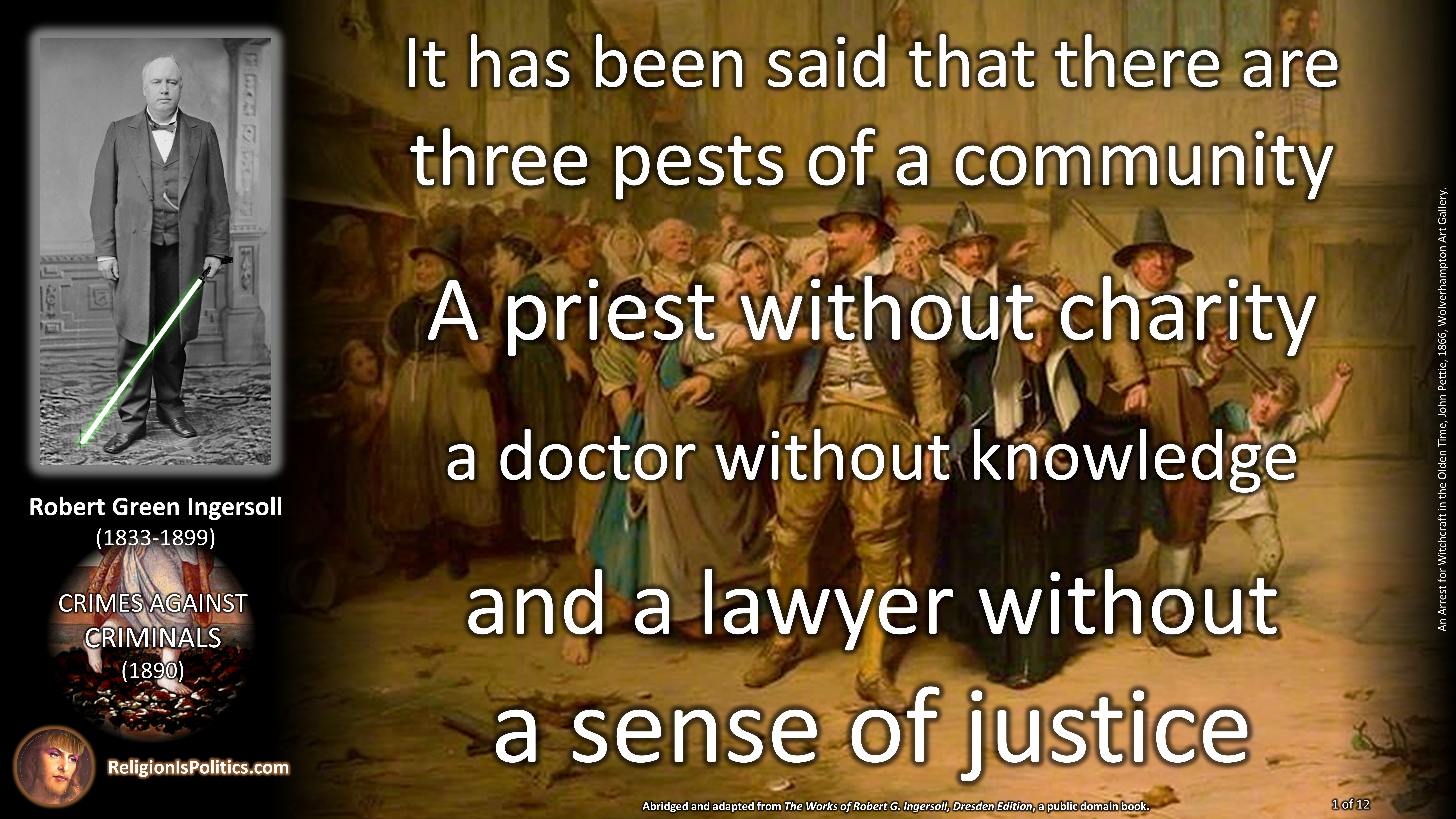
It has been said that there are three pests of a community.
A priest without charity, a doctor without knowledge, and a lawyer without a sense of justice.
What if a government consists of all three?
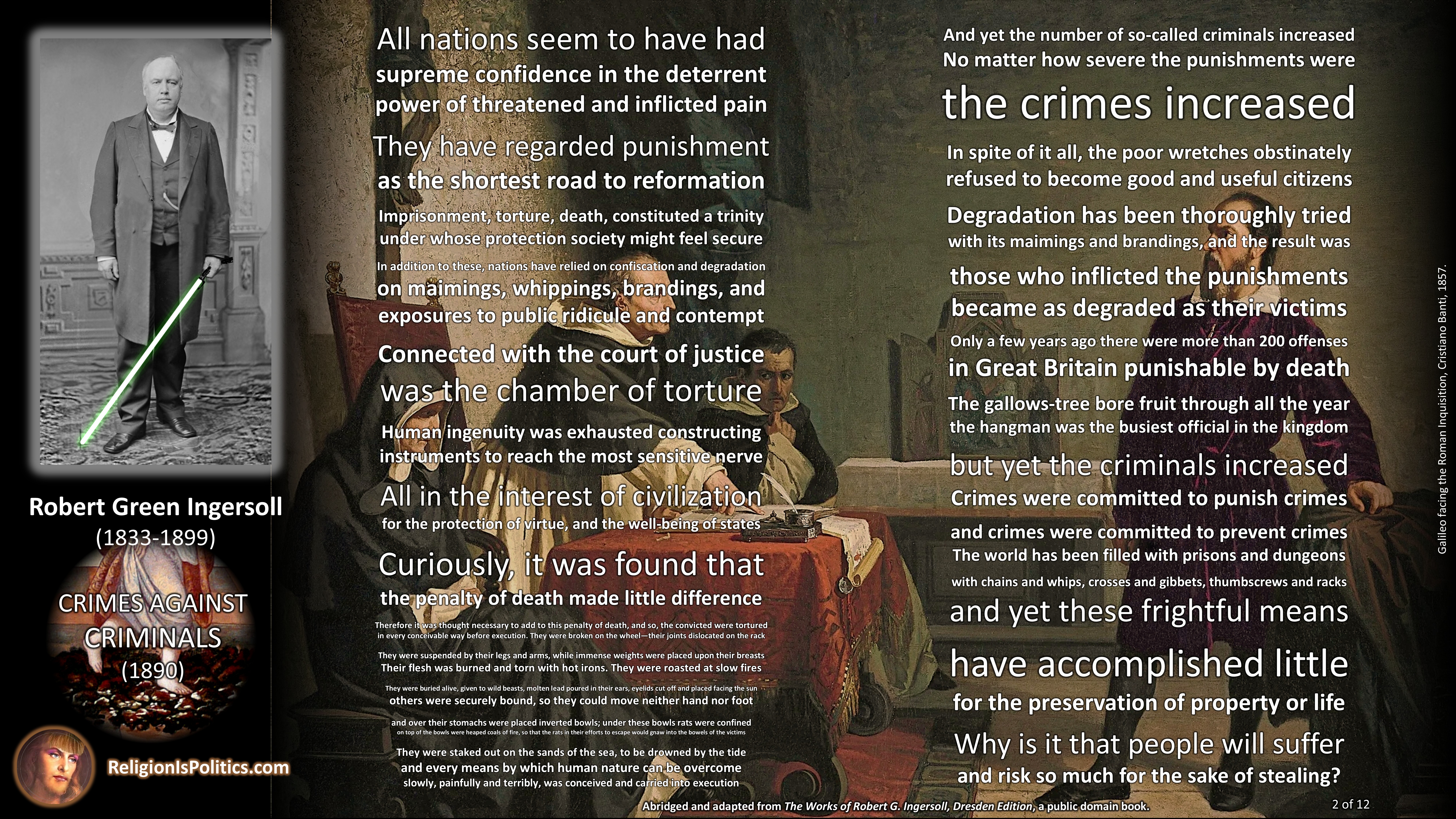
Actually, torture only ever produces the stated ends in isolated cases. At scale, it produces false confessions more than true ones.
But if your goal is to crush resistance then you won’t care if the confession is true or false because the only thing that really matters is the example.
So every time you torture someone you’ll convince yourself more and more that your methods always work and you’ll convince yourself more and more that nothing else works like your methods.
This will go on for as long as you can cling to power, and when you are finally deposed it will be your own delusions that bring you down.
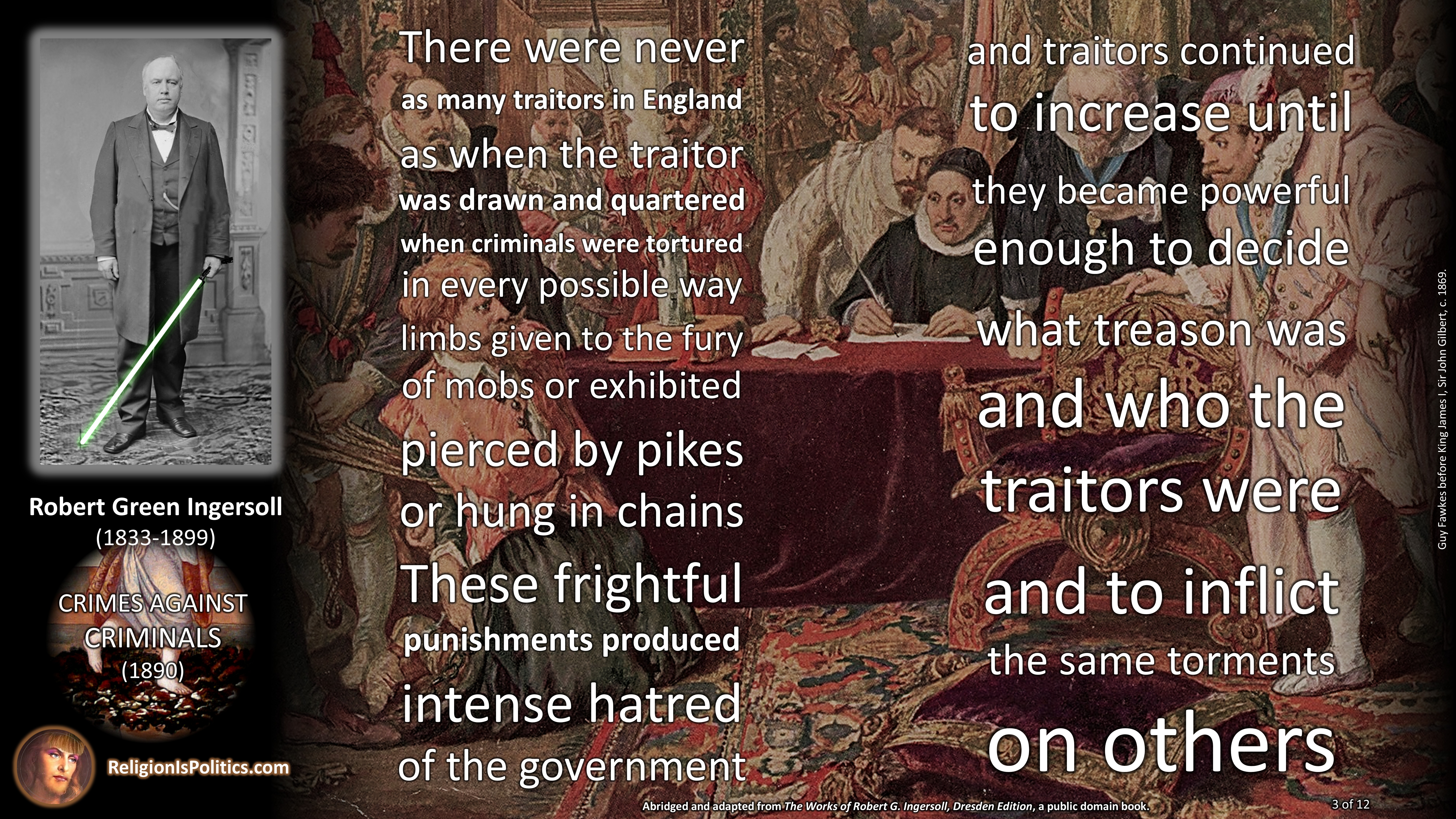
While the example of torture will certainly intimidate many citizens into compliance, it will not intimidate all of them. Some will be positively inspired, and they will attract popular support easily.
Even those productive citizens who are demobilized by the example will also be demoralized and will stop doing their best work and you’ll have to motivate them with even more examples of cruelty.
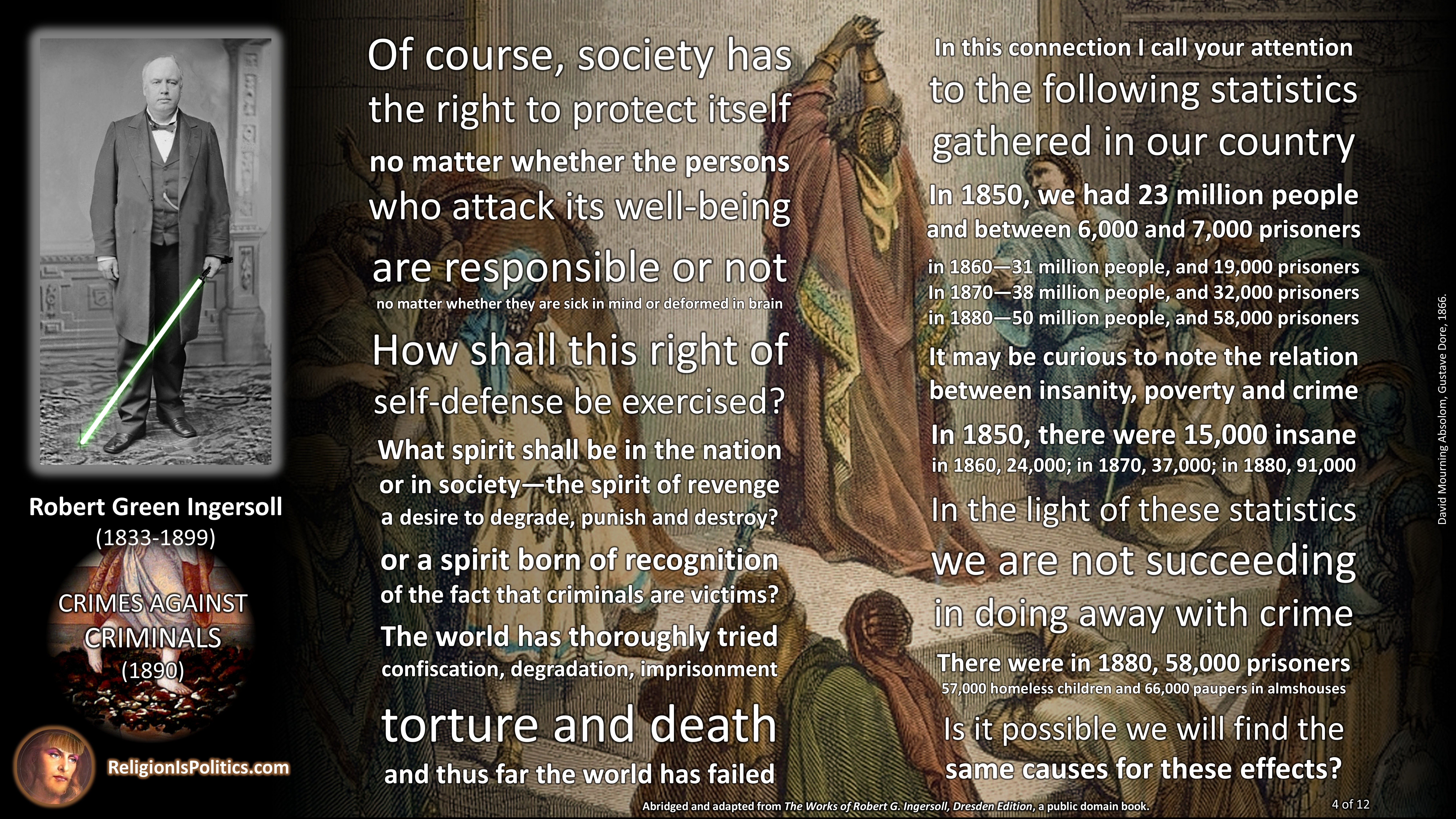
What drives crime is poverty and what drives poverty is crime. That is, wealthy criminals take every advantage of the legal and political systems to keep wealth concentrated in the fewest hands and poor people in turn become criminals to survive.
What cruel punishments do in effect is punish poor people for being poor, trap them in that condition, make them blame themselves, and reward the wealthy few with profits for which they did not labor.
If anyone believes in eternal hellfire, then a systematic cycle of poverty and abuse like this is just a good excuse for a baptism.
It always takes malice to inflict cruelty, so much that when cruelty is inflicted accidentally (or on innocent subjects) malice suggests itself after the event as a justification.
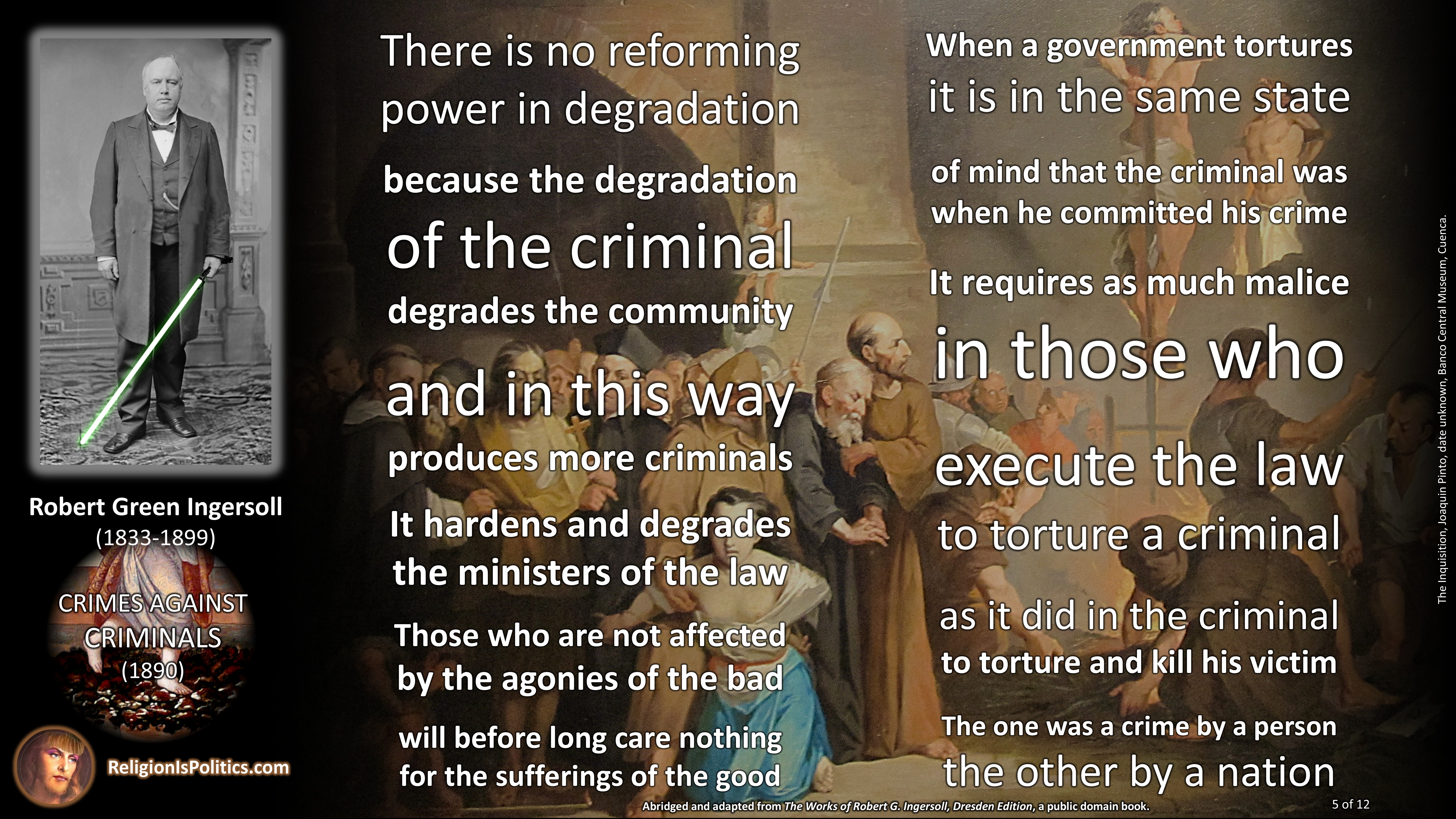
Those who believe in the old ways claim cruelty deters crime.
If we know anything about crime, we know criminals in poverty are already in a survival situation. They already see cruelty everywhere they look. And criminals in luxury only got there by putting other people in survival situations.
And almost all of them hope there is a God in heaven justifying their actions, forgiving their trespasses, giving them daily bread and delivering them from evil.
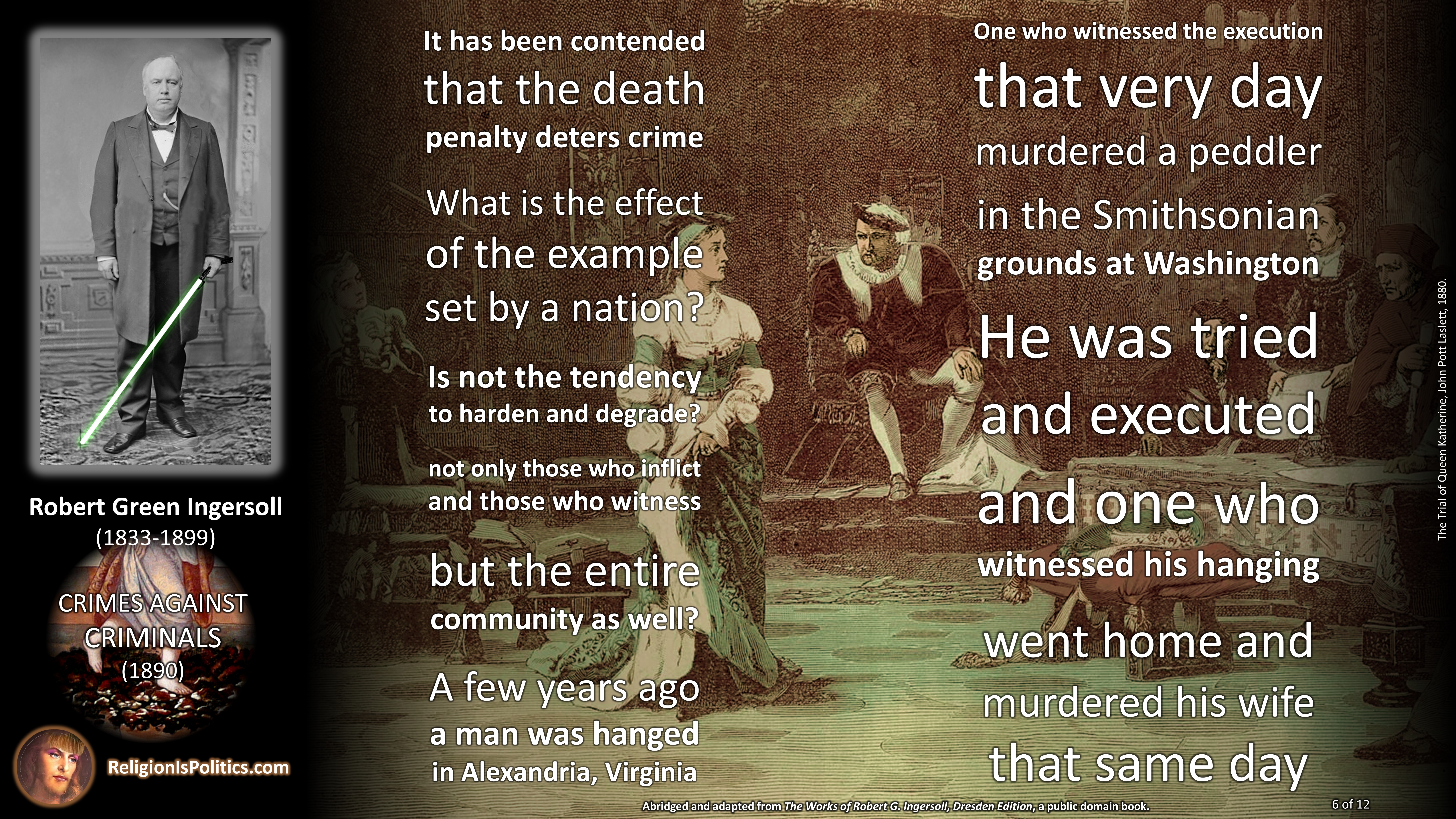
When Christians speak of a Christian worldview, they mean:
- they think the universe is a dictatorship
- they think the dictator has friends and enemies
- they think their agreeable feelings come from their personal relationship with the dictator
- and they think their disagreeable feelings come as personal attacks from the enemy
When this is your worldview, dictatorship is preferred, and even if you live in a democracy, you believe your democracy exists at the pleasure of a king.
Spectacles of public cruelty degrade and traumatize the whole community, dividing people naturally into predators and prey.
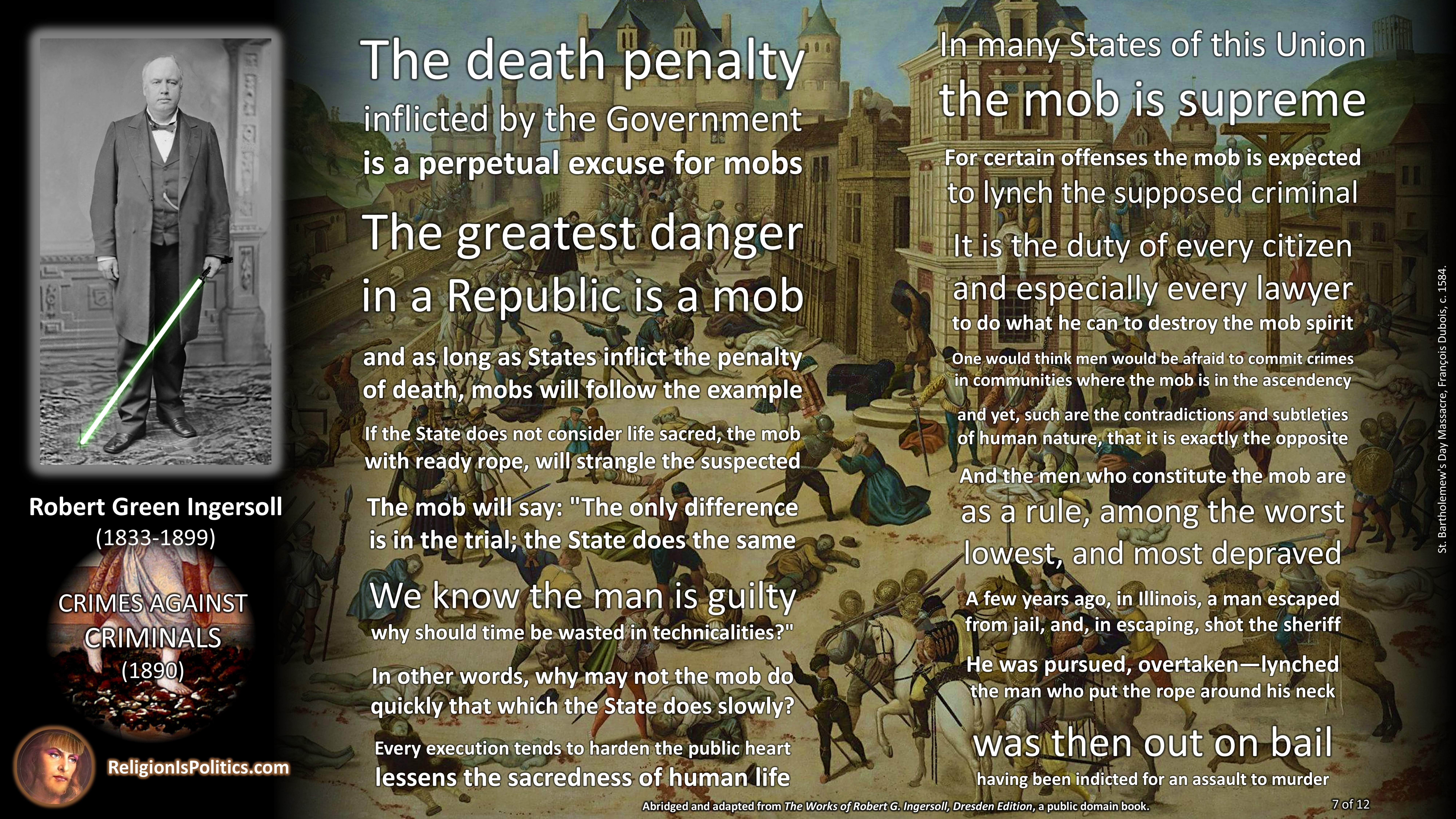
If you think the universe is a dictatorship, as long as you live in one you’ll think the problem is that you don’t have a closer personal relationship with the dictator.
And as long as you live in a democracy you’ll always think both sides are the same even if they couldn’t be more different.
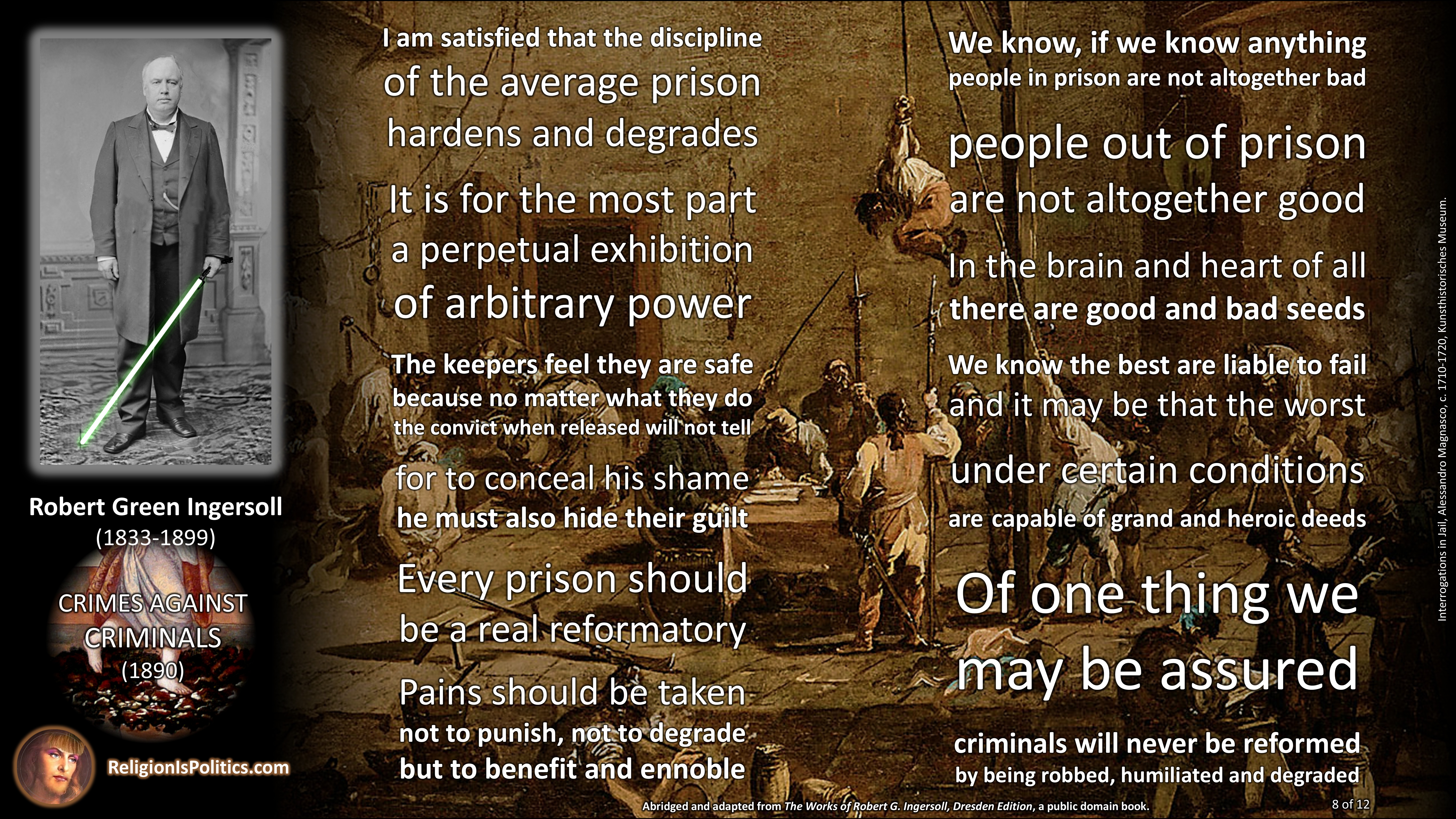
We know poverty is hell. And yet we know torture can make people in poverty work for free.
It can make adults act like children and make children act like slaves, but it can’t get anyone out of poverty.
If it could there wouldn’t be any poverty left.
What it really does is maintain the culture of political violence.
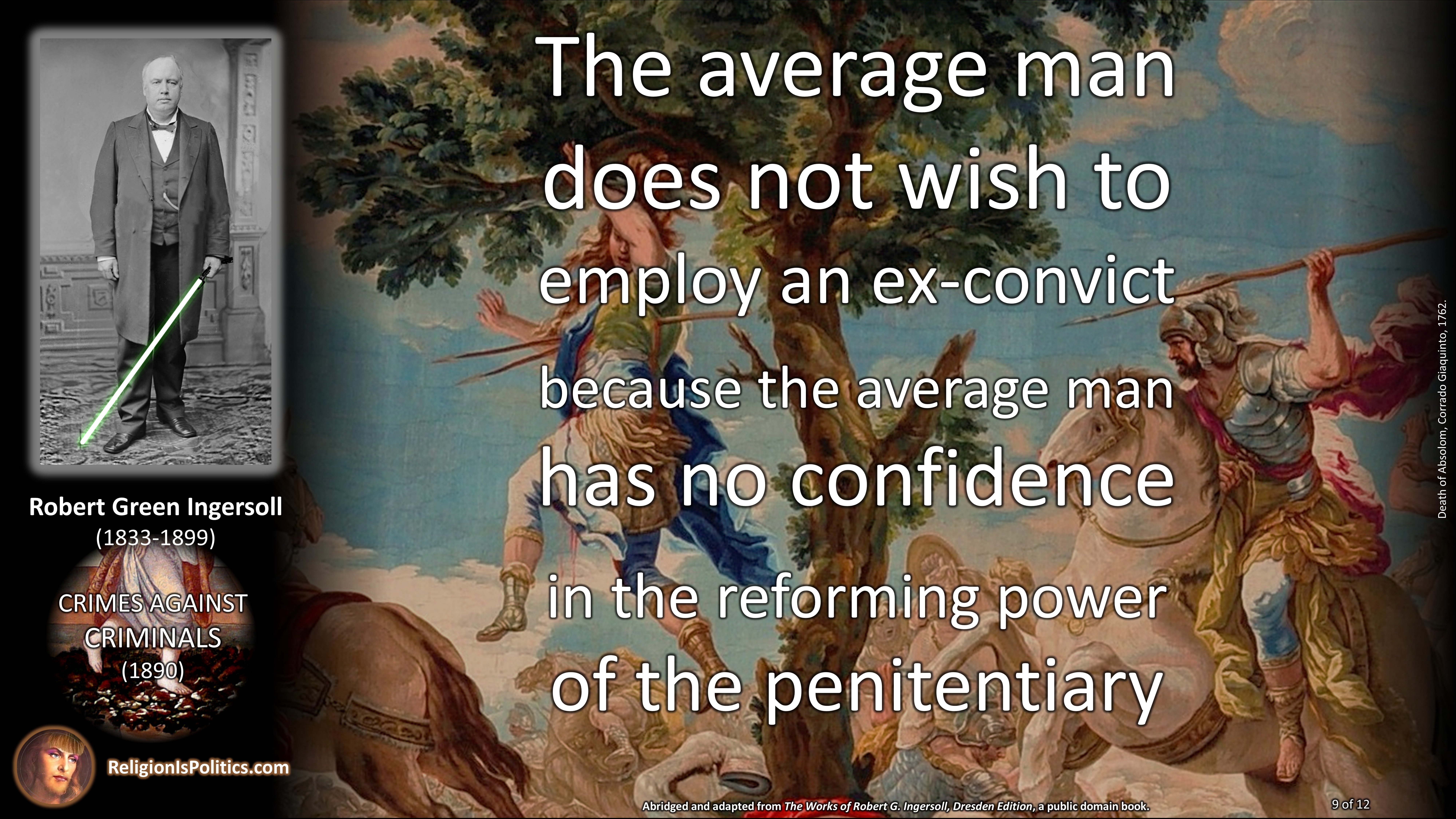
What a prison industry does is manufacture poverty and crime, sowing the seeds of injustice to be reaped by future generations.
US employers do not like to hire felons because they do not trust the prison industry to do anything but manufacture more crime.
When they do hire a felon, it’s to be President of all the companies and he’s never going to see the inside of a jail cell because more crime from the top down is what they want.
When the stakes of a mistake are torture and death, people are not going to make fewer mistakes.
They are going to be less honest about them, including with themselves, and especially with their loved ones.
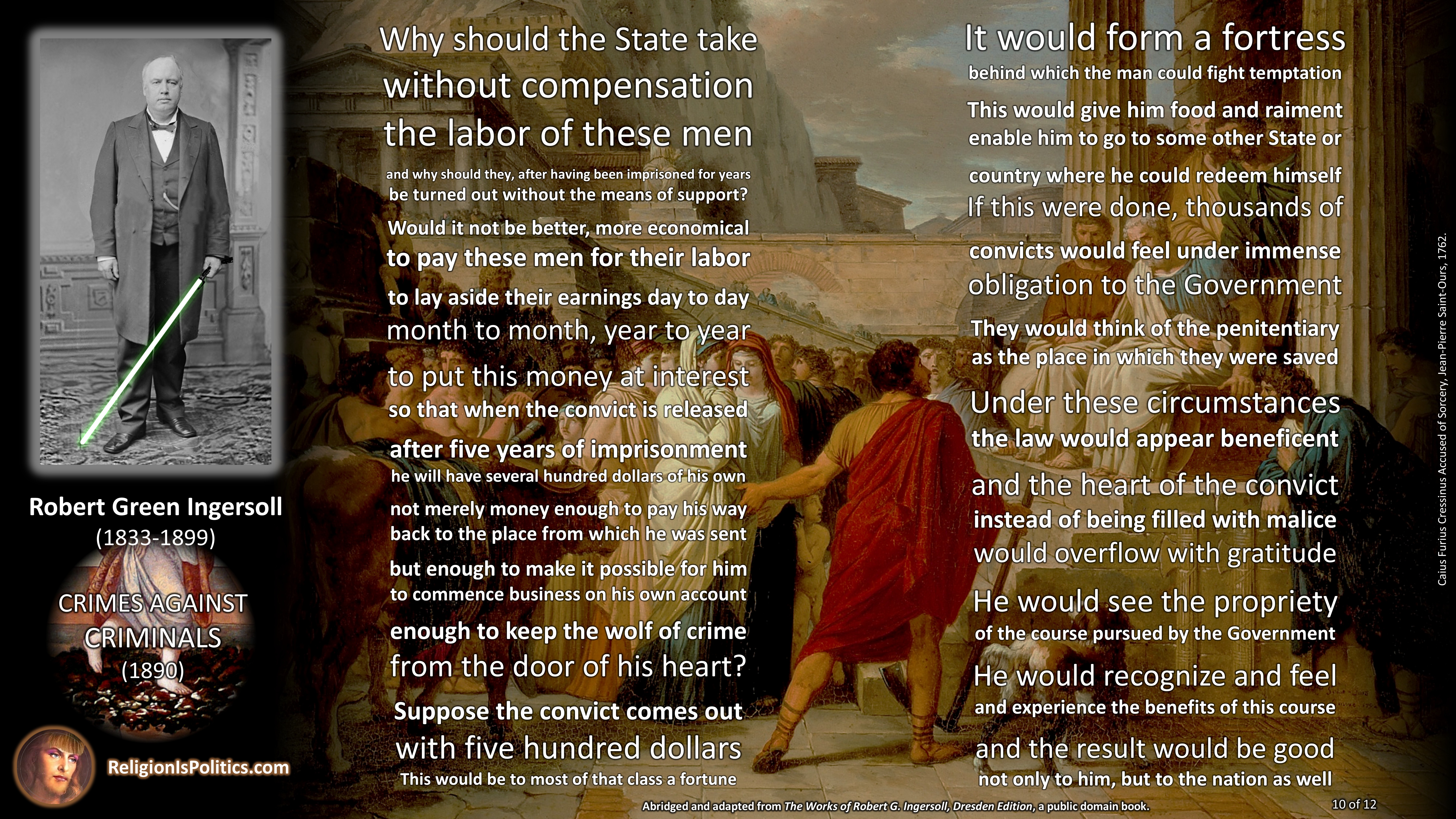
If prisoners got paid minimum wage they would not end up back in prison as often.
But that would be less profitable for the prison industry.
If CEOs had a maximum wage they would be obligated to their employees’ wellbeing more than their shareholders’ profits and some of what they say about capitalism would actually become true after all.
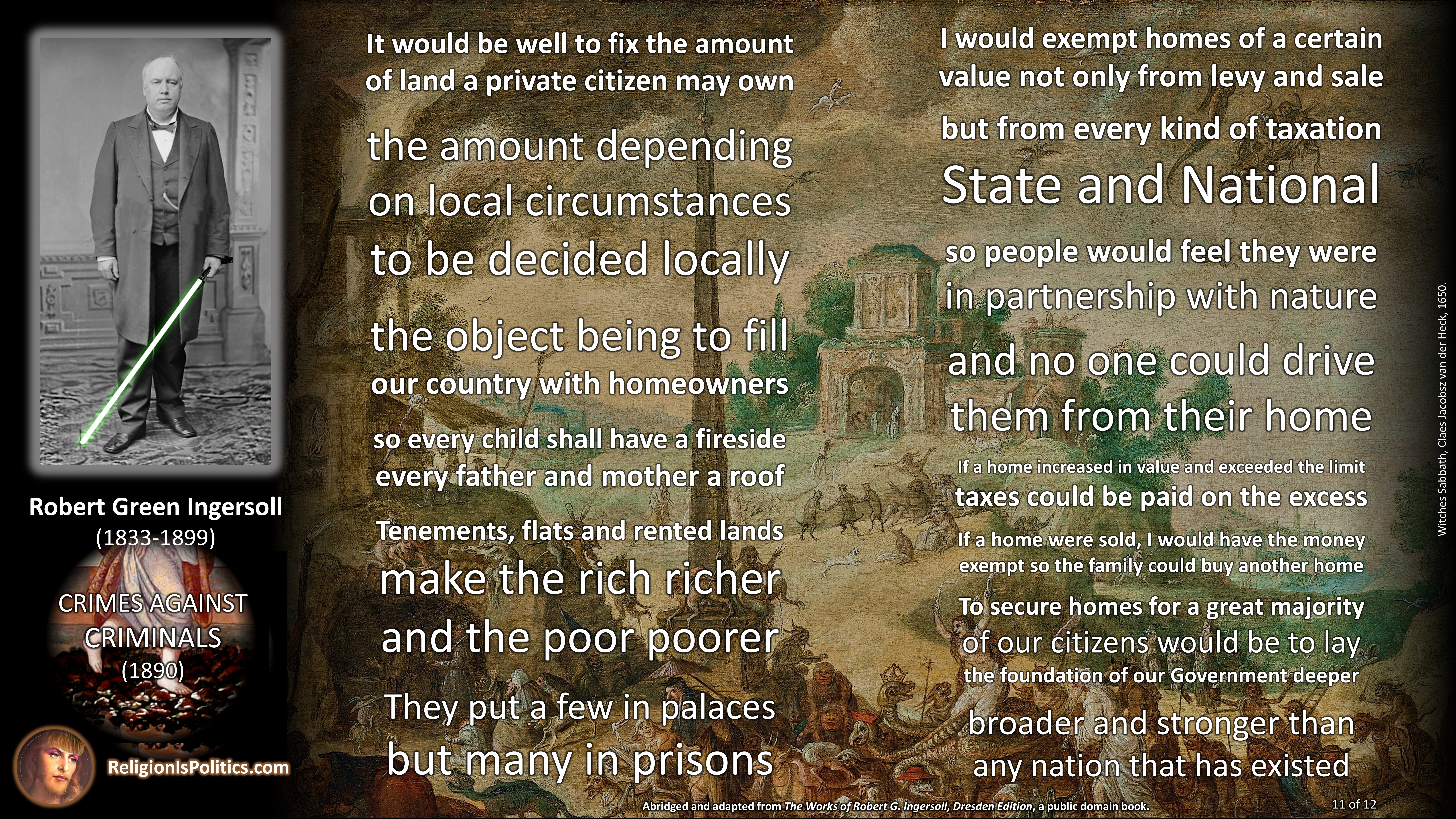
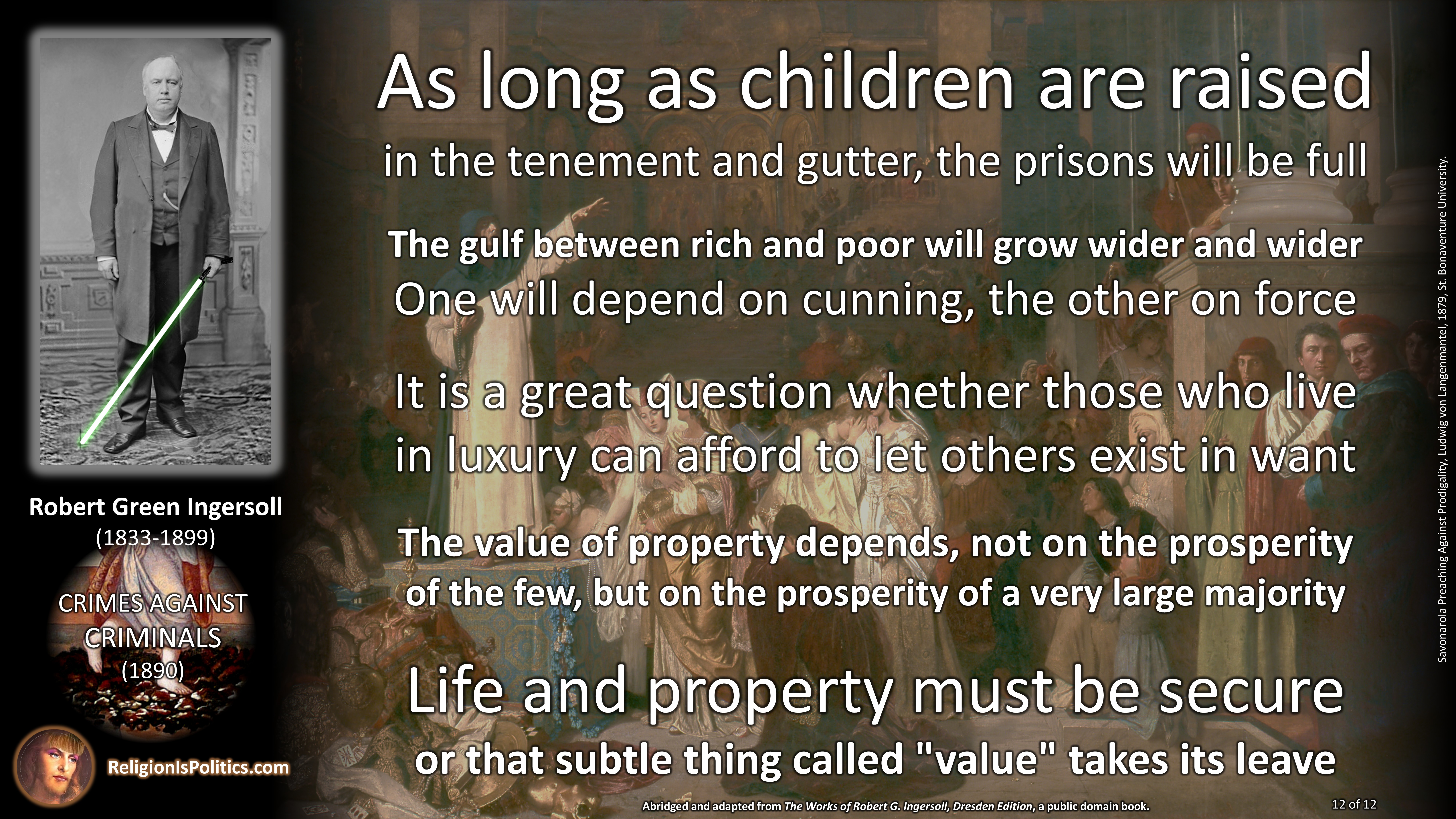
The real question is how much poverty can luxury afford?
Background Art
- An Arrest for Witchcraft in the Olden Time, John Pettie, 1866, Wolverhampton Art Gallery.
- Galileo facing the Roman Inquisition, Cristiano Banti, 1857.
- Guy Fawkes before King James I, Sir John Gilbert, c. 1869.
- David Mourning Absolom, Gustave Dore, 1866.
- The Inquisition, Joaquin Pinto, date unknown, Banco Central Museum, Cuenca.
- The Trial of Queen Katherine, John Pott Laslett, 1880.
- St. Bartholemew’s Day Massacre, François Dubois, c. 1584.
- Interrogations in Jail, Alessandro Magnasco, c. 1710-1720, Kunsthistorisches Museum.
- Death of Absolom, Corrado Giaquinto, 1762.
- Caius Furius Cressinus Accused of Sorcery, Jean-Pierre Saint-Ours, 1762.
- Witches Sabbath, Claes Jacobsz van der Heck, 1650.
- Savonarola Preaching Against Prodigality, Ludwig von Langenmantel, 1879, St. Bonaventure University.
 Religion is politics about the unknown