About the Holy Bible
Every time I hear Christian nationalists try to get kids to read the Bible in their free time, I can only picture Luke Skywalker telling Jabba the Hutt, “that’s the last mistake you’ll ever make.”
Today, multiple US states are forcing public school teachers to teach that the Ten Commandments were inspired personally by the author of the universe and were the first and best laws of all time.
With a little help, most of their students will eventually realize how absurd this is. But many will need a little help.
The reasons for this absurdity are historical. For 2,000 years, more or less, Christians have believed the Bible was truer than science. As long as that assumption was general, very little scientific progress was possible. But every time a falsehood is questioned, science begins. And that assumption is now so discredited by centuries of scientific progress that those who still hold it are forced to say the Bible was never intended to be scientific in the first place. They believe it because it is absurd.
The reason why schoolchildren are told today that the Bible is the absolute truth is the same reason as back in Ingersoll’s day: because it isn’t.
The things that you’re liable to read in the Bible ain’t necessarily so, and profits depend on kids continuing to believe it anyway.
Did you know the Old Testament gives the Ten Commandments three separate times, in two separate books, and even in the same book eight out of the ten are completely different?
Exodus 20, Exodus 34 and Deuteronomy 5.
You’d think they were genealogies of Jesus Christ.
No sermon can cover all three of these texts at once without inspiring critical thinking; likewise no sermon can admit the conflict between Jesus’ genealogies.
The Bible is rife with inconsistencies like these, all of which go to show that, by our standards, the God of the Bible was never a very good worldbuilder.
What will children think who pick up a Bible and read it thinking it’s the user manual of existence?
What will they think when they find better worldbuilding in Tolkien?
I was that child for 20 years. That’s how long it took before I admitted I knew better and might’ve known better all along.
About the authorship of the Old Testament, three things we can be absolutely sure of, judging from the contents alone.
- The texts were pillars of priestly power.
- They were written mostly anonymously by the few who could read for purposes of influencing the many who could not.
- And more authors were involved than will ever receive credit.
If there’s anything else we know about these authors for certain, we know their ideas, agendas and prejudices all varied.

If we swallow their ideas whole we could end up as ignorant or as malicious as they were.
Typically that’s what happens when we swallow their ideas whole.
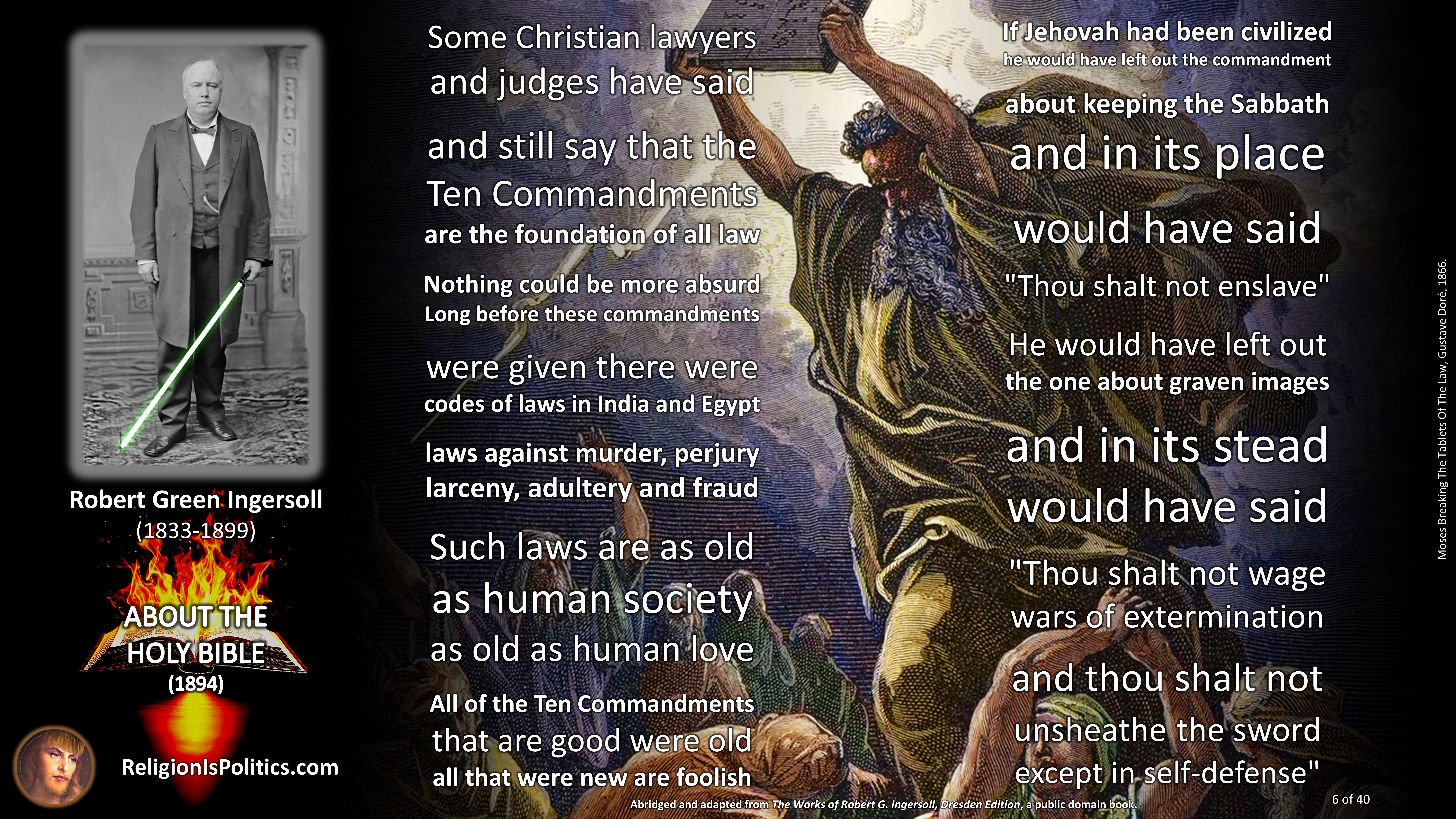
Do children need to know about Achan?
Will it improve their education to be told God works in mysterious ways?
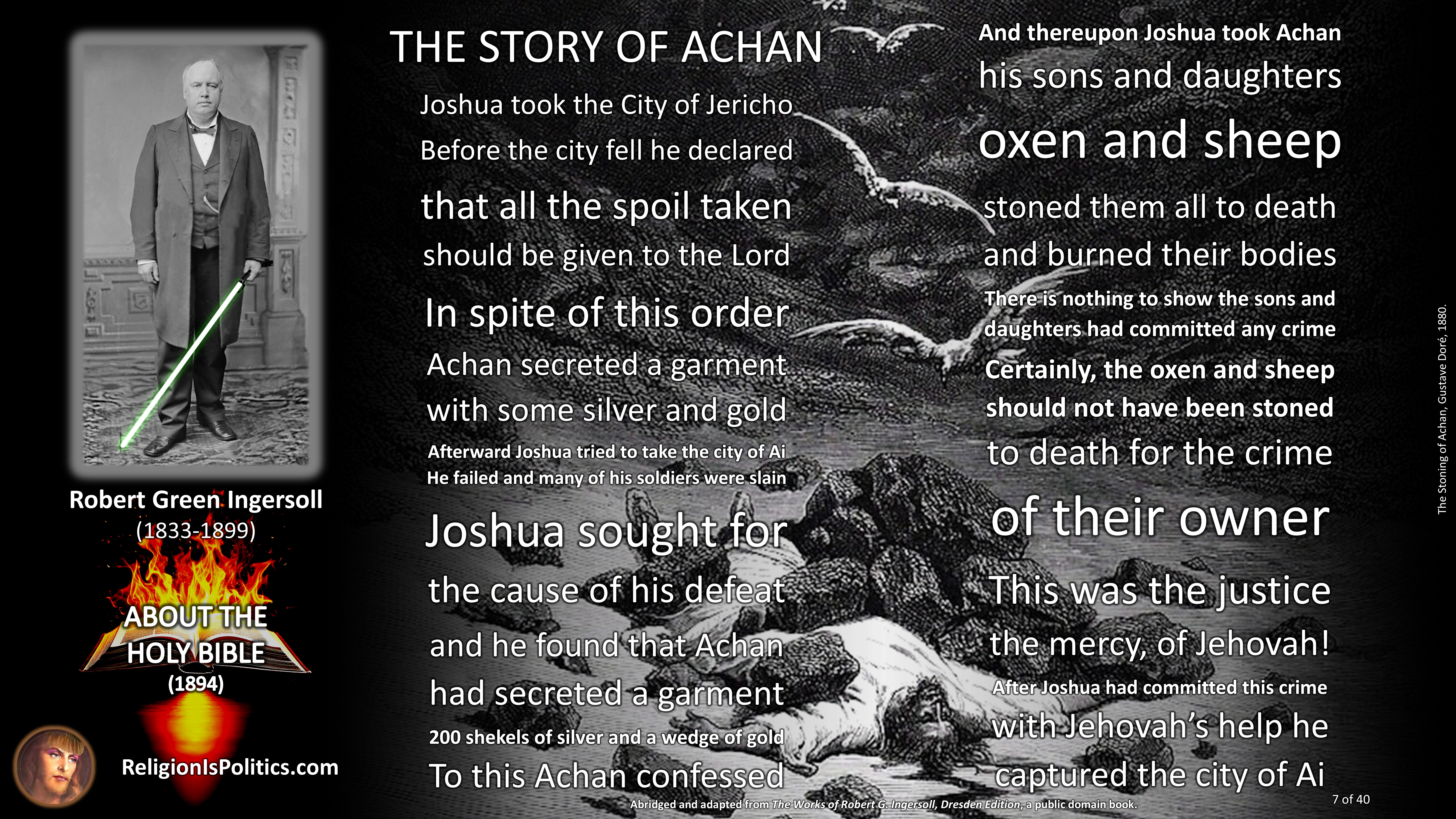
Will they learn critical thinking from the story of Elisha and the bears?
If this story teaches a student critical thinking, it’s because the student is virtuous, not the lesson.
Because without critical thinking the lesson here is that violence is divine.
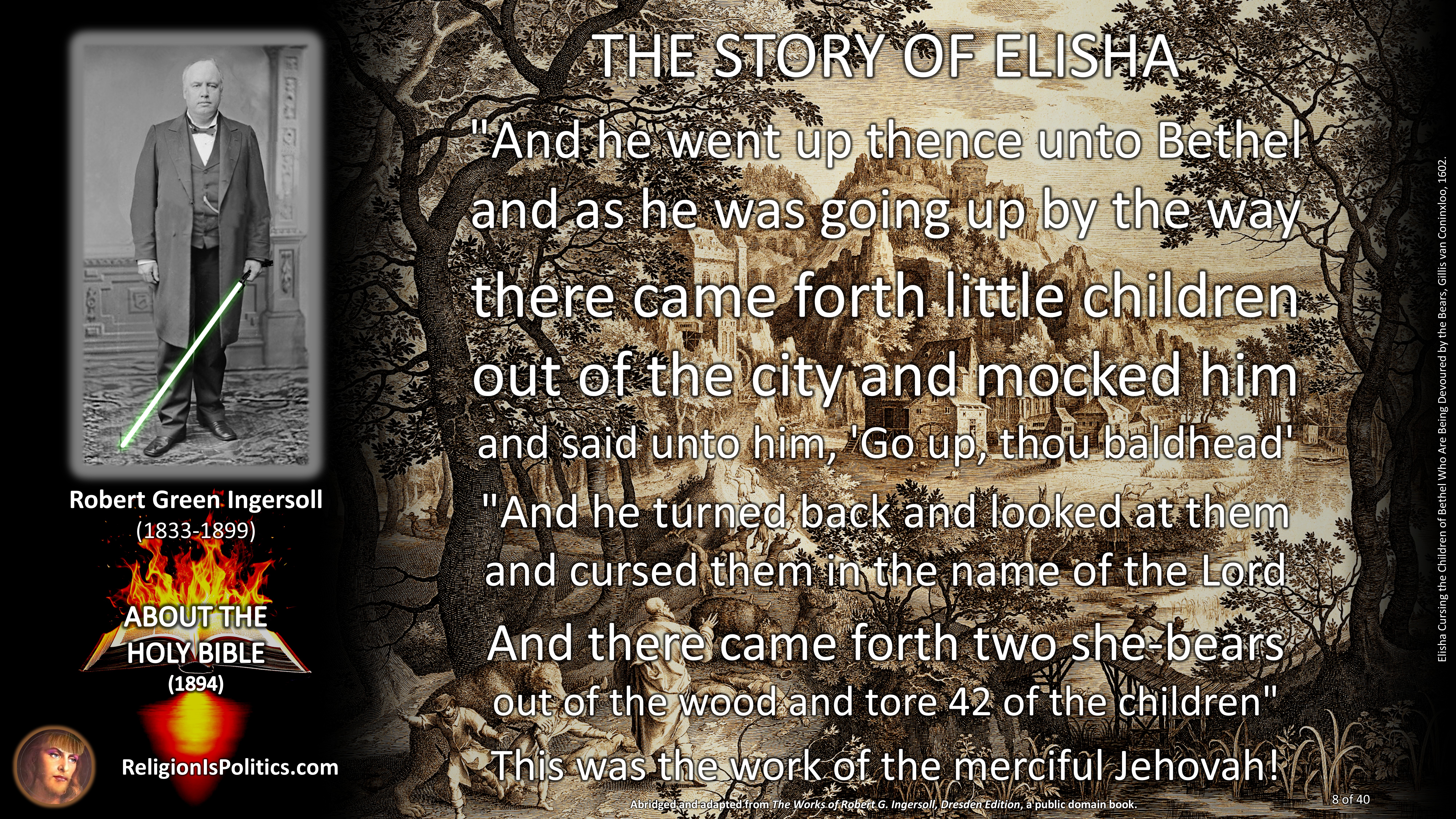
Is Daniel in the Lions’ Den a story for children?
Is this the best children’s literature of all time?
More like a story for children who torture small animals.
It’s a story for making more children like that.
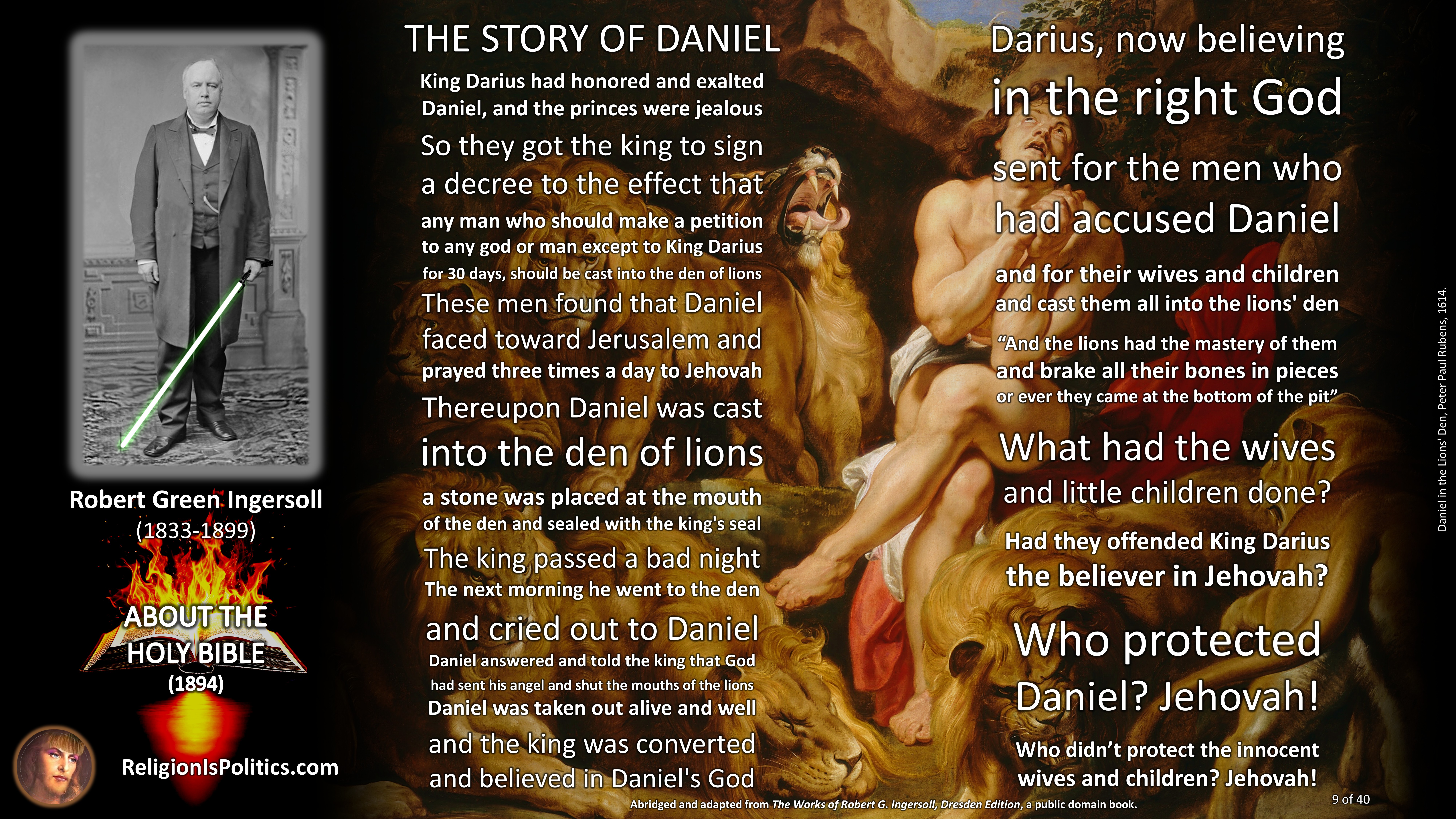
According to Genesis, God had Joseph’s brothers sell him into slavery so he could manipulate his way to power in Egypt, take advantage of a crisis, build a debt economy and enserf the free population.
According to Exodus, this ended badly.
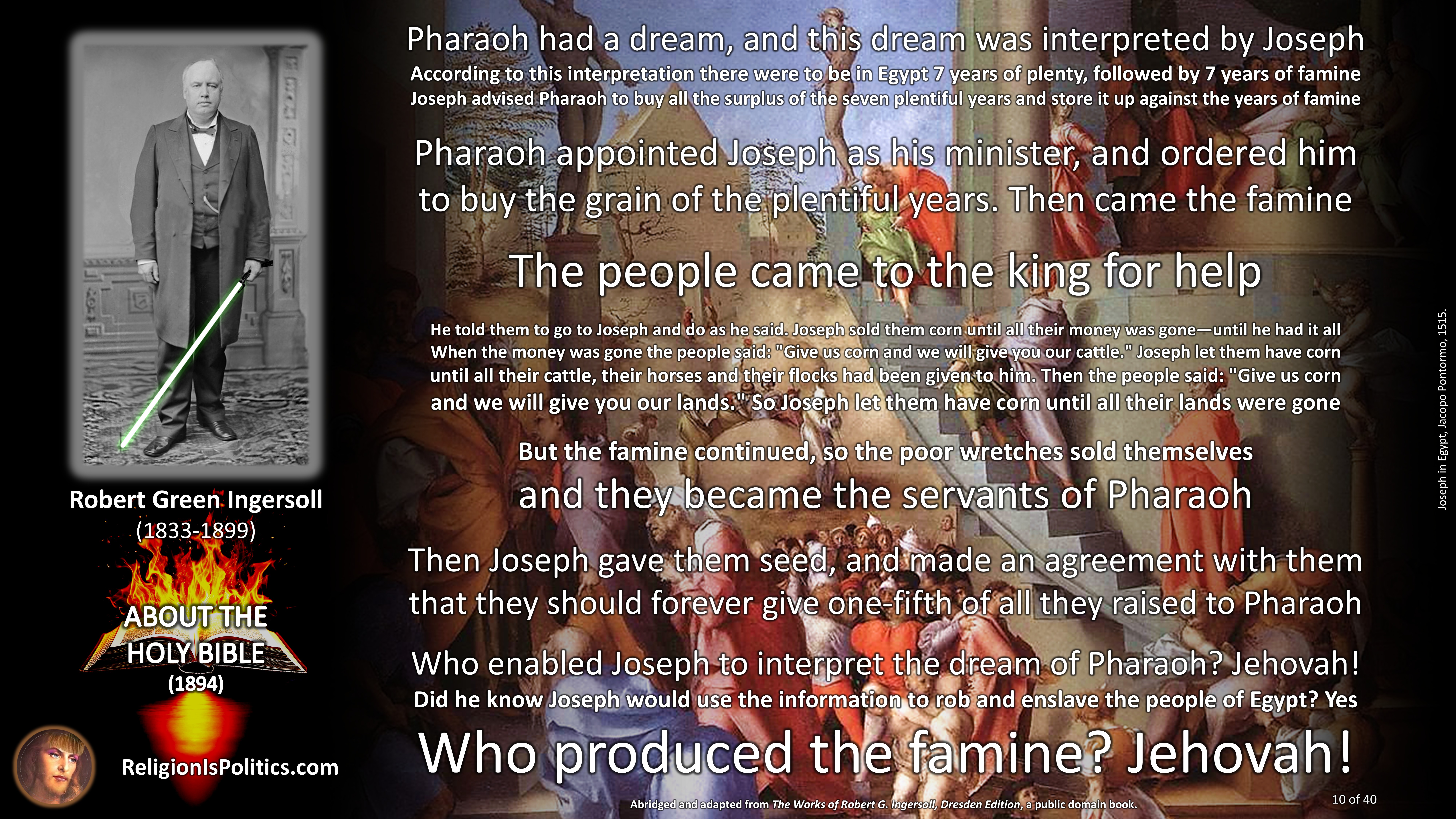
According to Exodus, the failure of the Israelites to maintain control in Ancient Egypt was all just one step of God’s plan to get them in control of Canaan.
Mysterious ways, indeed.
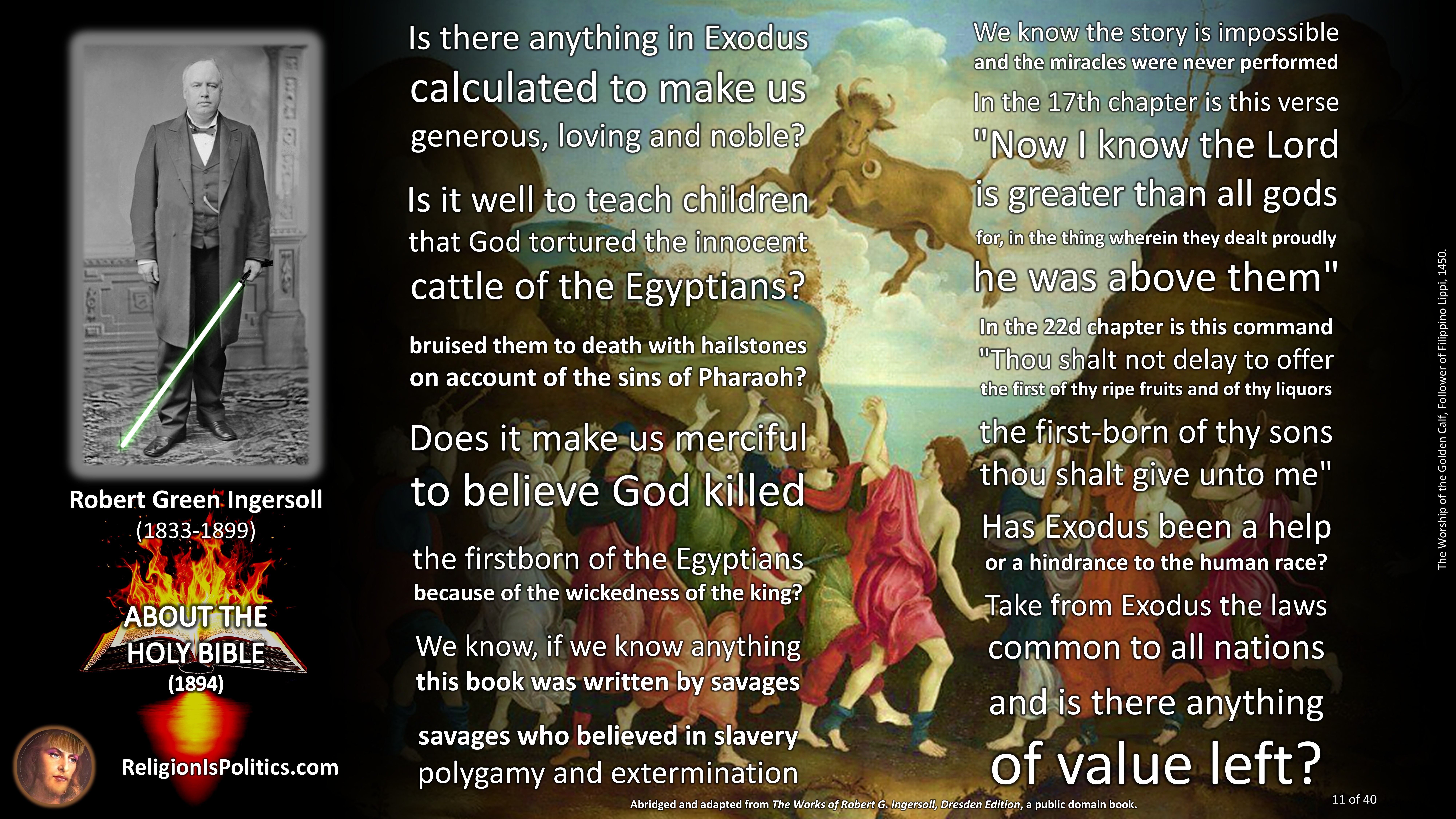
According to Leviticus, if people have the same race and religion as you then they are your equal, but if their race or religion are different then they can be trafficked as a commodity and inherited as wealth.
Where would civilization be without these teachings?
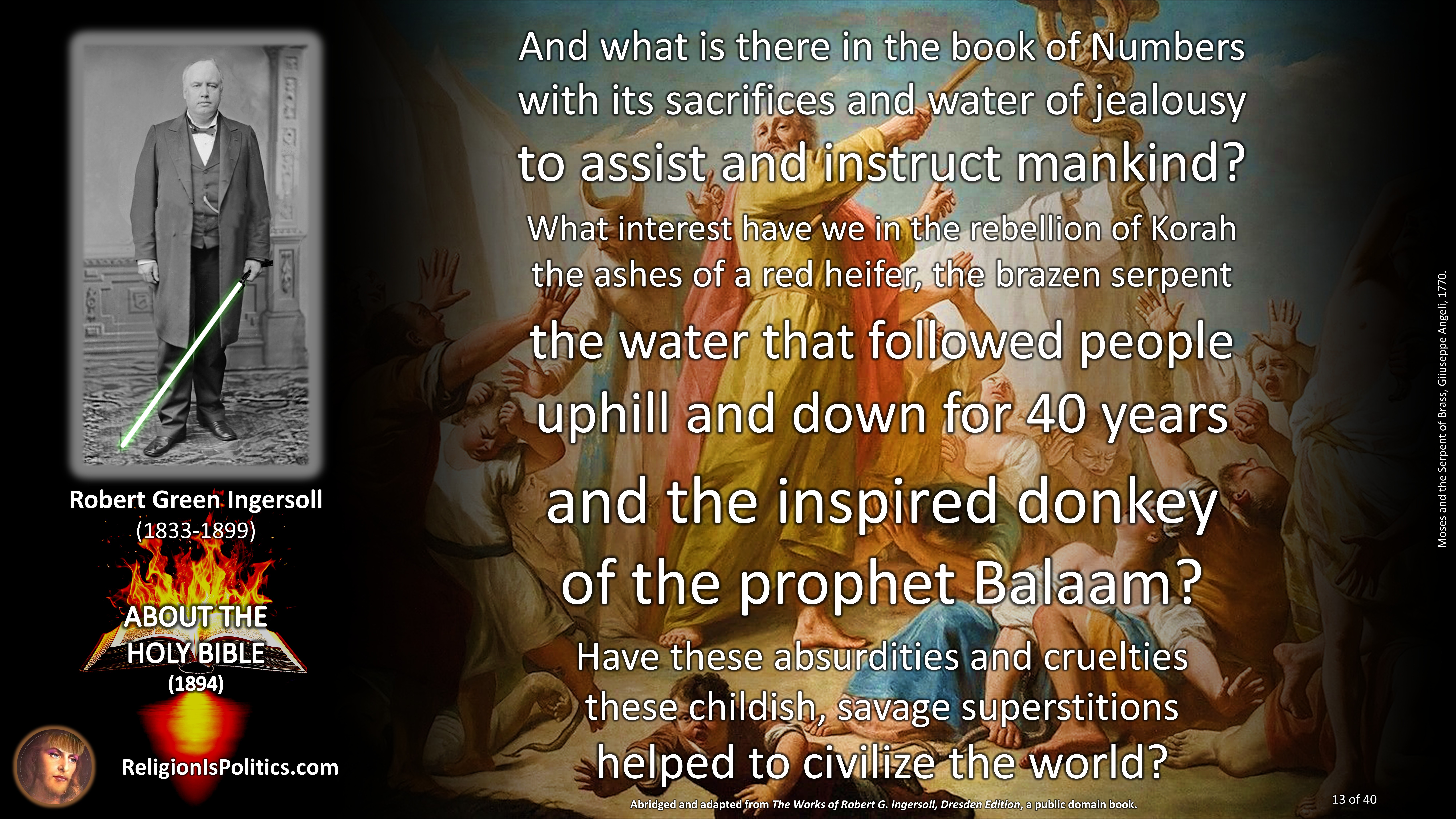
According to Numbers, if you are jealous of your wife you can pay the priest to make her drink some biohazards and then whatever happens to her God decides.
And if you are bitten by snakes, Numbers says you can get rid of the venom by looking at the graven image of a snake with all due respect to its maker.
Numbers does not say if the graven image of a snake violated the Second Commandment, but any pastor will tell you it did not.
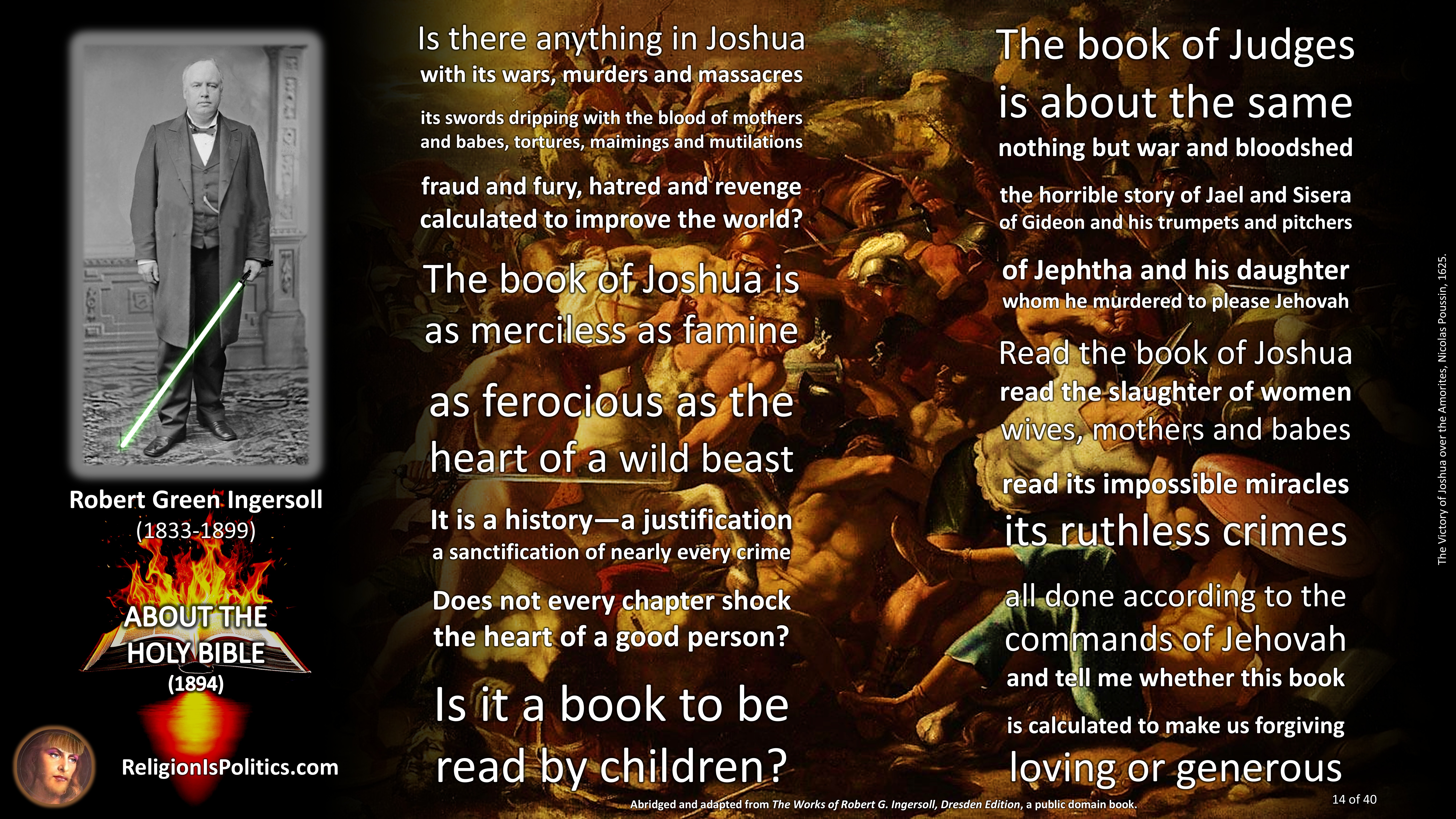
According to Joshua, the author of existence chooses favorite peoples, promises them lands and sends them on crusade.
According to Judges, the chaos and lawlessness that’s left after holy war is all part of God’s plan for statehood.
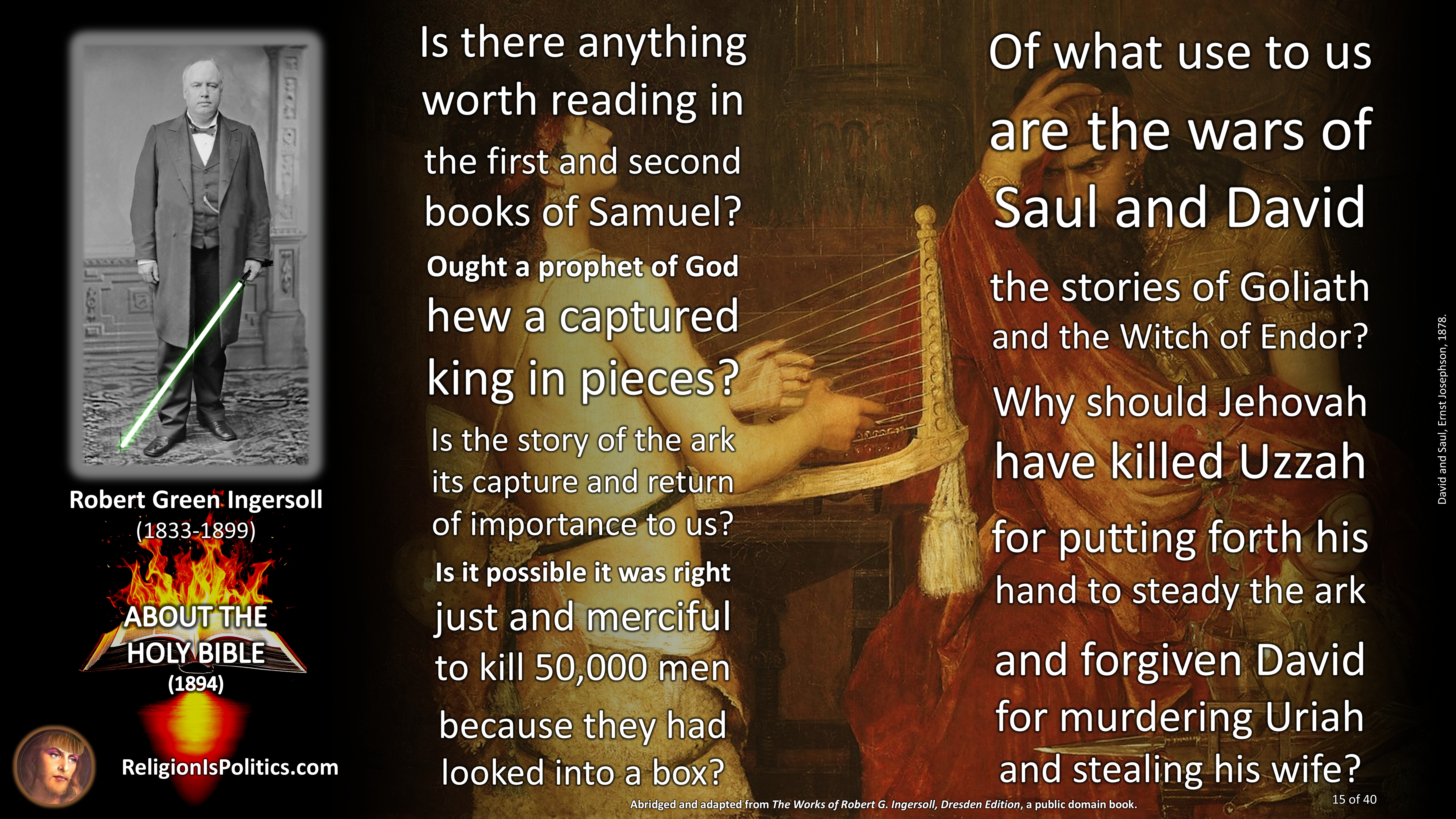
According to Samuel, the author of the universe frequently commands crimes against humanity, sometimes does them himself, and punishes people extra when their participation is not enthusiastic enough.
This explains the Middle Ages.
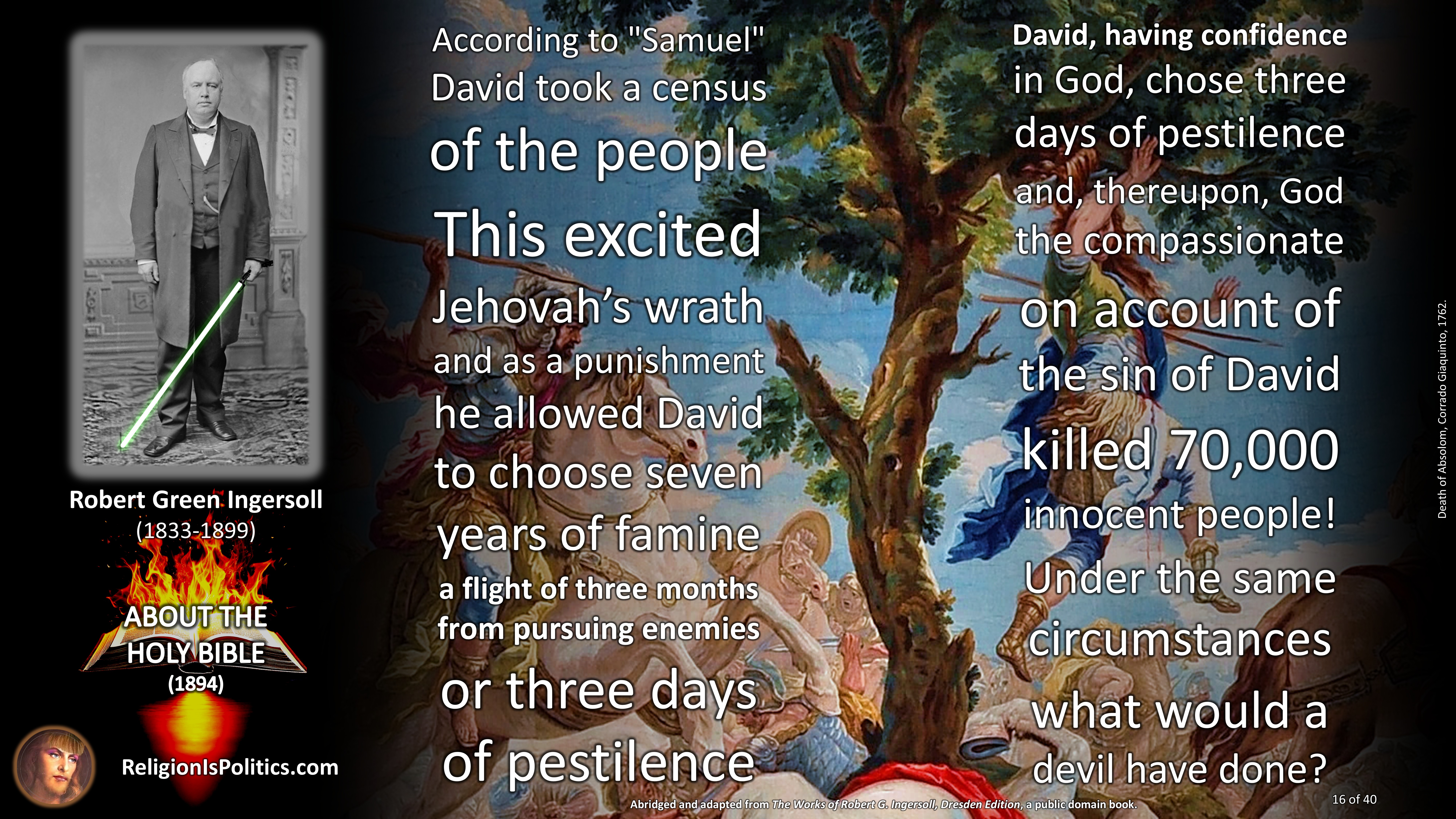
God told David to take a census.
Or maybe Satan told him.
Samuel and Chronicles disagree. Either way it was a trick question. David got a choice between years of famine, months on the run, or days of plague.
David knew a plague would affect him the least, so he chose that.
But in the end he got all three.
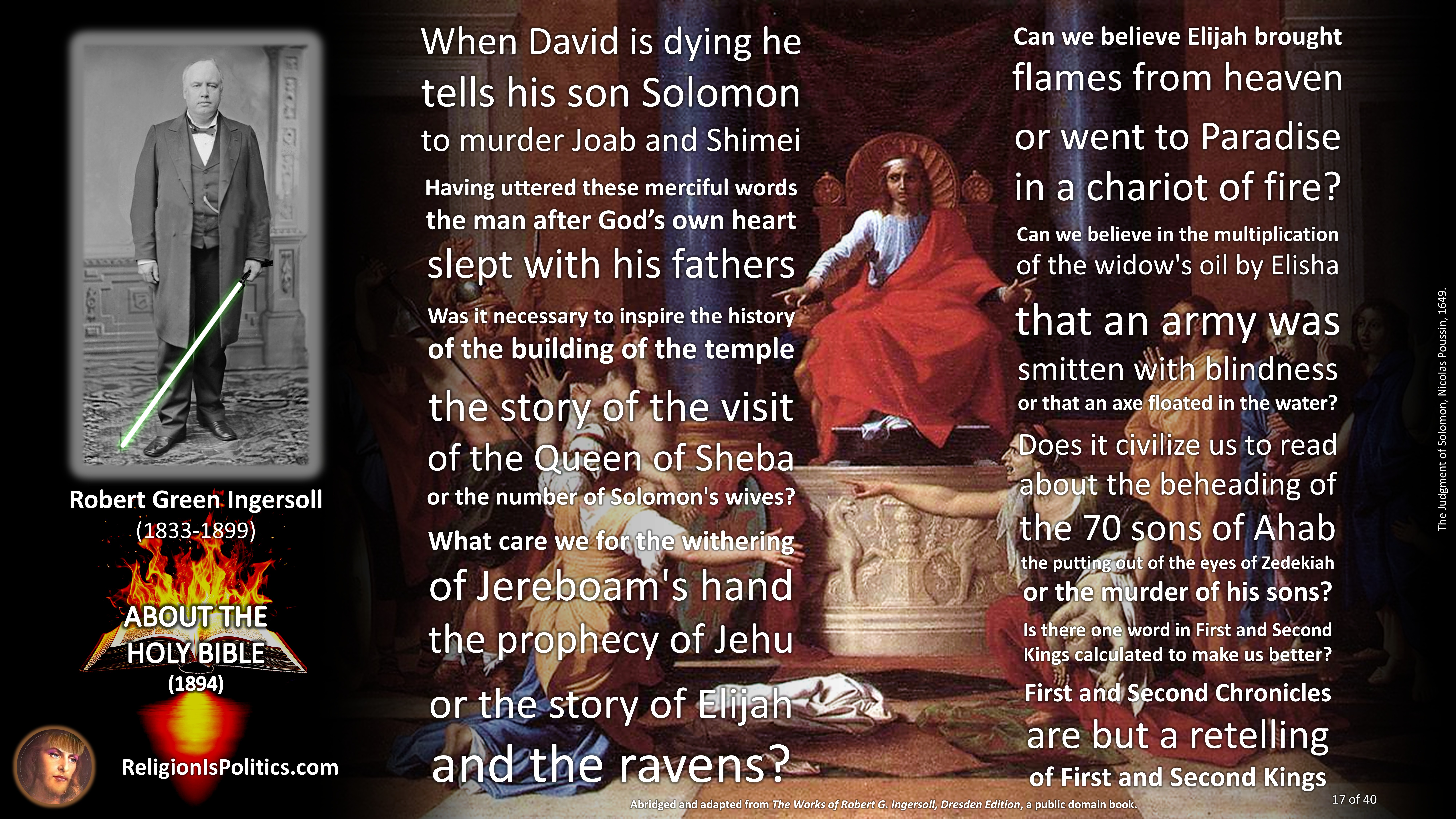
When David died he became a case study in the problems of monarchy.
If any king ever had a divine right to rule, David did, and yet not even David’s God could resolve the succession crisis he left behind.
The only thing that could resolve the succession crisis David left behind was for his designated heir to immediately carry out a series of executions.
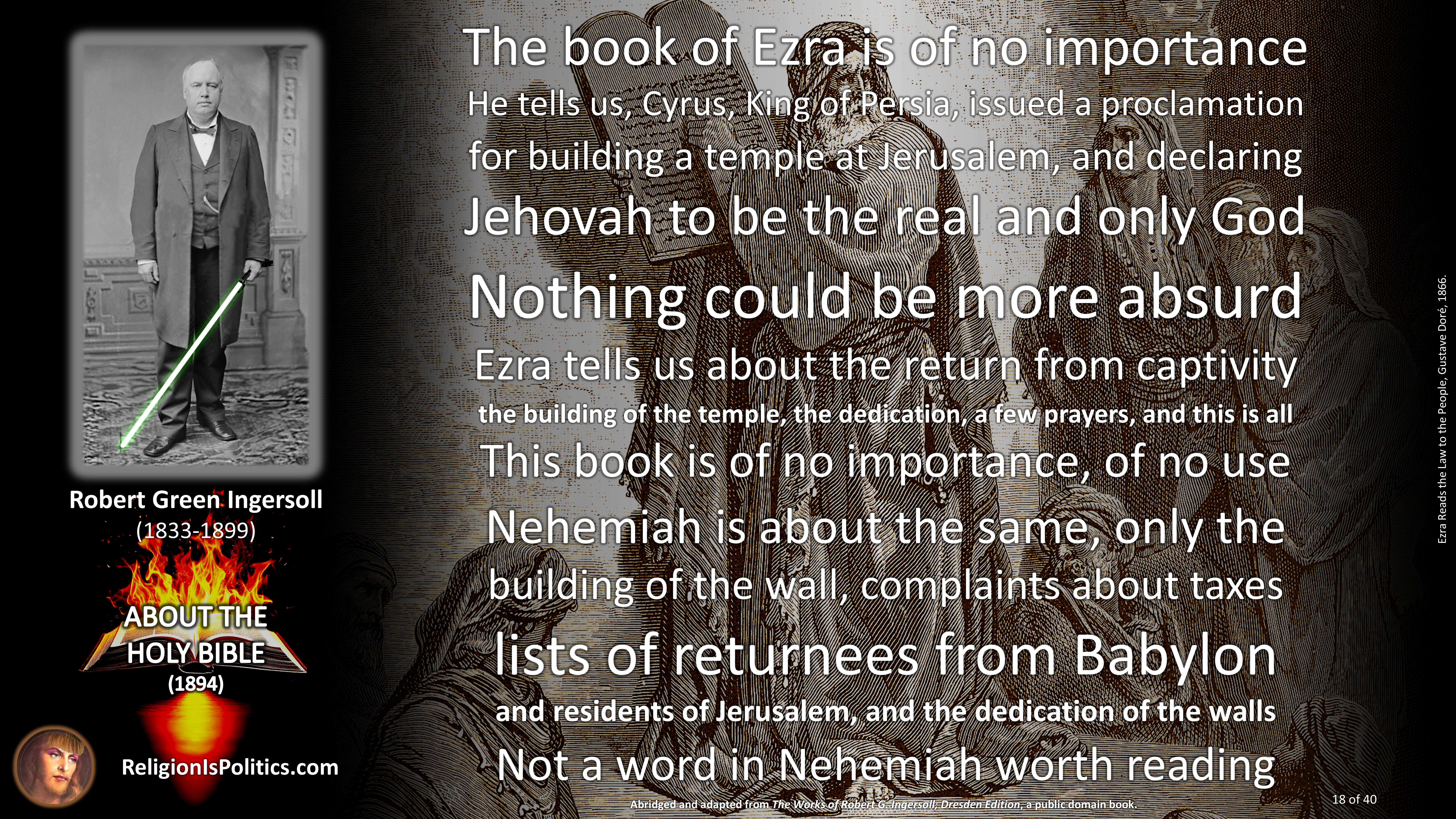
The books of Ezra and Nehemiah are of no importance — except that they serve as blueprints for Christian nationalist takeovers.
See also: Joseph in Egypt.
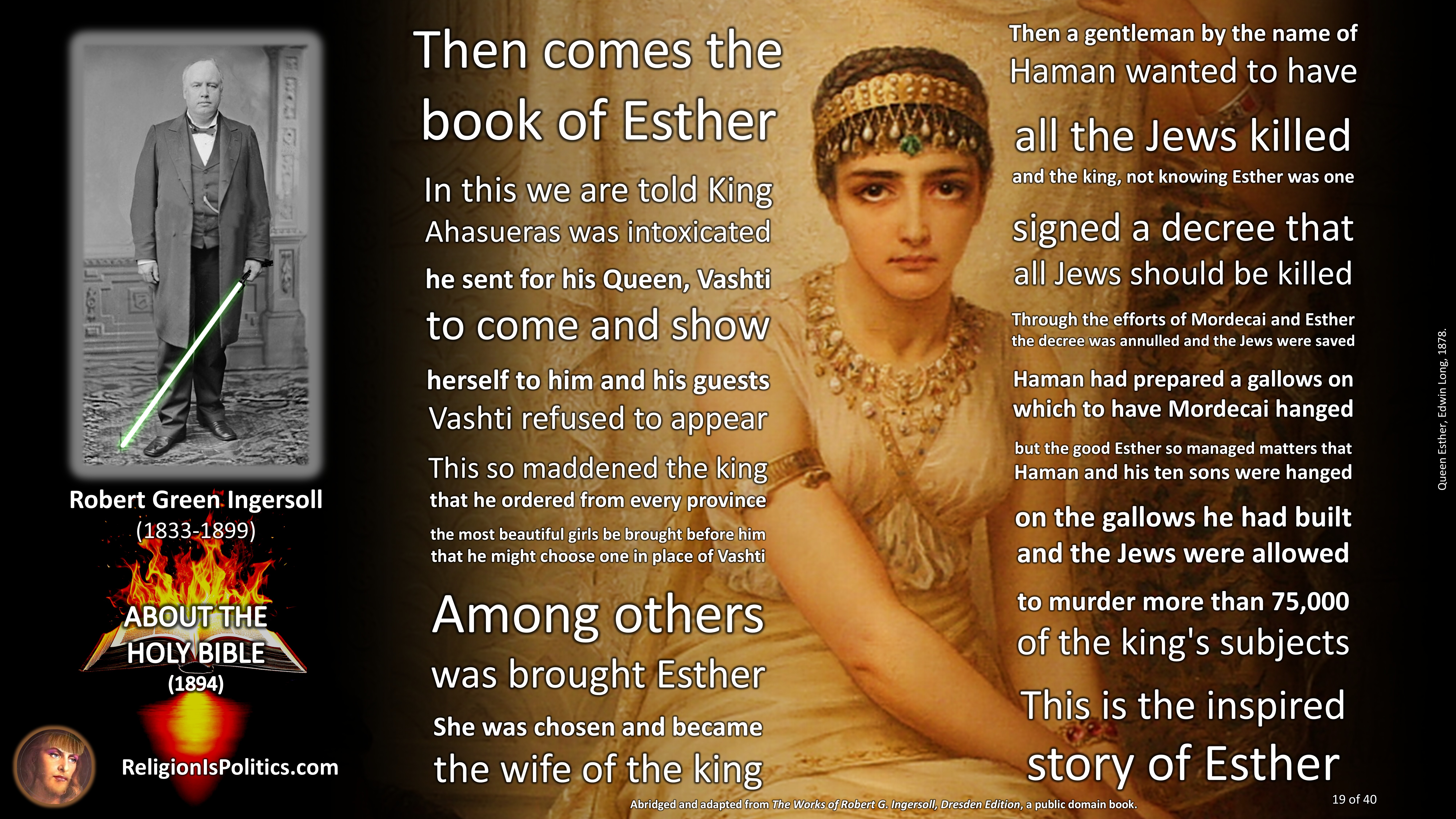
Esther also serves as a model for Christian nationalists taking over a country, but its main importance is as a model of misogyny.
You can see this in the way Queen Vashti was made an example of to control all the other women in the kingdom.
The Persian kingdom at the time was actually more progressive than the Israelite kingdom.
If this had happened back in the Israelite kingdom, the king would not have bothered to divorce his wife before he replaced her.
There are 150 poems in the book of Psalms.
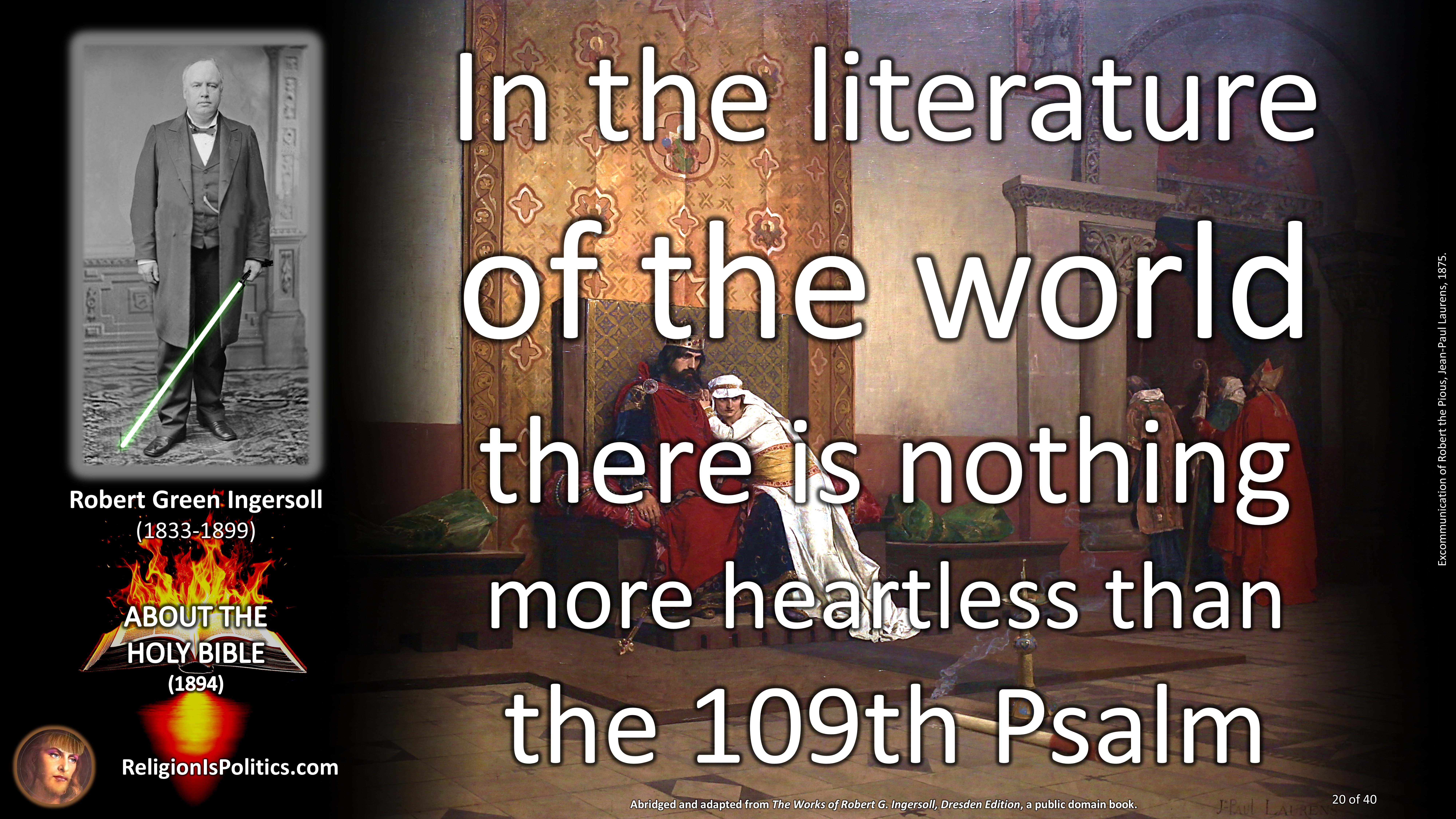
Dozens of them are known as “imprecatory.” That is, they wish bloody vengeance on the psalmist’s enemies and that’s all they do.
These poems of psychopathy are unequaled in the New Testament until we reach the book of Revelation.
The Psalms with their imprecations and the Prophets with their jeremiads absolutely helped inspire Revelation’s psychopathic vision, which gleefully anticipates the torture, massacre and barbecue of everyone who disagrees with the author.
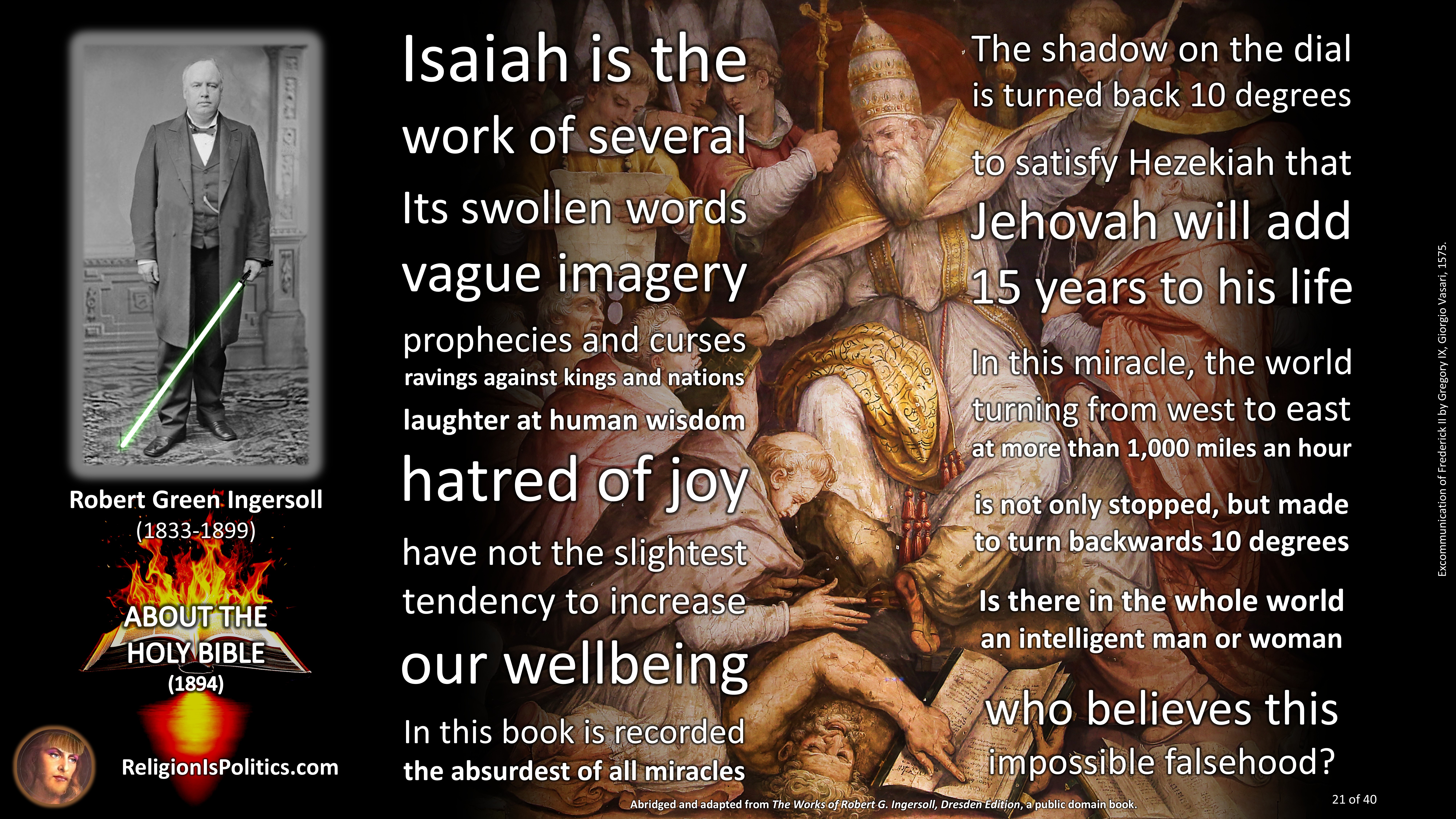
Whoever admires the prophets of Ancient Israel needs to meet their heroes.
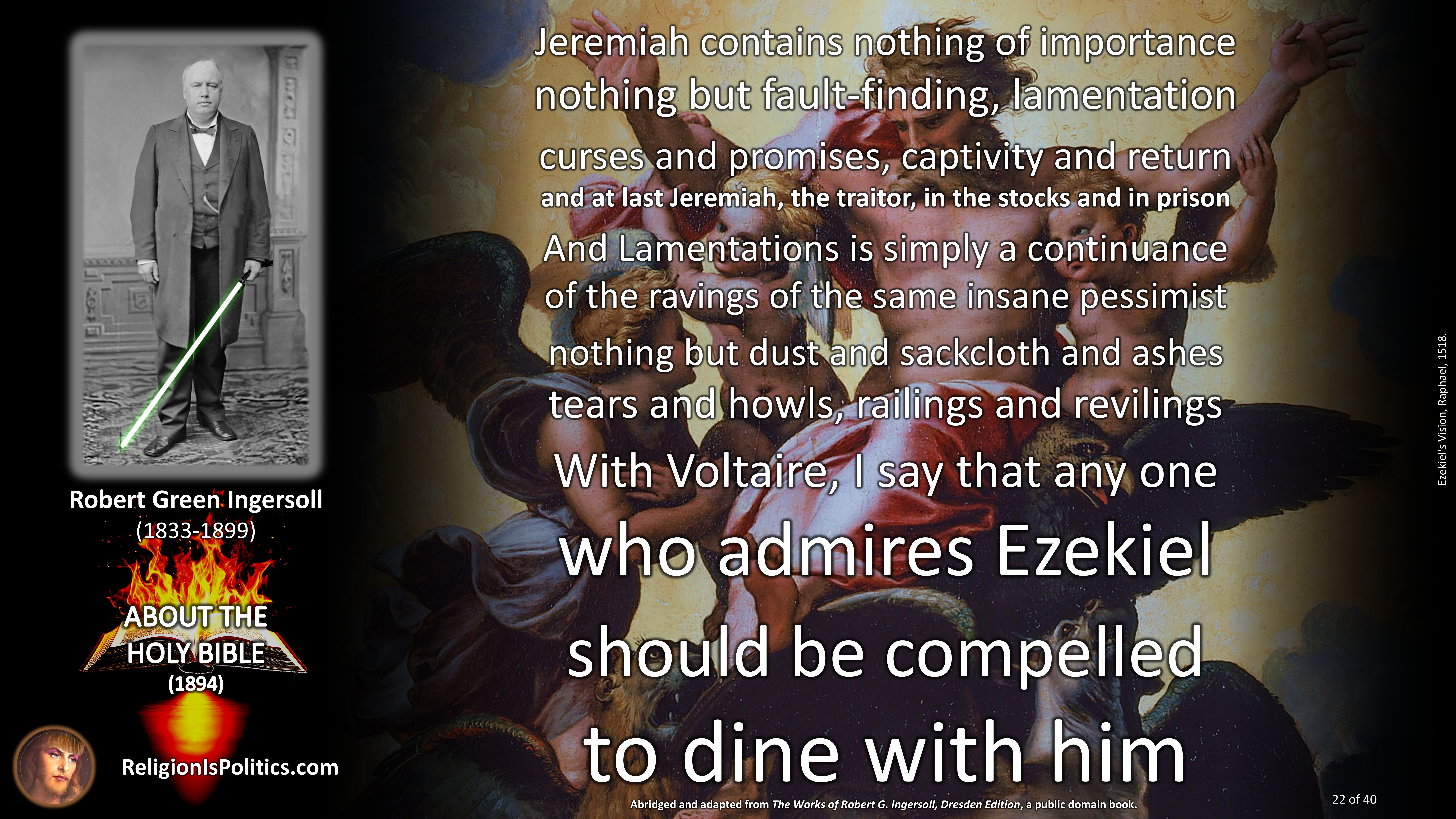
Is it possible any of these books were written through the agency of a superior being?
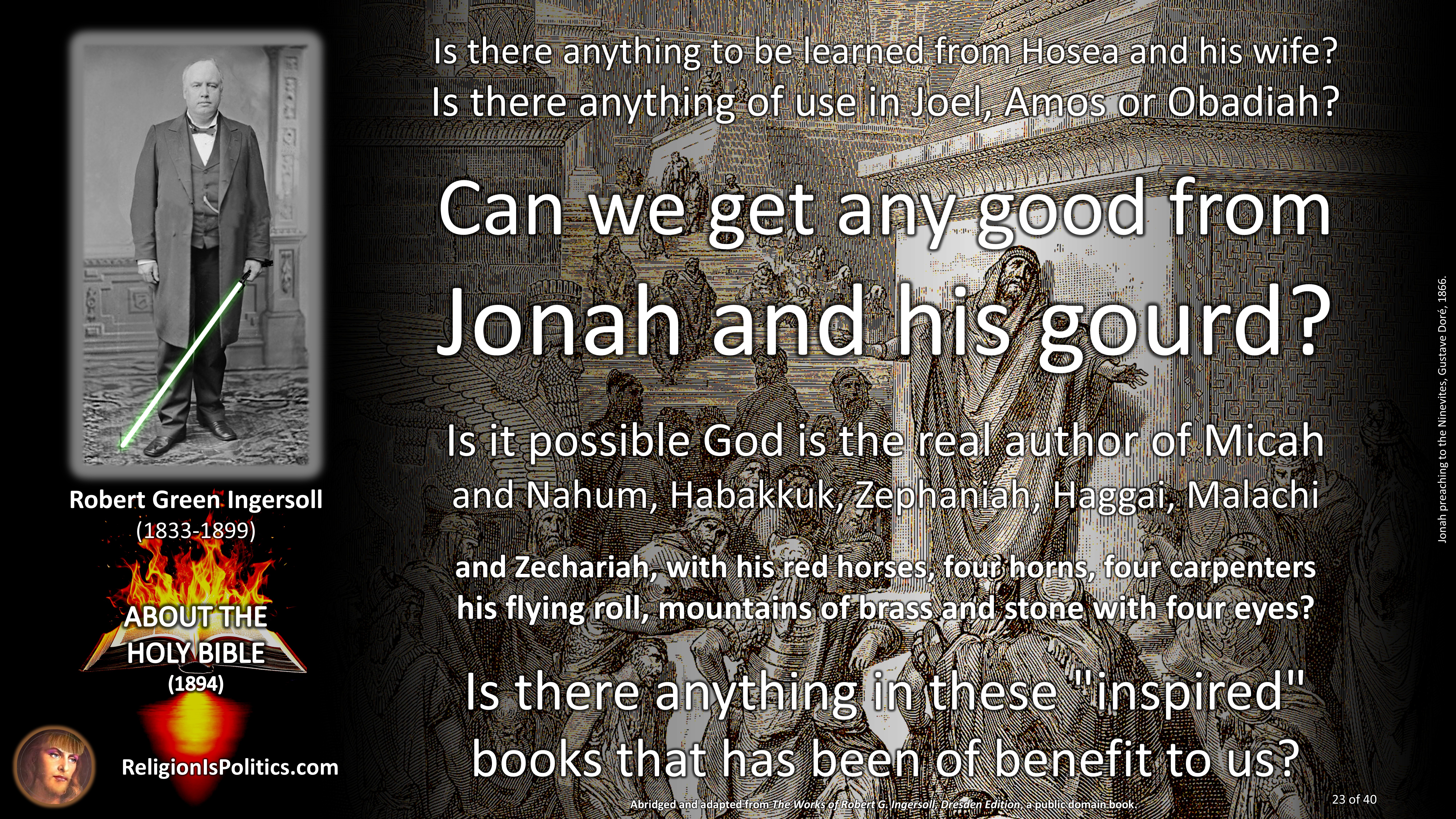
There are passages in the Bible that let us know, just by the contents, that the author was not someone we would wish to admire, and neither was his audience.
Unless we do admire those passages and submit to them in spite of ourselves.
Then we are just like the authors and the intended audience we become.
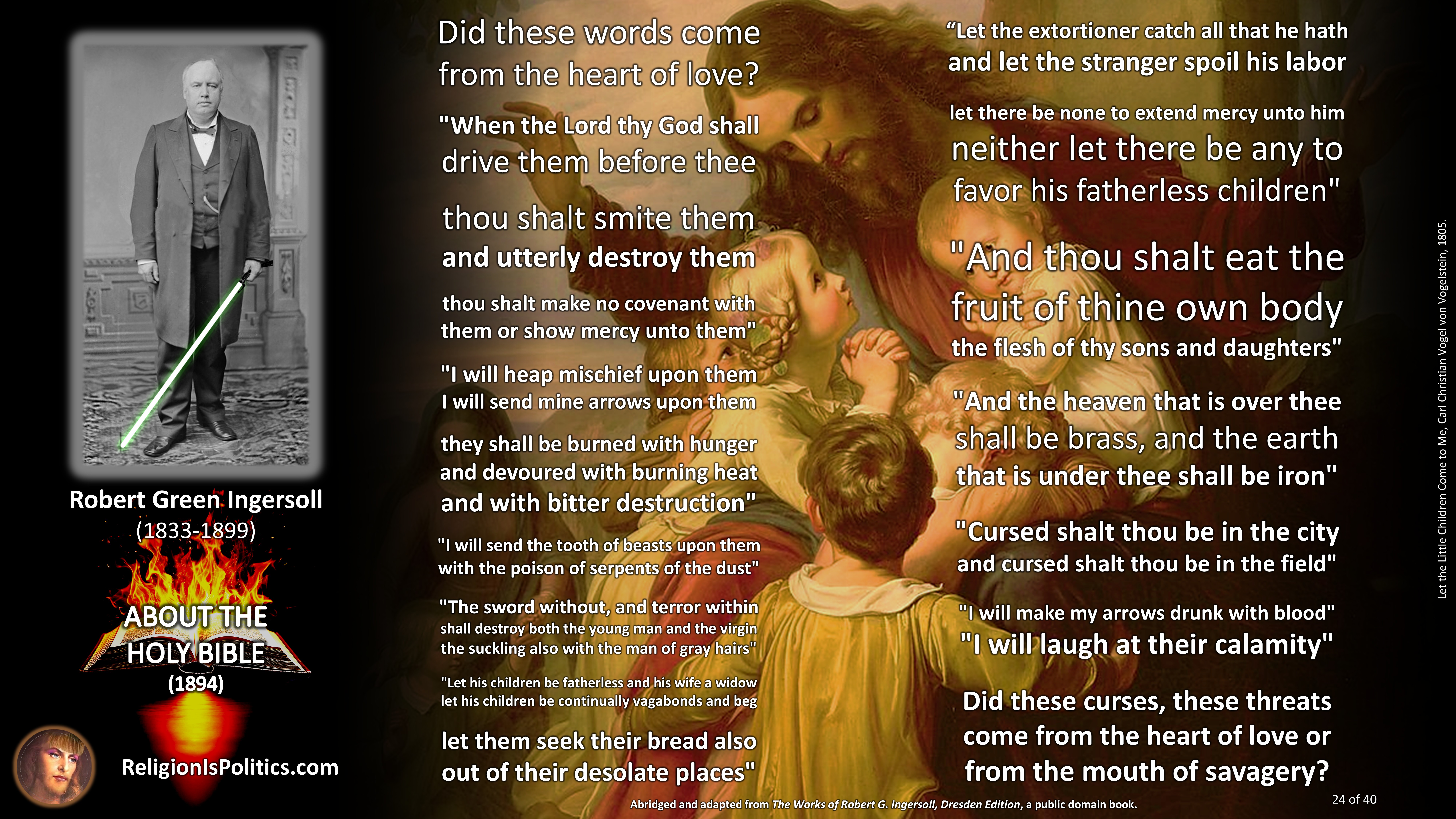
By the time God sent his only begotten son, he had already loved the world so much that it was rather the worse for wear.

When I did the art survey for this series, the most fascinating thing I didn’t use was an early Christian relief juxtaposing Daniel in the Lions’ Den with Jesus healing someone.
What was fascinating about Daniel was he was in the style of Hercules.
What was fascinating about Jesus was he was using a wand.
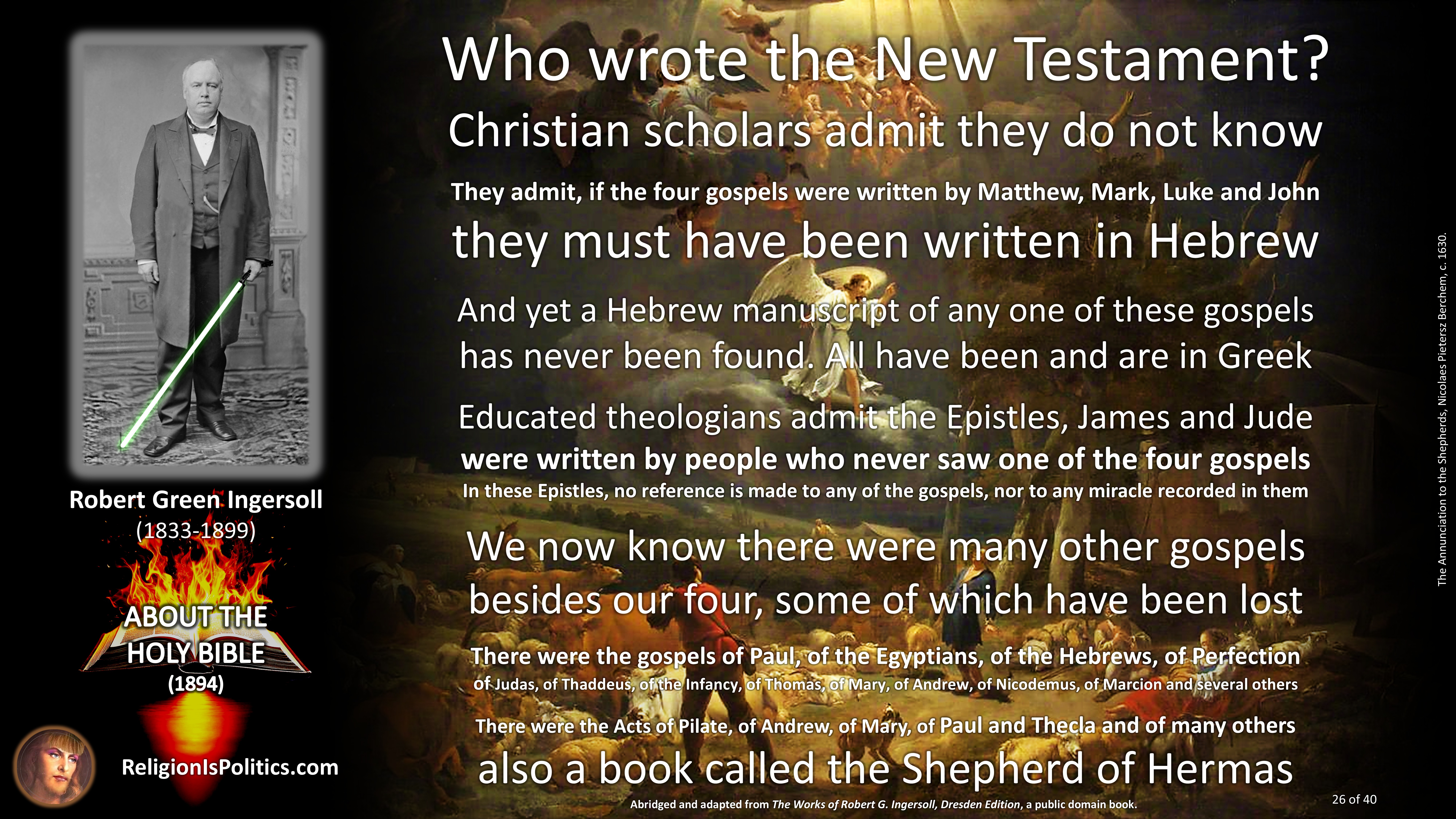
It doesn’t matter who wrote an anonymous text.
It matters who reads it and it matters what their values and incentives are.
What matters least is the integrity of the content. The gospels prove it.
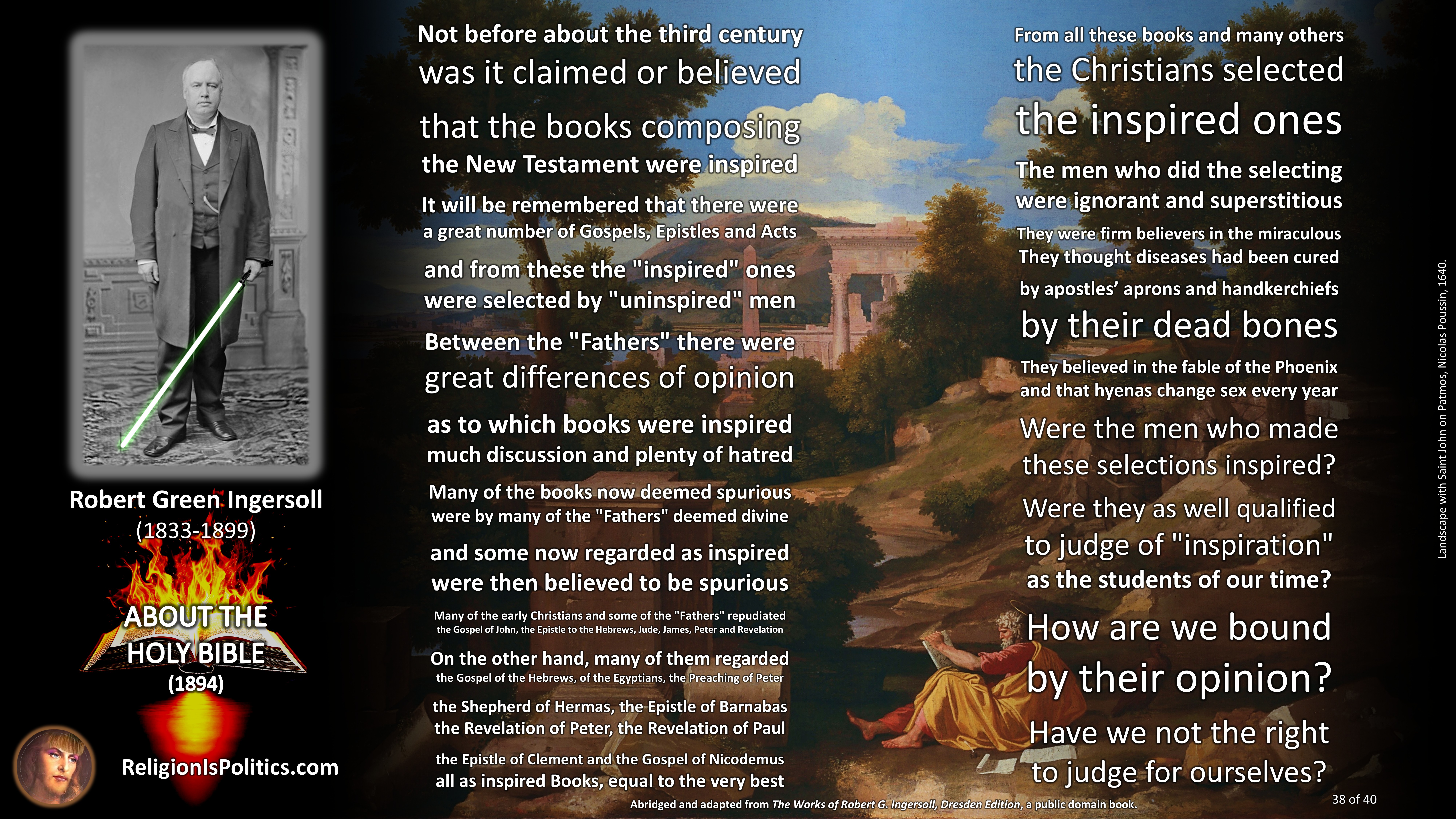
Their internal contradictions show the early church was more motivated by politics than truth all along.
The gospels were written by the few who could read to influence the many who could not, and it shows.
They are claimed to have been written by Jesus’ very disciples, who could not read, and yet Paul, who could write, had more influence than all of them put together.
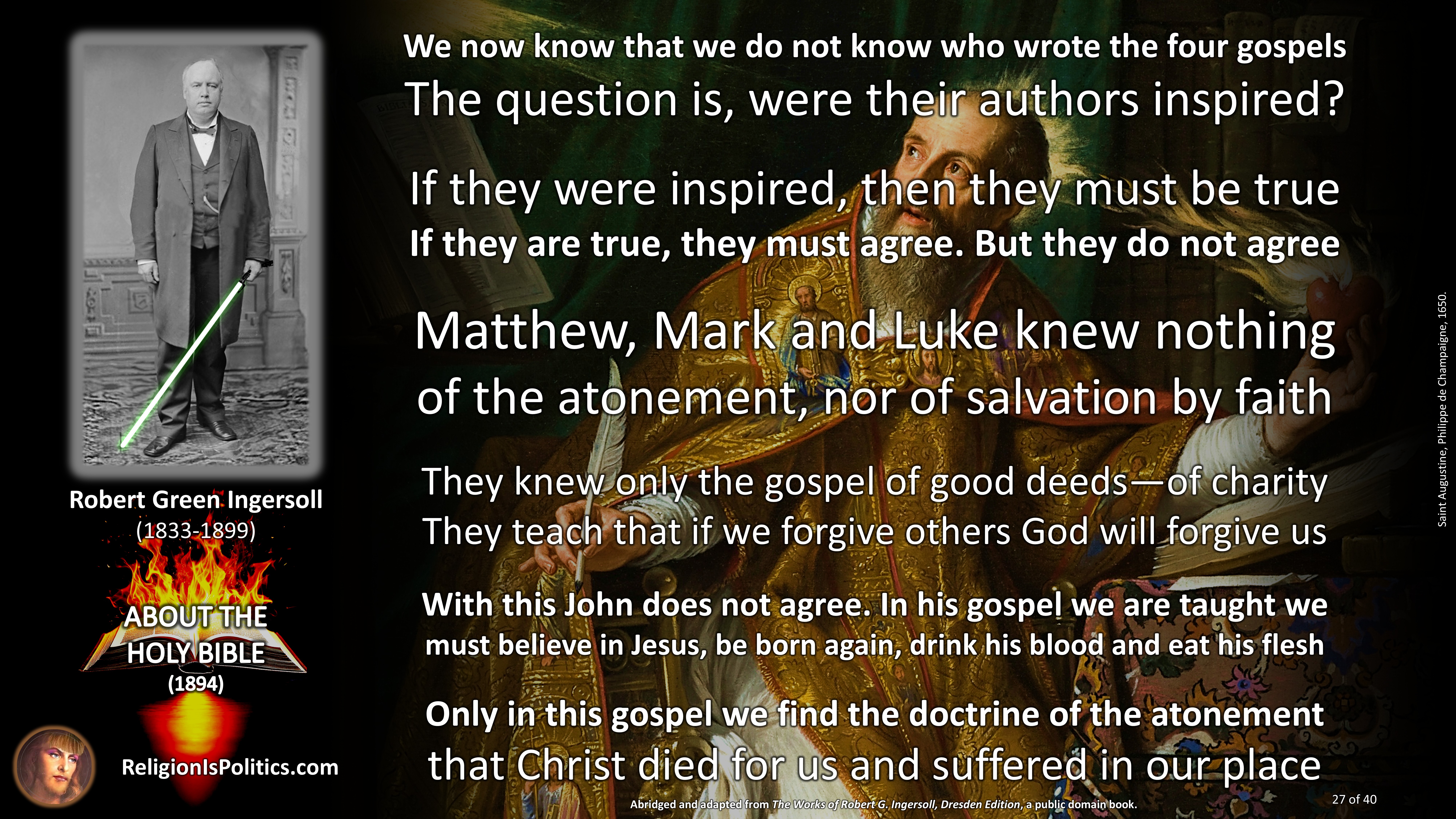
Apologists are forced to attribute one of Jesus’ genealogies to Joseph and the other to Mary even though both texts clearly say Joseph.
By the time Paul’s disciples got around to writing Jesus’ biography, they were no longer on speaking terms with one another, and probably no longer in touch with any of the original 12 either.
Gospels, they wrote dozens to choose from. The four they chose were probably the least disagreeable.
But the fact that they chose more than one shows it was a marketing decision all along. And the fact that they threatened anyone who chose differently with a fate worse than death shows something about the character of these marketers.
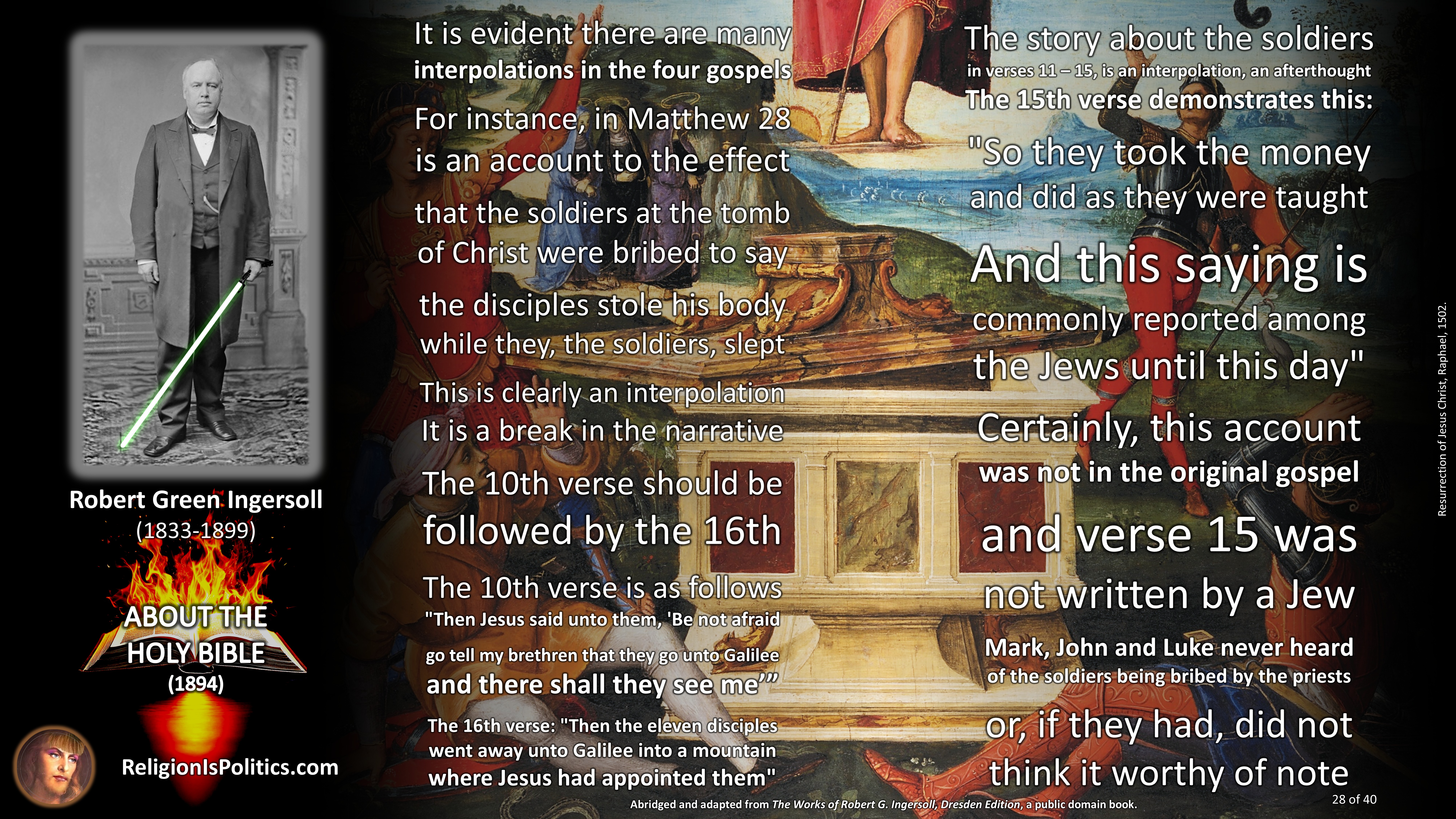
Not just the details, but the philosophies written in Matthew, Mark and Luke are so different from the views in John, apologists are forced to read John’s views between the lines of the others.
Because they’re not in the lines.
But they could have been, if only Jesus had known what he was doing.
Obviously John’s “plan of salvation” took some time to evolve. And obviously it was a product of committee.
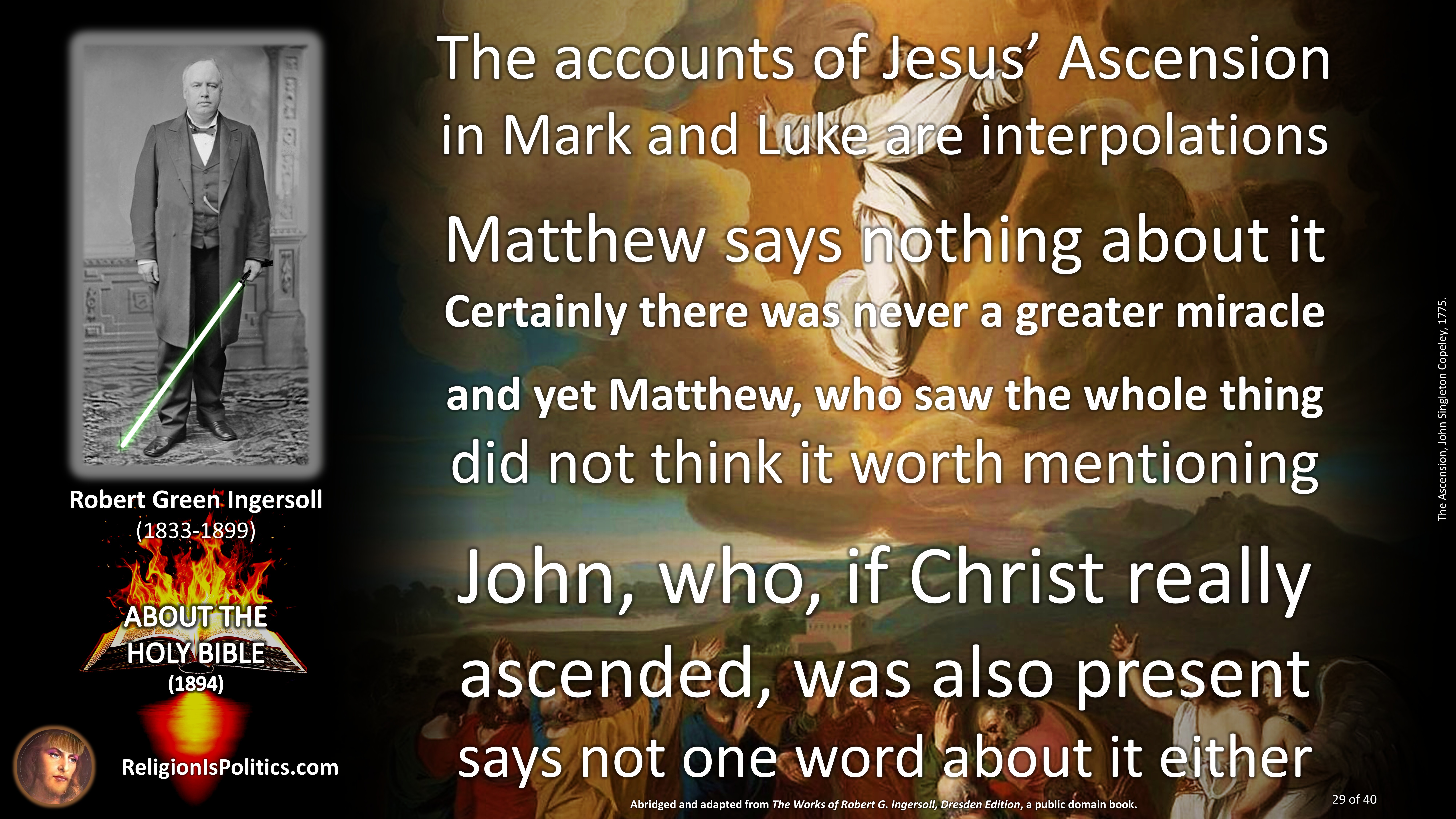
A child who reads the four gospels, having already read four books by Tolkien, cannot help but notice the Bible has more contradictions.
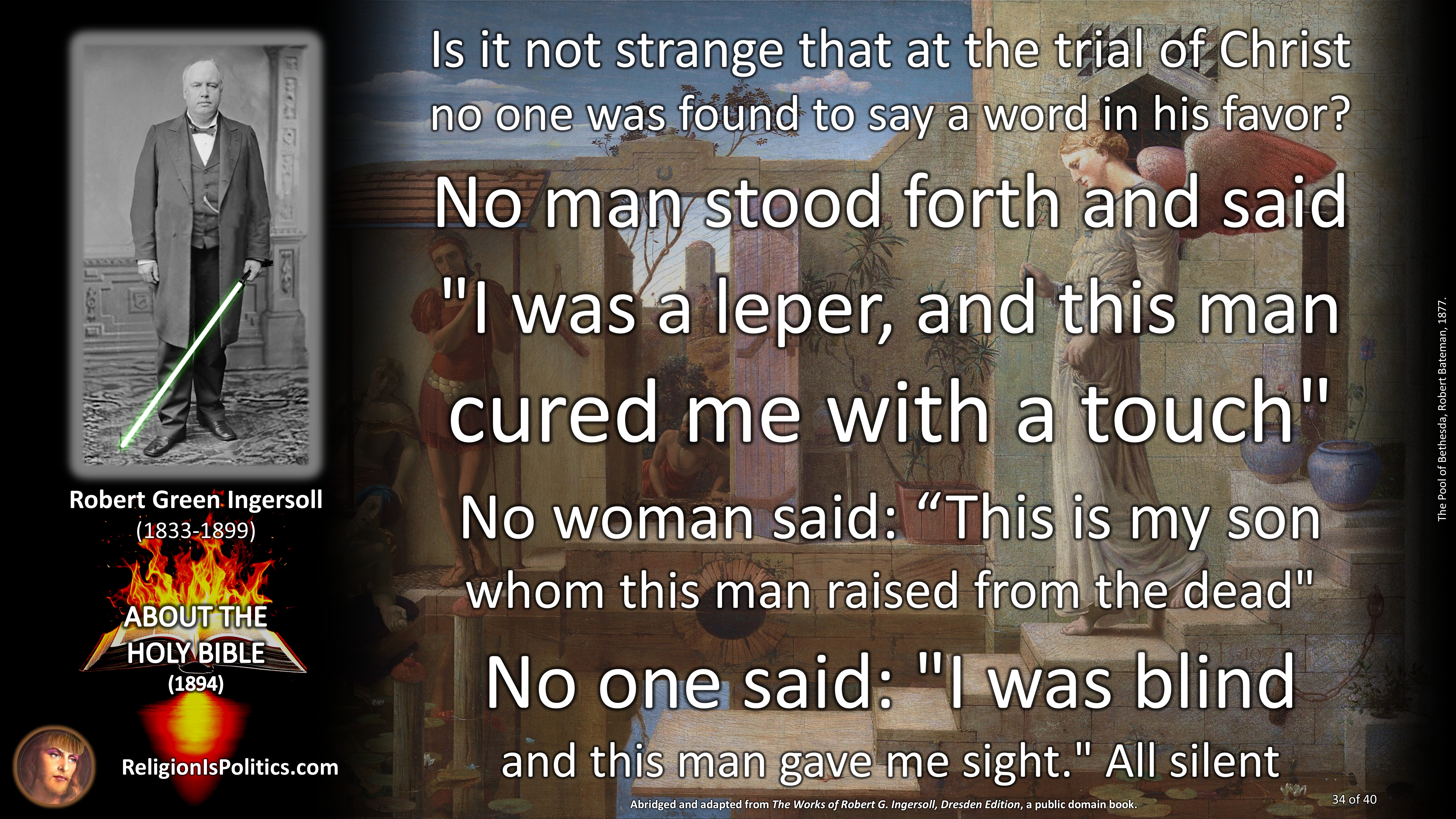
A child notices the people Jesus pretended to heal never became his disciples and never spoke up for him at trial.
A child notices pastors are believed more than scientists.
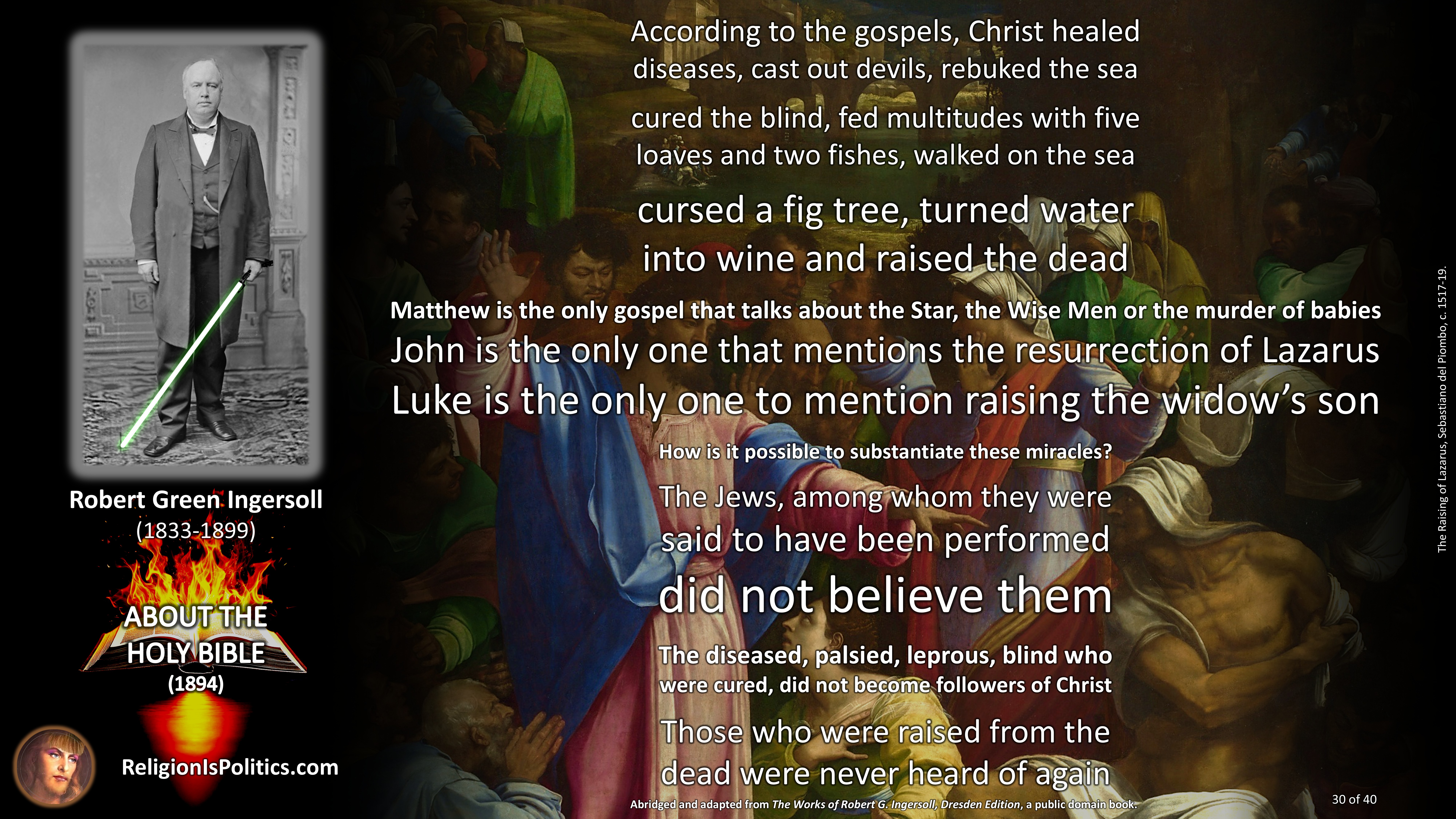
A child who reads Josephus, having read the four gospels, will be struck by the absence of corroborating evidence for the gospel narratives where evidence would be expected.
A child can see that what evidence is there was obviously a side note that got written into the text between copies.
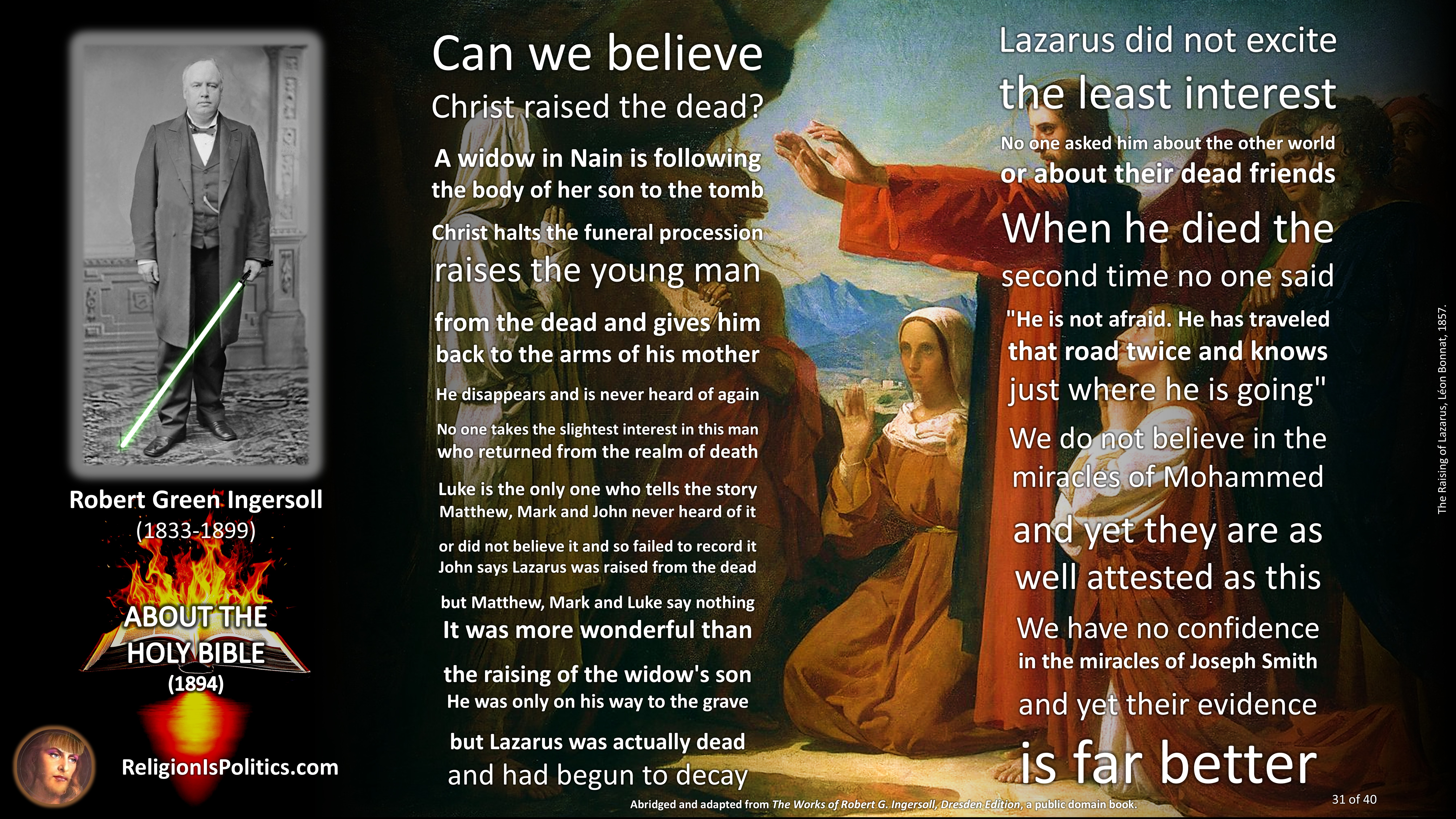
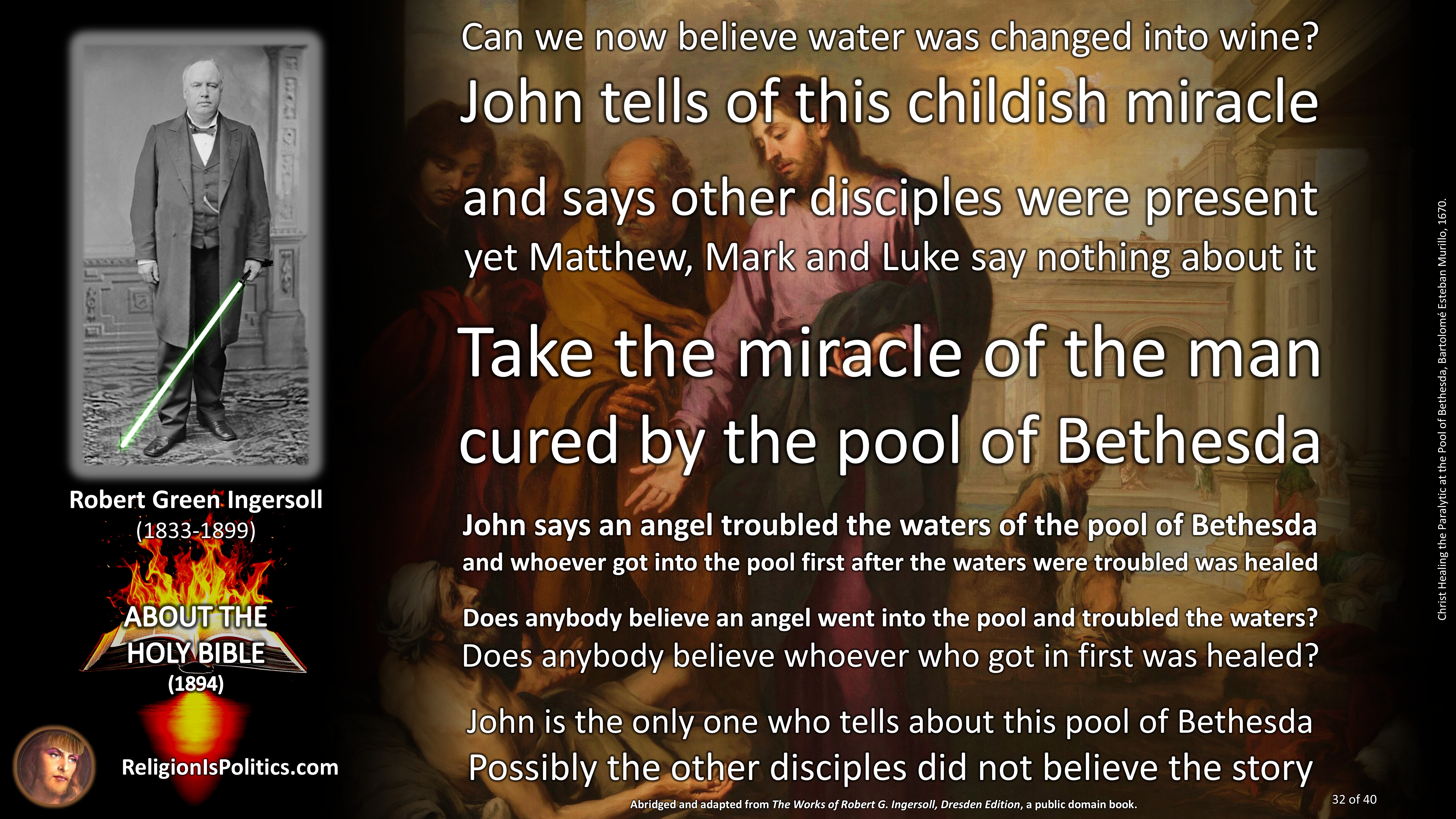
John says the geothermal hot springs were caused by an angel and whoever got in the water first after the angel would be healed.
Certainly if something like that had been true these waters would have been big business.
Matthew, Mark and Luke would have heard of them. Certainly if they were from the area.
Back then, a placebo effect was as good as medical treatment, especially if it came with bed rest, adequate nutrition and social support.
Other medical treatment might be even more harmful than the disease had been.
The irony was in those days almost every medical outcome was a coincidence yet coincidences were almost impossible to believe in.
It’s easy enough to imagine how Jesus’ faith healing scam worked.
He went to people in pain, tried to make them feel better and then tried not to hear from them again.
What else can we say of a doctor whose patients are claimed for marketing testimonials but they won’t testify under oath?
We all know that whenever Jesus couldn’t make a sick person feel better, he, his disciples, the crowd and potentially the whole community would collectively blame that sick person for their own continued illness and manifest lack of faith.

Jesus was an unemployed carpenter who convinced 12 other working men to quit their jobs, leave their families and wander the countryside with him pretending to provide medical care.
No wonder when he died they started an MLM.
Christian healthshare ministries are just like them.
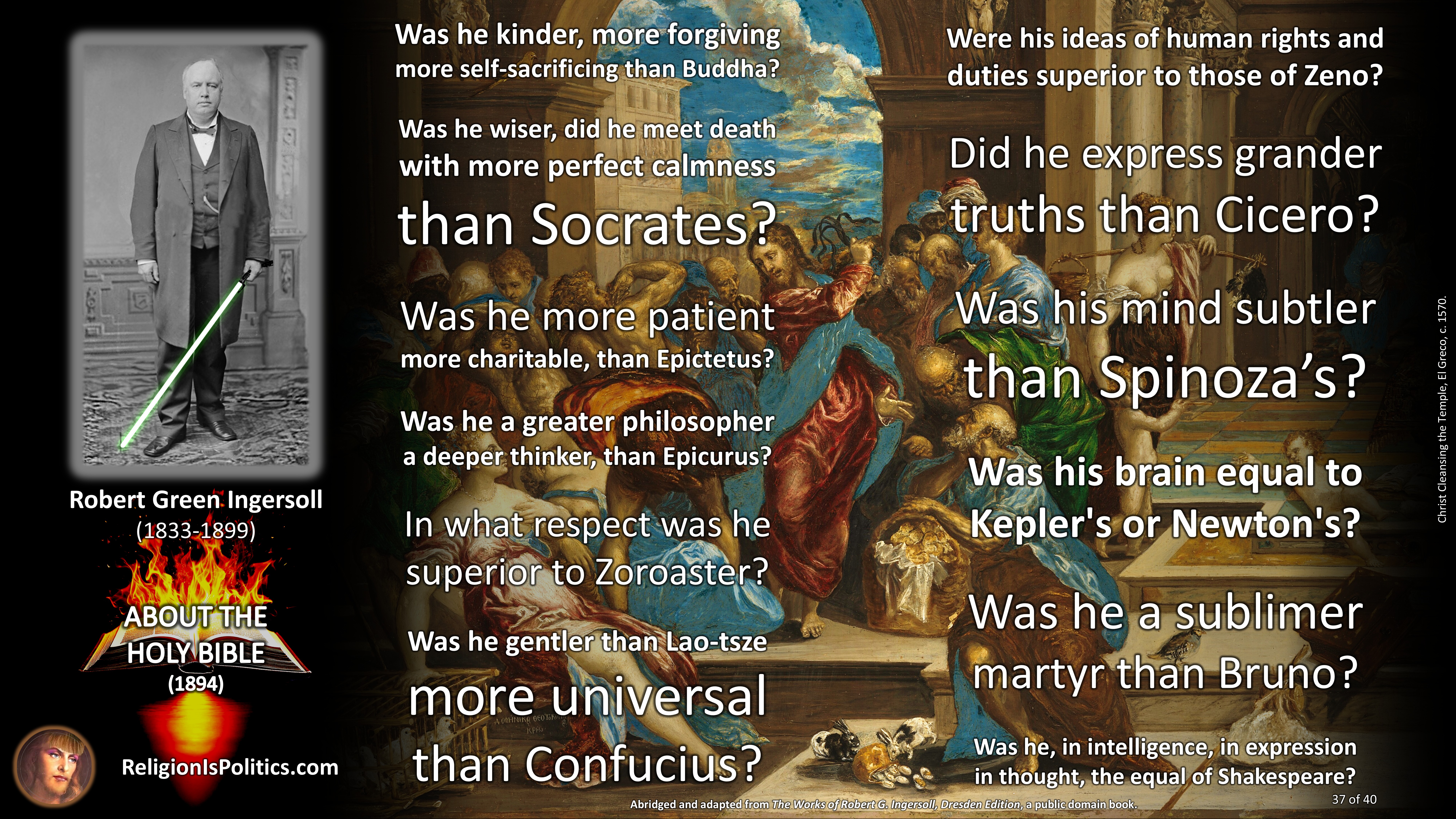
Was Jesus better than Buddha? Epictetus? Cicero? Spinoza? Bruno?
Was he better than Isaac Newton?
Was he better than you or me?
Maybe, but I doubt it.
I don’t think he would have said he was coming back with a sword in his mouth to throw whoever doesn’t like him in a lake of fire.
Very little information about Jesus survives the first century after his life.
The closer we look to that time, the more diverse were the ideas about him.
The gospels brag that his exploits would fill many books but the church made sure most of those books were thrown out.
The truth is, ideas about Jesus have never stopped changing. They have only gotten more rigid with time.

Jesus said we would never be able to solve poverty — the poor would always be with us until he returns.
He said whoever wasn’t with him was against him.
He said he was going out for smokes but it’s been 2,000 years and the only sign of his return is another genocide.
Enough is enough. I don’t believe him anymore.

Background art
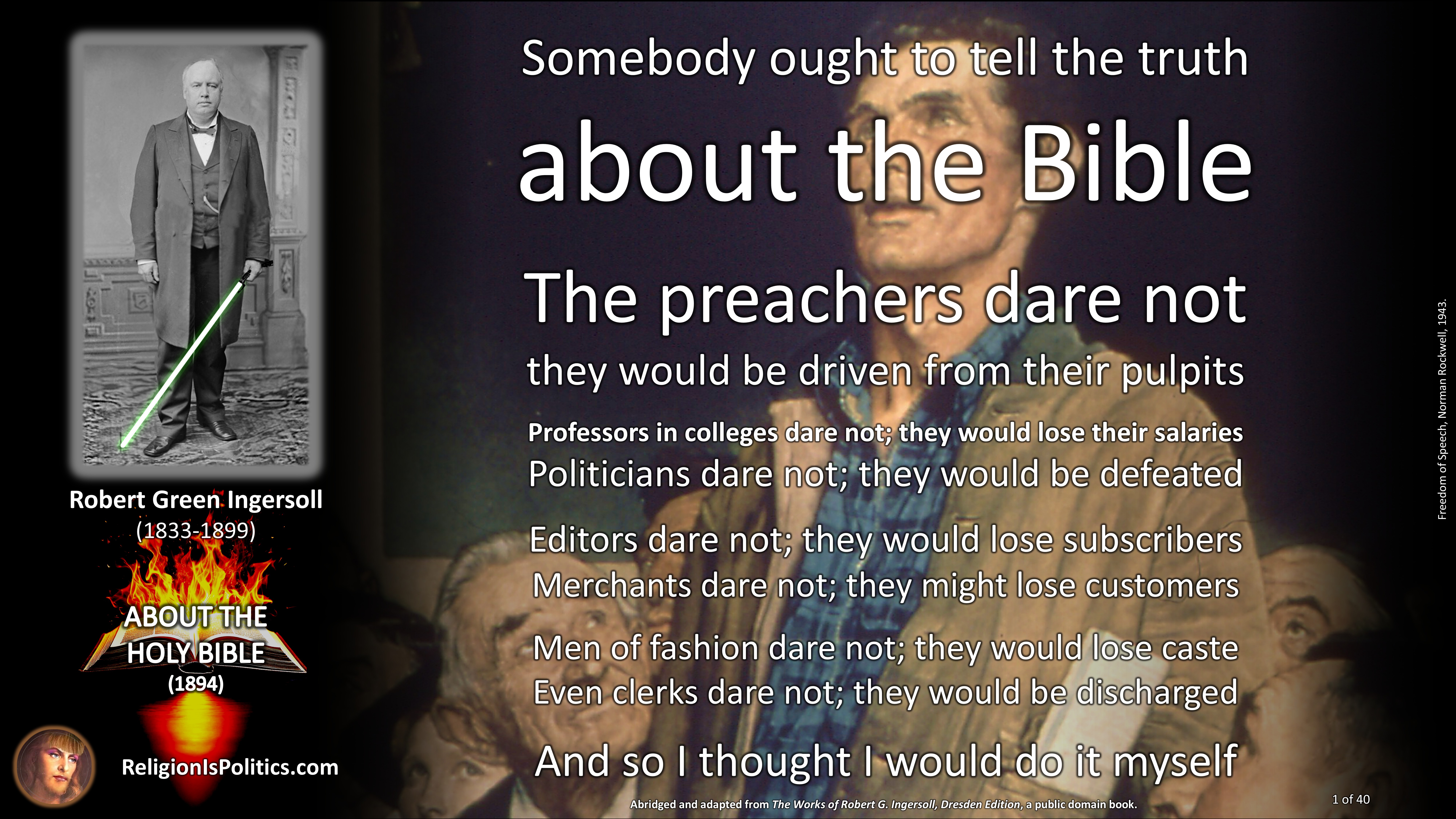
- Freedom of Speech, Norman Rockwell, 1943.
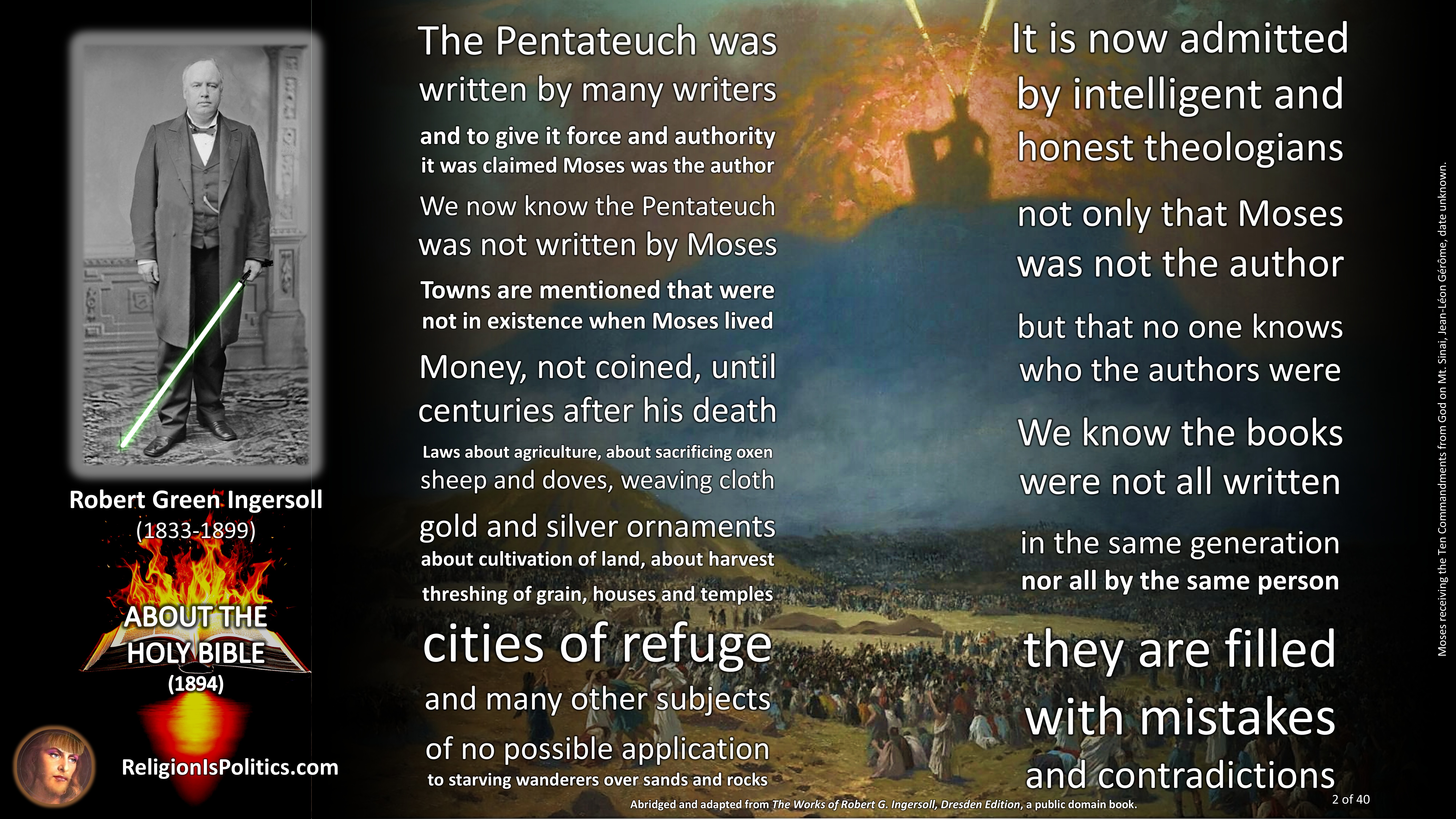
- Moses receiving the Ten Commandments from God on Mt. Sinai, Jean-Léon Gérôme, date unknown.
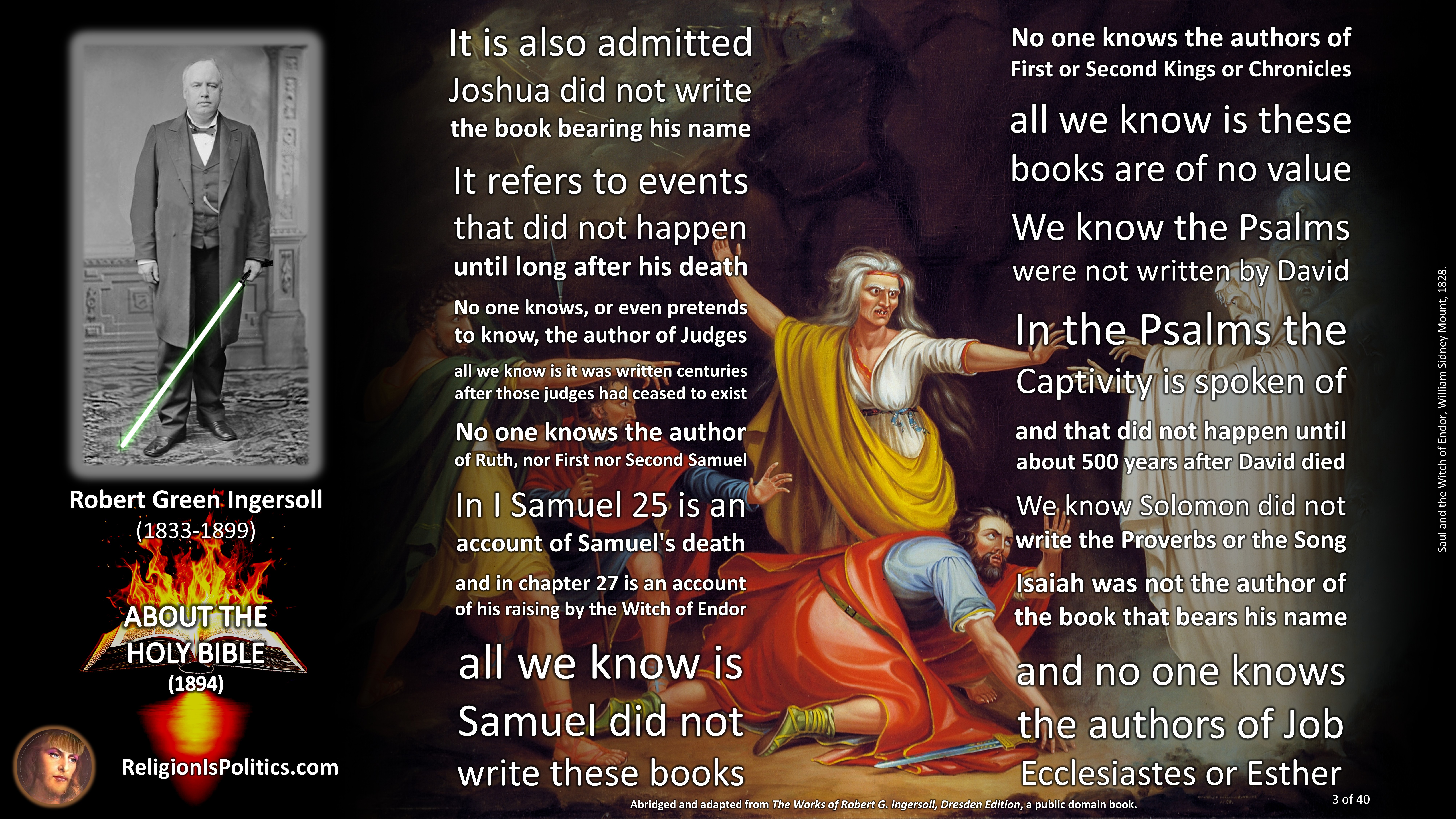
- Saul and the Witch of Endor, William Sidney Mount, 1828.
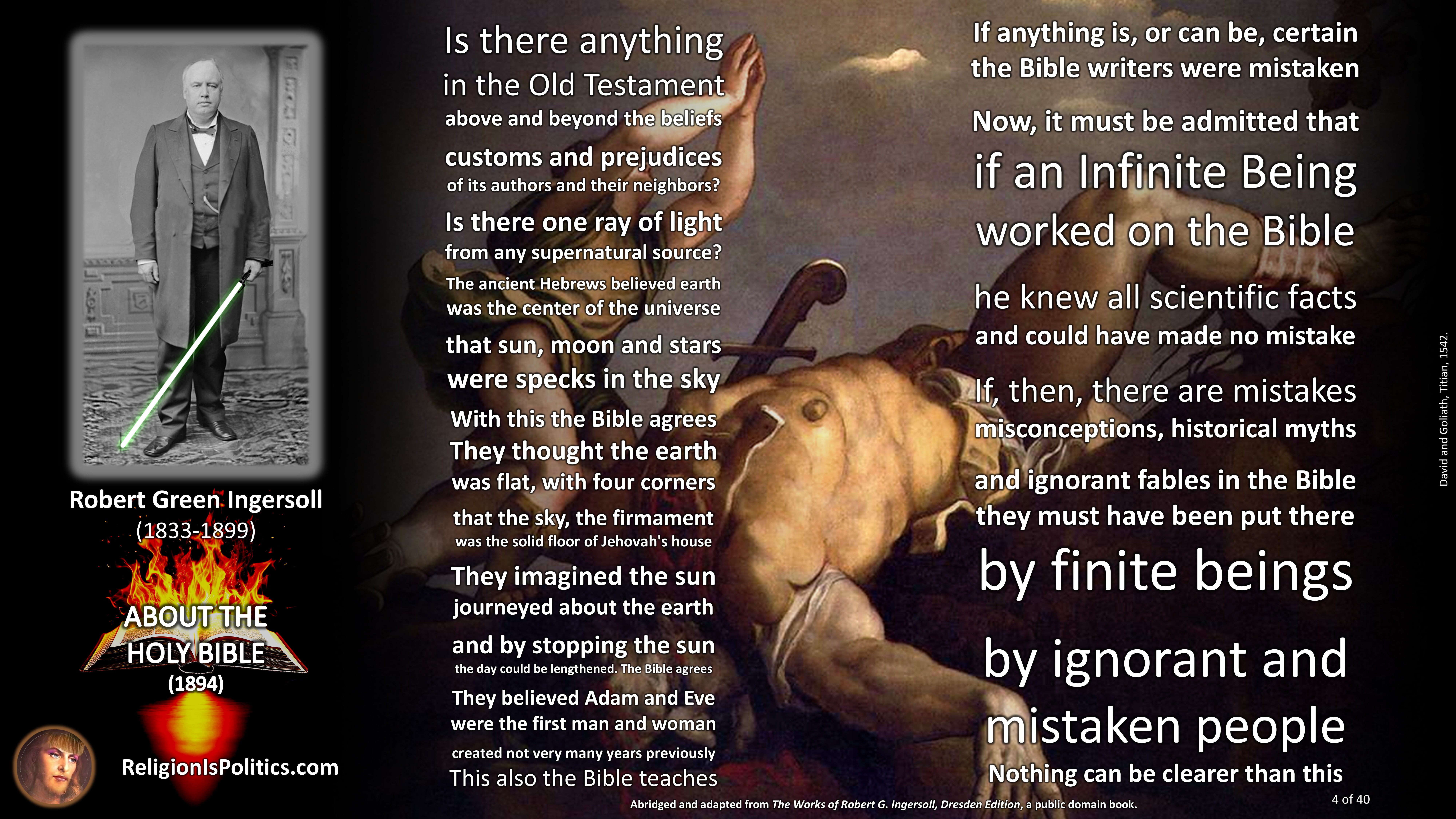
- David and Goliath, Titian, 1542.
- Joshua Commanding the Sun to Stand Still upon Gibeon, John Martin, 1816.
- Moses Breaking The Tablets Of The Law, Gustave Doré, 1866.
- The Stoning of Achan, Gustave Doré, 1880.
- Elisha Cursing the Children of Bethel Who Are Being Devoured by the Bears, Gillis van Coninxloo, 1602.
- Daniel in the Lions’ Den, Peter Paul Rubens, 1614.
- Joseph in Egypt, Jacopo Pontormo, 1515.
- The Worship of the Golden Calf, Follower of Filippino Lippi, 1450.
- Moses and Joshua bowing before the Ark, James Tissot, c. 1900.
- Moses and the Serpent of Brass, Giiuseppe Angeli, 1770.
- The Victory of Joshua over the Amorites, Nicolas Poussin, 1625.
- David and Saul, Ernst Josephson, 1878.
- Death of Absolom, Corrado Giaquinto, 1762.
- The Judgment of Solomon, Nicolas Poussin, 1649.
- Ezra Reads the Law to the People, Gustave Doré, 1866.
- Queen Esther, Edwin Long, 1878.
- Excommunication of Robert the Pious, Jean-Paul Laurens, 1875.
- Excommunication of Frederick II by Gregory IX, Giorgio Vasari, 1575.
- Ezekiel’s Vision, Raphael, 1518.
- Jonah preaching to the Ninevites, Gustave Doré, 1866.
- Let the Little Children Come to Me, Carl Christian Vogel von Vogelstein, 1805.
- The Destruction of the Temple in Jerusalem, Francisco Hayez, 1867.
- The Annunciation to the Shepherds, Nicolaes Pietersz Berchem, c. 1630.
- Saint Augustine, Philippe de Champaigne, 1650.
- Resurrection of Jesus Christ, Raphael, 1502.
- The Ascension, John Singleton Copeley, 1775.
- The Raising of Lazarus, Sebastiano del Piombo, c. 1517-19.
- The Raising of Lazarus, Léon Bonnat, 1857.
- Christ Healing the Paralytic at the Pool of Bethesda, Bartolomé Esteban Murillo, 1670.
- David Playing the Harp Before Saul, Rembrandt, 1655.
- The Pool of Bethesda, Robert Bateman, 1877.
- Elijah in the Desert, Washington Allston, 1818.
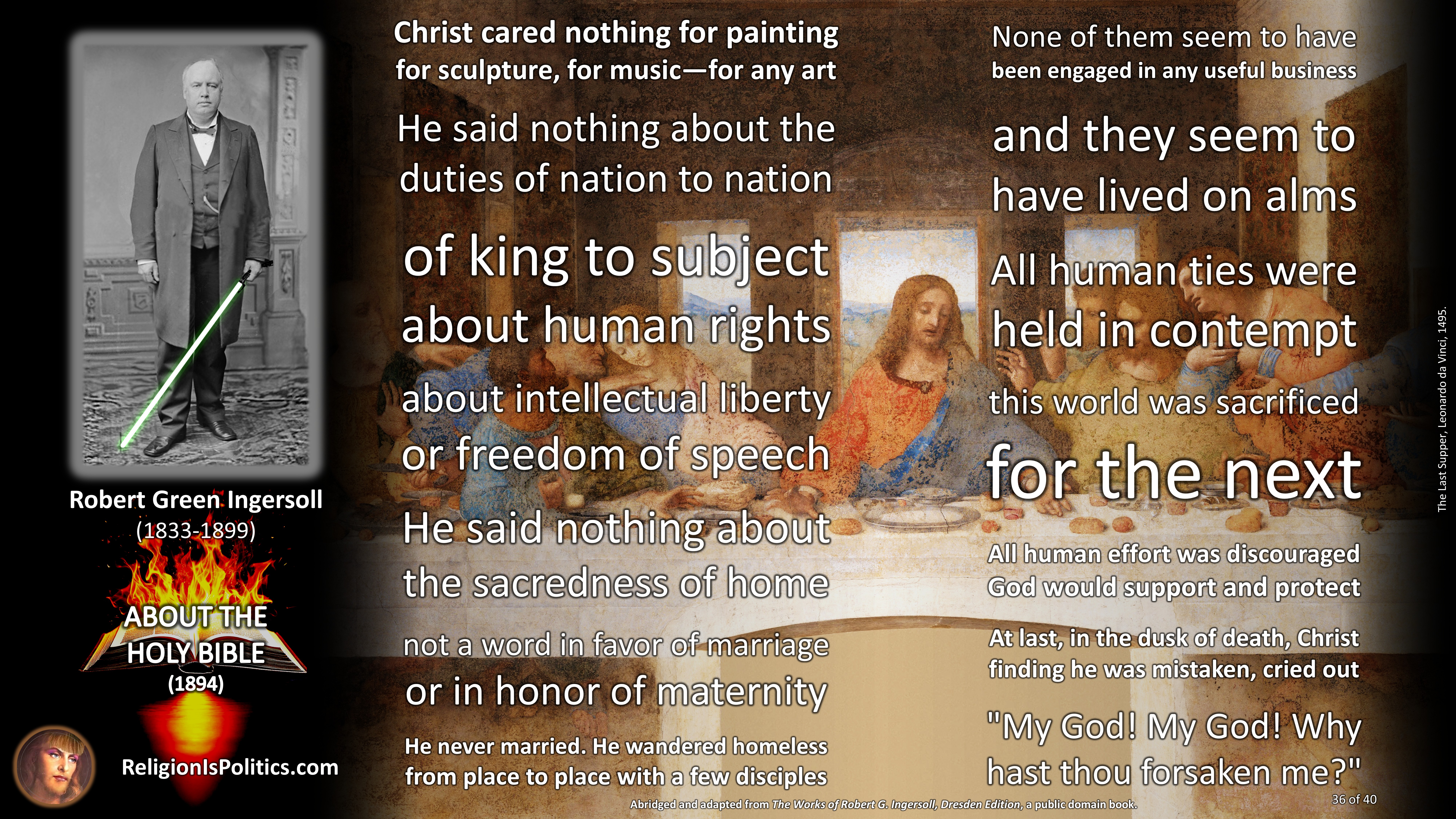
- The Last Supper, Leonardo da Vinci, 1495.
- Christ Cleansing the Temple, El Greco, c. 1570.
- Landscape with Saint John on Patmos, Nicolas Poussin, 1640.
- Saint John the Evangelist on Patmos, Titian, c. 1553-1555.
- The Death of Socrates, Jacques-Louis David, 1787.
 Religion is politics about the unknown